When a Shop's Diagnostic Fee Makes Sense
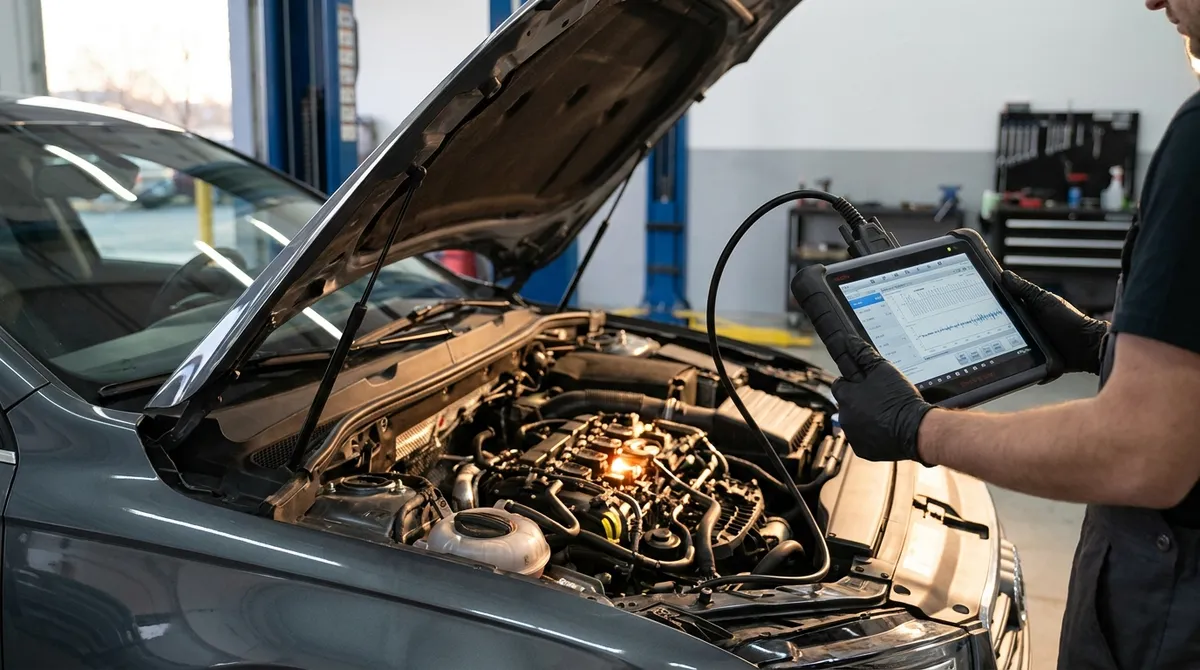
Your car’s acting up, and you call the shop. The first thing they often say? “We charge $150 to diagnose it.” It feels like paying just to get a quote, and nobody likes that. But sometimes, that fee is the best money you’ll spend to get your vehicle running right.
What You’re Really Paying For
A diagnostic fee isn’t just for plugging in a scanner and reading a code. If it were that simple, everyone would do it themselves. What you’re paying for is a mechanic’s time, experience, and the use of specialized tools.
Think about it: when your car has a problem, it’s often more than just a single, obvious fault. It might be an intermittent misfire, a tricky electrical short, or a sensor acting up that only shows its true colors under specific driving conditions. A good technician doesn’t just read a code; they interpret it. They’ll check wiring harnesses, test components with multimeters and oscilloscopes, perform vacuum tests, check fuel pressure, and analyze live data from your car’s computer. They’re not just looking for a problem; they’re looking for the root cause. This methodical process takes time, training, and expensive equipment.
When That Diagnostic Fee is a Smart Investment
There are plenty of times when paying for a professional diagnosis is absolutely the right call. It can save you from throwing parts at a problem, which often ends up costing more in the long run than the diagnostic fee itself.
- Complex or Intermittent Issues: If your car only acts up sometimes, or if there are multiple symptoms that don’t seem related, a professional is your best bet. Chasing down an intermittent misfire or a phantom electrical drain can drive anyone crazy. A shop has the tools and systematic approach to track these ghosts down. For instance, if your engine is stalling at idle or stopping randomly, that’s a complex issue that needs a careful look.
- Safety Concerns: Issues with brakes, steering, or suspension should always go to a professional. If you’re hearing a grinding noise when braking or a whining noise when you turn the wheel, these aren’t things to guess about. Your safety, and the safety of others, depends on getting it right.
- Multiple Warning Lights or Unclear Symptoms: If your dashboard looks like a Christmas tree, or if you have a strange smell (like burning rubber, oil, or wires) but no clear idea why, a shop’s diagnostic process can sort through the noise.
- Specialized Tools Required: Some problems require tools that most DIY mechanics don’t have, like advanced scan tools that can command specific tests, smoke machines for vacuum leaks, or pressure testers.
When You Might Hold Off (or Do It Yourself First)
Not every car problem needs a paid diagnosis right away. Sometimes, a little bit of your own time and effort can save you that fee.
- Obvious, Simple Fixes: If you have a flat tire, a dead battery, or a clearly visible loose belt, you don’t need a diagnostic fee to tell you what’s wrong. These are usually straightforward repairs.
- Clear Check Engine Light Codes: If your Check Engine Light is on and you can pull a specific code that points at one well-documented part, you may be able to take it from there yourself. An EVAP leak code that turns out to be a cracked gas cap seal doesn’t need a shop’s diagnostic time.
- Maintenance You Already Know Is Due: If the symptom lines up with something you’re overdue on anyway — plugs, an air filter, a battery well past its life — it’s reasonable to take care of that first and see where you stand.
One thing worth keeping in mind: a code is a starting point, not a diagnosis. It tells you which system the computer is unhappy with, not which part failed. Sorting out that difference is exactly what you’re paying a shop for.
The Honest Answer
A diagnostic fee is worth paying when the cost of guessing wrong is higher than the fee, and on modern cars it usually is. Two wrong parts will generally run you more than the diagnostic charge would have, and you still won’t have fixed the car.
Do the free checks yourself first — visual inspection, gas cap, air filter, pulling the codes. Then pay for the expertise when the answer isn’t obvious. It’s also worth asking whether the shop applies the diagnostic fee toward the repair if you have them do the work; policies vary, so ask before you agree to anything. If you want a second opinion on what a code is likely pointing at before you book the appointment, the AI Mechanic can walk through it with you.