Grinding Noise When Braking: What It Means
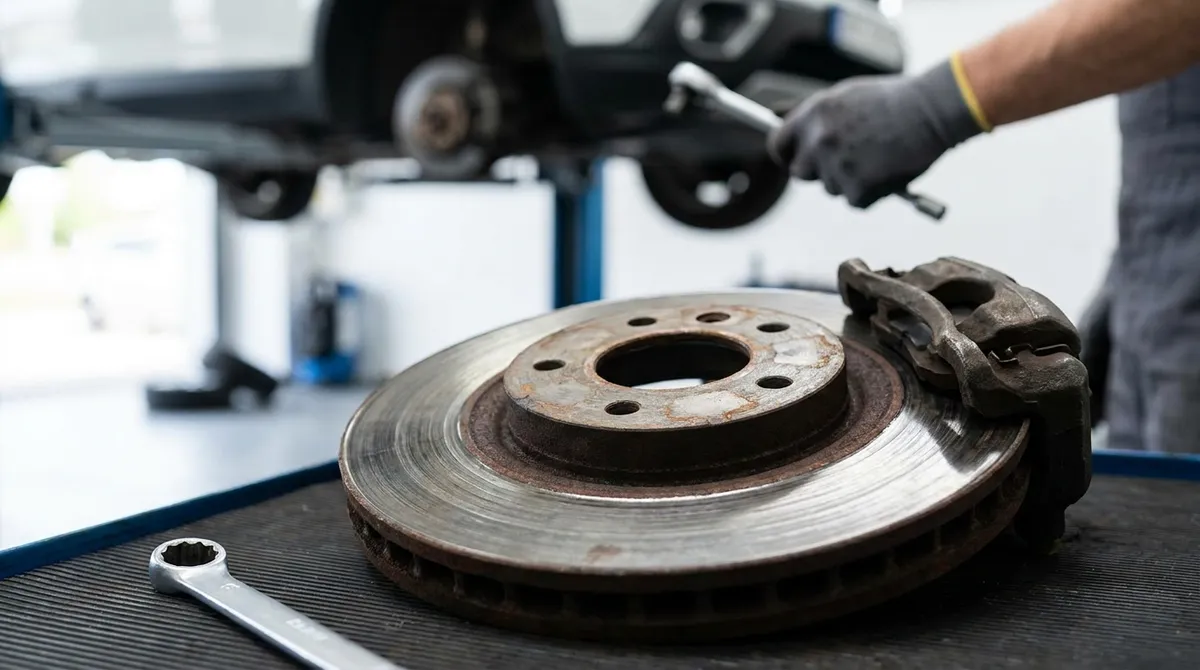
Few sounds are as unsettling as a grinding noise when you press the brake pedal. It’s not just an annoyance; it’s your vehicle telling you something important about its stopping power. Ignoring this sound can lead to bigger repair bills and, more importantly, put you and others on the road at risk.
What’s That Grinding Sound?
Most of the time, a grinding noise during braking points to severely worn brake pads. Brake pads have a friction material that wears down over time. When that material gets too thin, a small metal tab called a “wear indicator” or “squealer” starts to rub against the rotor. This usually makes a high-pitched squeal first, but if you let it go, the pad material can wear completely away, leaving metal-on-metal contact. That’s your grinding sound.
When you hear metal grinding, it means:
- The brake pads are shot.
- The brake rotors are likely being damaged by the metal-on-metal contact.
- Your braking performance is compromised.
Don’t wait for it to get worse. If you’re hearing grinding, it’s time to check your brakes. If you’re looking for other common car issues, our symptom guides hub can help you figure out what your vehicle is trying to tell you.
Other Reasons for the Grind
While worn pads are the most common culprit, other issues can cause a grinding noise when you brake:
- Damaged Rotors: Even with good pads, rotors can warp or get deep grooves. If a rotor is severely grooved or has a lip on the edge, it can cause the pad to grind against the uneven surface. Sometimes, a rotor can even crack, leading to a nasty sound.
- Stuck or Seized Caliper: The brake caliper holds the pads and squeezes them against the rotor. If a caliper piston seizes or the slide pins get stuck, the pads might not release properly, causing constant friction and grinding, even when you’re not on the brakes hard. Or, one pad might wear much faster than the other, leading to metal-on-metal on one side.
- Foreign Objects: Sometimes, a small rock, piece of gravel, or road debris can get caught between the brake pad and the rotor. This will definitely cause a grinding sound until it’s dislodged or worn away. This is usually a less consistent grind and might come and go.
- Wheel Bearing Issues: While not directly brake-related, a bad wheel bearing can sometimes make a grinding or rumbling noise that gets worse when you apply the brakes or turn. If you’re hearing a general grinding that also changes with braking, it’s worth checking the bearings too. You can find more information on diagnosing various car issues in the MECH AI fix database.
How Long Can You Wait? (Spoiler: Not Long)
Let’s be clear: a grinding noise when braking is not something you can safely ignore for long. This isn’t like a quirky dashboard light that might just be a loose gas cap. This is about your ability to stop your vehicle.
Here’s why you need to address it quickly:
- Safety: Your stopping distance will increase, and your brakes might fade under heavy use. This is a direct safety hazard.
- Cost: What might have been a simple pad replacement can quickly turn into needing new pads and rotors, and possibly even calipers. The longer you wait, the more components get damaged, and the repair bill climbs.
- Further Damage: Beyond the brakes themselves, severe grinding can put extra stress on wheel bearings and other suspension components.
If you’re hearing grinding, it’s best to get it looked at right away. Don’t plan a long road trip or put off the repair for weeks.
What to Do Next
First, if you’re hearing a grinding noise, drive gently. Avoid hard braking and give yourself extra stopping room. Next, you’ll want to get eyes on those brakes.
Here’s how to start:
- Visual Inspection: If you can safely do so, park on a level surface, put the car in park with the emergency brake on, and try to look through the wheel spokes at your brake pads. Are they super thin? Can you see metal-on-metal contact? You might need to remove a wheel for a better look, but only if you’re comfortable and have the right tools.
- Listen and Feel: Try to pinpoint which wheel the sound is coming from. Does the steering wheel shake when you brake? Does the pedal feel different? If your car is also shaking or vibrating when you brake, that’s another sign of serious brake or suspension trouble.
- Get a Diagnosis: If you’re not comfortable doing the inspection yourself, or if you’ve looked and aren’t sure, take it to a trusted mechanic. They can quickly lift the car, remove the wheels, and give you a clear picture of what’s going on. Or, use a tool like the MECH AI Mechanic to input your symptoms and get an idea of common causes for your specific vehicle.
A grinding brake noise is a clear signal that your braking system needs attention, and fast. Don’t put off getting it checked out. Your safety, and your wallet, will thank you.