Timing Belt or Chain: When to Replace It
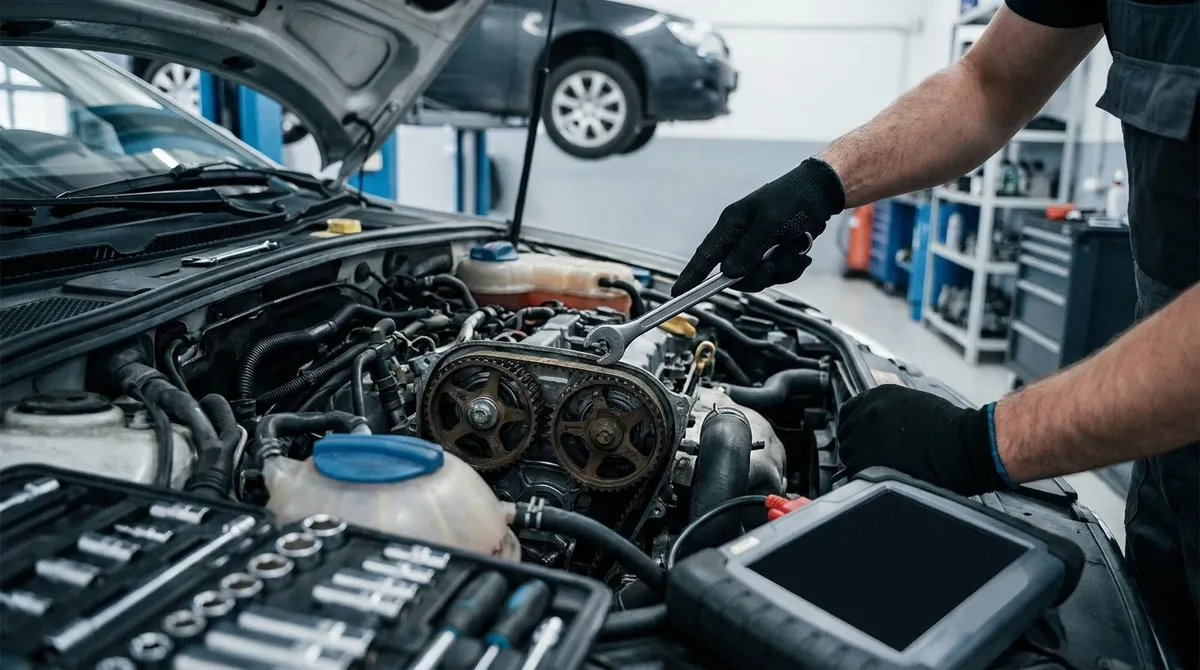
Your car’s engine has a lot of moving parts, and they all need to work together in perfect time. That’s the job of the timing belt or timing chain. Skipping this maintenance item can turn a routine service into a full engine replacement.
What Do Timing Belts and Chains Do?
Think of your engine’s crankshaft and camshafts as two dancers that need to stay in perfect rhythm. The crankshaft makes the pistons go up and down, and the camshafts open and close the valves that let air in and exhaust out. The timing belt or chain is what keeps these two parts synchronized. If they get out of sync, or if the belt or chain breaks, things can go wrong in a hurry.
Timing Belts: Know Your Schedule
Timing belts are made of rubber and reinforced with fibers. Like any rubber part, they wear out over time and with mileage. Manufacturers set specific replacement intervals, usually between 60,000 and 100,000 miles, or every 5-7 years, whichever comes first. This isn’t a suggestion; it’s a hard deadline.
When a timing belt breaks, the engine stops. On many modern engines, called “interference engines,” a broken timing belt means the pistons will hit the valves. This bends valves, damages pistons, and can even crack the cylinder head. That’s when you’re looking at a major engine rebuild or replacement, which costs a lot more than a new belt. Some older or simpler engines are “non-interference,” meaning the parts won’t collide, but the engine still won’t run.
It’s common practice to replace other components at the same time as the timing belt. These often include the water pump, tensioners, and idler pulleys. These parts are usually behind the same covers as the belt, so doing them all at once saves you labor costs down the road. If you hear a squealing noise from the front of your engine, that’s usually the accessory (serpentine) belt rather than the timing belt, which runs hidden behind covers. A failing timing belt is more likely to show up as a ticking noise from behind the timing cover, rough running, or — most often — no warning at all. You can learn more about general engine noises in our symptoms guide.
Timing Chains: Built Tough, But Not Forever
Timing chains are made of metal, similar to a bicycle chain, and are designed to last much longer than belts – often the life of the vehicle. Because they’re lubricated by engine oil, keeping up with regular oil changes is crucial for their longevity. Sludgy oil can cause premature wear on the chain and its tensioners.
While chains are more durable, they aren’t maintenance-free. Over time, chains can stretch, and their hydraulic tensioners or plastic guides can wear out. When this happens, you might hear a rattling noise, especially on a cold start that goes away after a few seconds. This is often the chain slapping against its guides due to a worn tensioner. If the rattling continues or gets louder, it’s a serious warning. A stretched chain can throw off engine timing, leading to a check engine light, poor performance, or even stalling. If your car stalls while driving, a timing chain issue could be one of the causes.
If you suspect a timing chain issue, it’s best to get it checked out. The MECH AI app can help you understand common issues for your specific vehicle and point you towards potential fixes in our fix database.
The Cost of Waiting
The biggest reason to stick to your timing belt or chain schedule is to avoid a catastrophic failure. A timing belt replacement might cost a few hundred to over a thousand dollars, depending on the car and what other parts are replaced. A timing chain replacement can be even more expensive due to higher labor times.
However, compare that to the cost of a new engine. If your interference engine’s timing belt breaks, you’re looking at thousands of dollars for repairs, often making the car uneconomical to fix. Even on a non-interference engine, being stranded and needing a tow, plus the cost of the belt replacement, is a hassle you can avoid. It’s a classic case where preventative maintenance saves you a lot of money and headache in the long run.
Your vehicle’s owner’s manual is the best place to find the exact service interval for your timing belt or chain. If you don’t have the manual, a quick search online for your car’s year, make, and model, plus “timing belt interval” or “timing chain replacement,” should give you the information you need. Don’t gamble with your engine’s health; follow the schedule and get these critical components replaced when it’s time.