Why Your Car Feels Sluggish and Loses Power
When your car feels like it’s lost its get-up-and-go, it’s more than just annoying. It’s a sign the engine isn’t making the power it should, or that something else is holding it back. This isn’t just about speed; it’s about the engine working harder than it needs to, which can lead to bigger problems down the road.
Check Your Dashboard First: Is the Light On?
The first thing to do when your car feels gutless is to glance at the dashboard. Is the Check Engine Light (CEL) on? A solid light means the computer has detected an issue, but it’s not usually an immediate emergency. A flashing light, though, means the engine is misfiring badly enough to potentially damage the catalytic converter, and that needs attention right away.
If the light is on, getting the codes read is your first practical step. Most auto parts stores will do this for free. The codes will give you a starting point, pointing to a specific system like ignition, fuel, or emissions. For a deeper dive into what that light means, check out our guide on why your check engine light is on.
Fuel and Air: The Engine’s Dinner and Breath
An engine needs the right mix of fuel and air to make power. If either one is off, the engine will struggle.
- Clogged Fuel Filter: Over time, dirt and rust can build up in the fuel filter, restricting flow to the engine. It’s like trying to drink through a pinched straw. If your car feels fine at low speeds but struggles when you try to accelerate hard, this could be the culprit. A new fuel filter is a relatively cheap part and a good place to start for older vehicles or those with high mileage.
- Weak Fuel Pump: If the fuel pump isn’t delivering enough pressure, the engine will starve for fuel, especially under load. This can cause hesitation, stalling, or a general lack of power.
- Dirty Fuel Injectors: Injectors spray fuel into the engine. If they’re clogged or dirty, the spray pattern gets messed up, leading to incomplete combustion and less power.
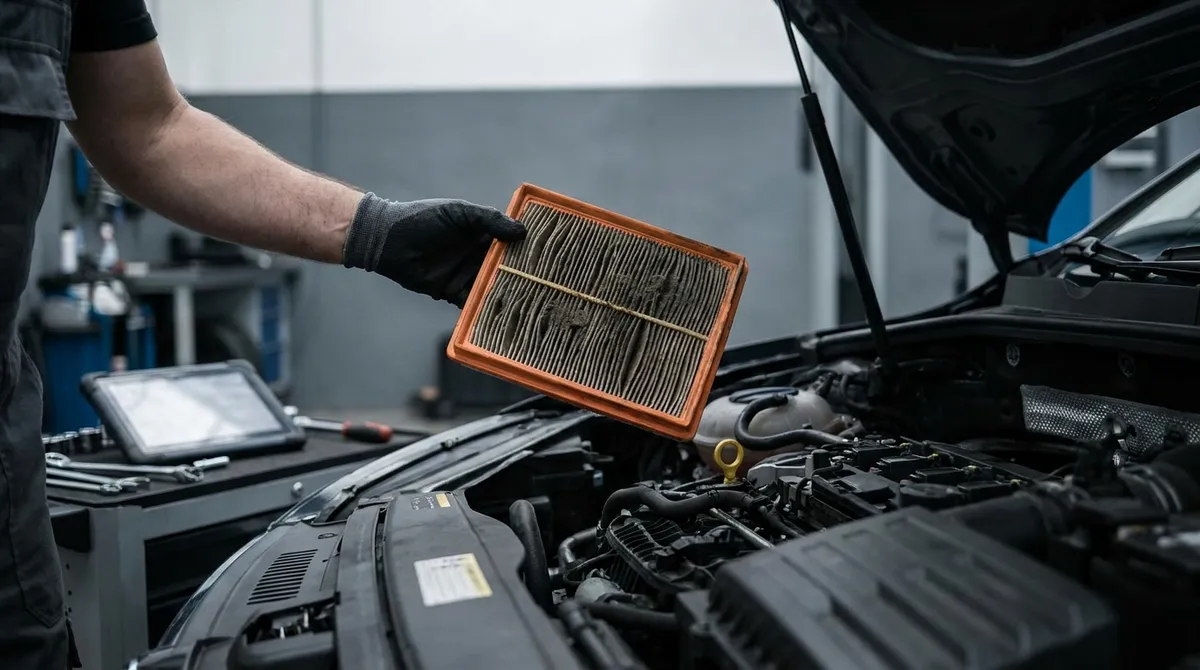
- Clogged Air Filter: A dirty air filter chokes the engine, reducing the amount of air it can take in. This is a simple visual check and an easy fix.
- Mass Air Flow (MAF) Sensor: This sensor measures the amount of air entering the engine. If it’s dirty or faulty, it sends incorrect information to the computer, leading to the wrong fuel-air mix. You might notice rough idling or hesitation. If you’re experiencing a rough idle even without a check engine light, we’ve got some first checks for that problem.
- Vacuum Leaks: Any unmetered air getting into the engine through a cracked hose or gasket can throw off the fuel-air ratio, causing a loss of power and often a rough idle.
Spark and Exhaust: Getting the Job Done and Out
Once the fuel and air are in, you need a good spark to ignite it, and a clear path for the exhaust to leave.
- Worn Spark Plugs or Bad Coil Packs: Spark plugs create the spark. If they’re old, fouled, or improperly gapped, the spark will be weak, leading to misfires and a noticeable power loss. Coil packs deliver high voltage to the plugs; if one fails, that cylinder stops firing. Replacing spark plugs is a common maintenance item, and knowing the right way to do it can save you headaches. We cover spark plug maintenance and avoiding coil pack trouble in another article.
- Clogged Catalytic Converter: The catalytic converter cleans up exhaust gases. If it gets clogged, it restricts the exhaust flow, creating back pressure that chokes the engine. It’s like trying to run with a hand over your mouth. This can cause a significant power loss, especially at higher RPMs, and might even make your car feel like it’s struggling to breathe. Sometimes a P0420 code points to this, but it could also be a sensor.
Other Things That Can Steal Power
Sometimes, the problem isn’t directly with the engine’s ability to make power, but with something else that’s dragging it down.
- Transmission Problems: A slipping transmission, low fluid, or internal issues can make the engine rev without effectively transferring power to the wheels. This often feels like a loss of acceleration, even if the engine sounds like it’s working hard.
- Brakes Dragging: While less common for a general “losing power” complaint, a caliper that isn’t fully releasing can cause one or more wheels to drag, making the engine work harder to move the car. This usually comes with a burning smell or excessive heat from the wheel.
- Faulty Sensors: Beyond the MAF, other sensors like the Oxygen (O2) sensors or Throttle Position Sensor (TPS) can send bad data to the engine computer, causing it to run inefficiently and lose power.
Dealing with a car that’s lost its pep can be frustrating. Start with the basics: check for dashboard lights, listen for unusual noises, and consider when the last maintenance was done. If you’re not sure where to start, or if the problem feels bigger than a simple DIY fix, it’s always smart to get a professional opinion. For complex issues, the MECH AI app can help you understand potential causes and what questions to ask your mechanic.