P0304 Code: Pinpointing a Cylinder 4 Misfire
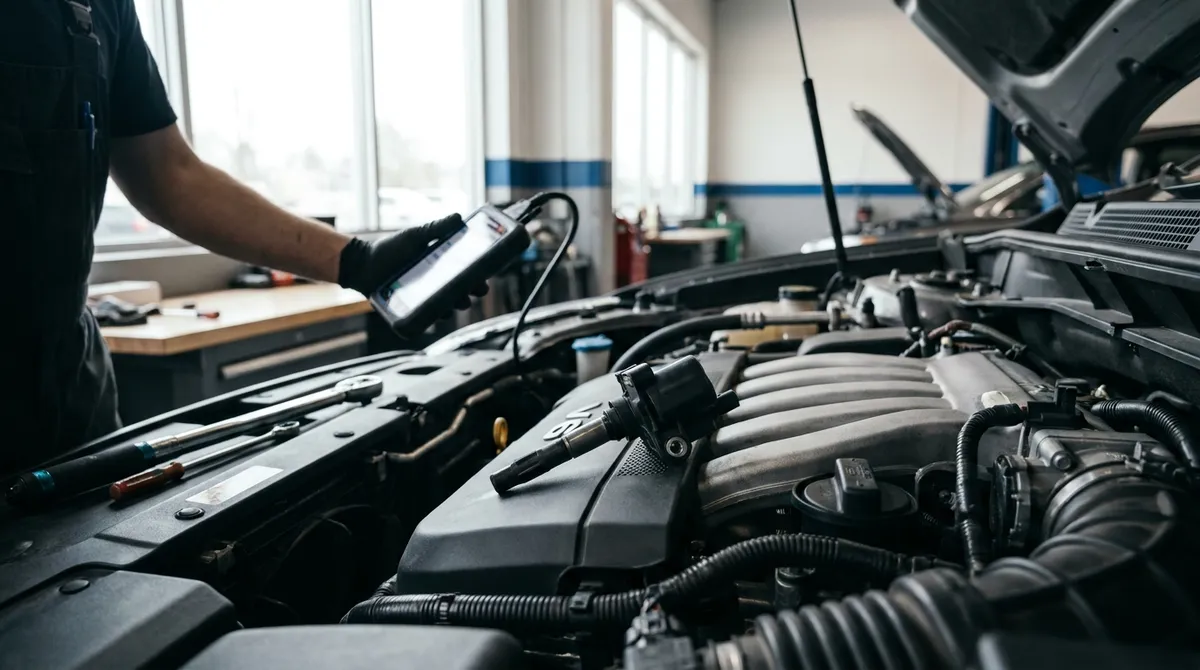
When your Check Engine Light comes on and you pull a P0304 code, it means the engine computer has detected a misfire in cylinder number 4. Simply put, that cylinder isn’t doing its job right, and it’s throwing off the whole engine’s rhythm. This isn’t just a nuisance; a persistent misfire can hurt your catalytic converter and make your car run rough, waste gas, or even stall.
What is a Misfire, Anyway?
Your engine needs three things for a cylinder to fire properly: air, fuel, and spark, all at the right time. A misfire happens when one of those three components is missing or out of whack in a specific cylinder. When the computer detects that the crankshaft isn’t speeding up as much as it should after cylinder 4’s power stroke, it logs the P0304 code. If the misfire is bad enough, your Check Engine Light might even flash, which is the computer’s way of telling you there’s a serious problem that could damage your catalytic converter. You can learn more about what a flashing light means compared to a solid one in our guide on /blog/why-is-my-check-engine-light-on/.
Symptoms of a misfire often include a rough idle, poor acceleration, reduced fuel economy, and sometimes a noticeable lack of power. You might feel a shudder or shake, especially when the engine is under load.
Common Culprits for P0304
Since the P0304 code points directly to cylinder 4, your troubleshooting can focus there. The usual suspects fall into the spark, fuel, or compression categories.
Here are the most common things to check:
- Spark Plug: A worn, fouled, or incorrectly gapped spark plug is a frequent cause. Plugs don’t last forever, and one bad plug can cause a misfire.
- Ignition Coil (or Coil Pack): Most modern engines use individual ignition coils for each spark plug. If the coil for cylinder 4 is weak or failing, it won’t deliver enough juice to ignite the fuel. Sometimes, the problem is with the wiring harness going to the coil.
- Fuel Injector: If cylinder 4 isn’t getting enough fuel, it won’t fire. A clogged, dirty, or faulty fuel injector can starve the cylinder.
- Vacuum Leak: An air leak near cylinder 4 (like a cracked intake manifold gasket) can lean out the air-fuel mixture for that cylinder, causing a misfire.
- Compression Issues: This is less common for a single-cylinder misfire but can happen. Bent valves, worn piston rings, or a blown head gasket can all lead to low compression in a cylinder, meaning it can’t create enough pressure to ignite the fuel properly.
How to Diagnose a Cylinder 4 Misfire
Don’t just throw parts at it. Start with the simplest, cheapest checks first.
- Check for Other Codes: Always scan for other codes. Sometimes a P0304 is a symptom of a larger issue, like a mass airflow sensor problem or a fuel pressure issue that might trigger a different code.
- Inspect the Spark Plug: Pull the spark plug from cylinder 4. Look for signs of fouling (oil, carbon, fuel), damage to the electrode, or incorrect gap. While you’re at it, check the condition of the spark plug wire if your engine uses them. If you’re replacing plugs, make sure you know the right gap and torque specs. We’ve got a guide on /blog/spark-plugs-gap-torque-and-avoiding-coil-pack-trouble/ that can help.
- Swap Components: This is a classic diagnostic trick.
- Coil Pack Swap: If your engine has individual coil packs, swap the coil from cylinder 4 with a coil from a different cylinder (e.g., cylinder 1). Clear the code and drive the car. If the misfire moves to cylinder 1 (now you get a P0301 code), you know the coil pack is bad.
- Spark Plug Swap: You can do the same with spark plugs, though it’s often easier to just replace a suspicious plug.
- Fuel Injector Swap: This is a bit more involved. Relieve the fuel system pressure before you open any line or fitting — the system stays pressurized long after the engine is shut off, and a fitting cracked open under pressure sprays atomized fuel across a hot engine bay. Look up the relief procedure for your vehicle, wear eye protection, work on a cool engine, and keep a fire extinguisher within reach. Once it’s safe, swap the injector from cylinder 4 with one from another cylinder. If the misfire follows the injector, you’ve found your problem. If any of that gives you pause, this is a reasonable one to hand to a shop.
- Check for Vacuum Leaks: With the engine running, carefully listen for hissing sounds around the intake manifold and vacuum lines near cylinder 4. You can also use a smoke machine if you have access to one, or spray a small amount of unlit propane or carb cleaner around suspected leak areas; if the engine RPM changes, you’ve found a leak.
- Perform a Compression Test: If spark and fuel seem fine, and there are no obvious vacuum leaks, a compression test will tell you if cylinder 4 is mechanically sound. Low compression means internal engine damage, which is a bigger job.
Sometimes, tracking down a misfire can be tricky, especially with intermittent issues. If you’re scratching your head, the MECH AI app can help you sort through potential causes based on your specific vehicle and the symptoms you’re seeing, or you can ask the AI Mechanic directly.
One last thing worth repeating: if your check engine light is flashing rather than steady, stop driving and get the car towed. A flashing light during a misfire means raw fuel is going into the exhaust, and that destroys catalytic converters quickly. A P0304 you address this week is a spark plug or a coil. The same misfire ignored for a month can add a catalytic converter to the bill.