Why Your Brake Pedal Is Hard to Push
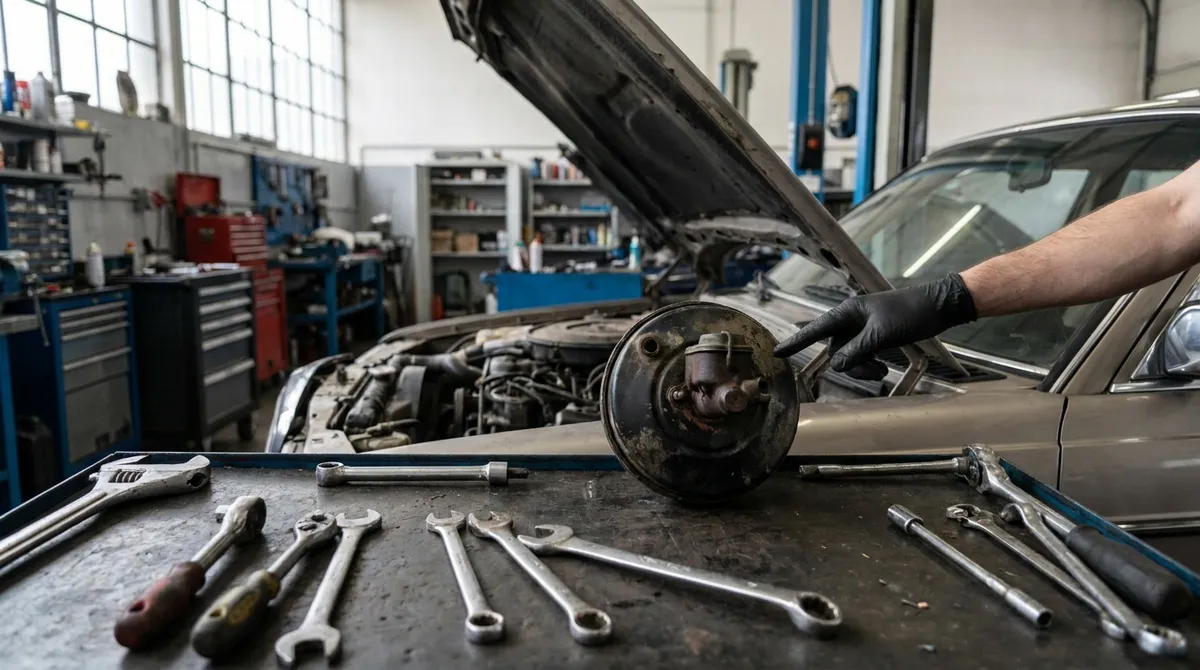
Few things are as unsettling as pressing the brake pedal and feeling like you’re trying to stop a runaway train with your foot. A hard brake pedal means your car isn’t stopping like it should, and that’s a problem you need to get sorted out right away. This usually points to an issue with your power brake assist system.
How Power Brakes Work (The Short Version)
Most modern vehicles use a vacuum-assisted brake booster to help you stop. When you press the brake pedal, you’re not just pushing fluid through lines; you’re also activating a large diaphragm inside the booster. This diaphragm uses the difference in air pressure (vacuum from the engine, atmospheric pressure from outside) to multiply the force you apply to the pedal. It makes stopping much easier than it would be without it. Without this assist, you’d have to stand on the pedal to get the car to slow down. If you’re noticing any unusual braking behavior, it’s always a good idea to check out our main page for common symptoms that might point to other issues.
Common Causes of a Hard Brake Pedal
If your brake pedal suddenly feels like a brick wall, the power assist is probably gone. Here are the usual suspects:
- Vacuum Leak: This is the most common culprit. The brake booster needs a steady supply of engine vacuum to do its job. If there’s a leak in the vacuum hose leading to the booster, or if the booster itself has a torn diaphragm, it won’t get enough vacuum. You might also notice a hissing sound under the hood or a rough idle if the leak is significant enough to affect the engine’s air-fuel mixture. For more on diagnosing engine issues, check out our article on rough idle with no check engine light.
- Bad Check Valve: The check valve is a one-way valve in the vacuum hose that connects the engine to the brake booster. Its job is to hold vacuum in the booster when the engine is off or when engine vacuum is low (like during hard acceleration). If this valve fails, vacuum can bleed out of the booster, leaving you with no assist on the first pedal press after the car has been sitting.
- Faulty Vacuum Pump: Some vehicles, especially diesels or certain gasoline engines, don’t produce enough natural vacuum and rely on a dedicated vacuum pump. If this pump fails, you lose your power brake assist.
- Clogged Vacuum Line: Less common, but a blocked or collapsed vacuum hose can prevent vacuum from reaching the booster.
Quick Checks You Can Do
Before you take it to the shop, there are a couple of simple tests you can perform to narrow down the problem:
- Engine Off Test: With the engine off, pump the brake pedal several times until it feels firm. Then, keep pressure on the pedal and start the engine. If the pedal sinks slightly, your booster and check valve are likely working. If it stays hard, there’s a problem.
- Engine Running Test: Start the engine and let it idle for a minute. Press the brake pedal and hold it. Then, turn off the engine while keeping pressure on the pedal. The pedal should remain firm for at least 30 seconds. If it rises quickly, the check valve or booster might be faulty.
- Visual Inspection: Pop the hood and look at the large vacuum hose running from the engine (often from the intake manifold) to the brake booster (the large, round canister behind the master cylinder). Check for cracks, loose connections, or obvious damage.
When to Call in the Pros
If these simple checks point to an issue, or if you’re not comfortable poking around under the hood, it’s time to get a professional opinion. A hard brake pedal is a serious safety concern, and it’s not something to put off. While fixing a vacuum hose might be a DIY job for some, replacing a brake booster or vacuum pump often requires specialized tools and knowledge.
Don’t guess when it comes to your brakes. If you’re unsure about what’s going on or need more specific guidance for your vehicle, the MECH AI app can help you figure out what’s wrong and what to do next. You can also explore our fix database for common repairs. Get it checked out, and drive safe.