Brake Pedal Vibrates When Stopping: What's Up?
You’re driving along, hit the brakes, and suddenly the pedal starts shaking under your foot. It’s not just a little tremor; it’s a noticeable pulsation that tells you something isn’t right. This isn’t just uncomfortable; it’s a sign your braking system needs attention.
The Usual Suspect: Rotors
When your brake pedal vibrates, most folks immediately think “warped rotors.” It’s a common term, but “warped” isn’t exactly accurate. Rotors don’t usually bend out of shape like a potato chip. What actually happens is uneven wear or a buildup of brake pad material in certain spots. This creates high and low spots on the rotor surface.
When the brake pads clamp down on these uneven surfaces, they grab, release, and grab again with each rotation. That’s what you feel as a pulsation through the brake pedal. It’s like trying to sand a bumpy piece of wood – your hand feels the ups and downs.
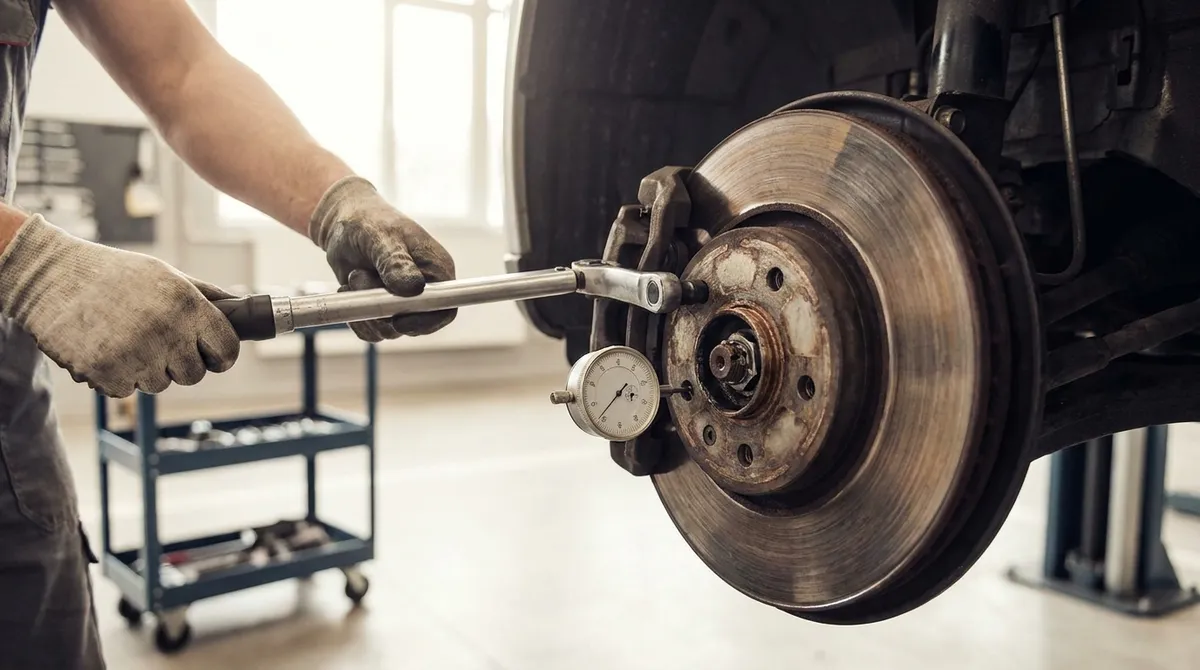
To check for this, a mechanic will measure the rotor’s “runout” (how much it wobbles) and its thickness variation. If the variation is too much, the rotor needs attention. Sometimes, they can be machined (resurfaced) to even them out, but often, especially on modern, thinner rotors, replacement is the better call. New pads are always a good idea with new rotors. You can learn more about general car troubles and how to approach them in our symptom guides.
Other Brake System Troubles
While rotors get most of the blame, other parts of the brake system can cause that pedal shake.
- Sticking Calipers: A caliper is supposed to release fully after you take your foot off the pedal. If it sticks, even slightly, it can keep one pad dragging on the rotor. This generates excessive heat and can lead to uneven pad wear or hot spots on the rotor, causing pulsation. It also wears out pads and rotors much faster than they should.
- Uneven Pad Wear: This can happen if calipers are sticking, but also if the pads themselves are low quality, weren’t installed correctly, or if the brake system has other issues. If one pad is worn down more than its partner, it can create an imbalance that you’ll feel.
- Loose Wheel Bearings: Your wheels need to spin smoothly and without play. If a wheel bearing is worn out or loose, the wheel assembly can wobble slightly. This wobble translates to the rotor, which then pushes back on the brake pads and caliper, causing the pulsation. A mechanic can check for play by jacking up the car and trying to wiggle the wheel. For more detailed information on a wide range of car issues, check out our fix database.
- Damaged Hubs: The rotor bolts directly to the wheel hub. If the hub itself is bent, rusty, or has debris on its mounting surface, the rotor won’t sit perfectly flat. Even a tiny bit of misalignment here can cause significant runout and lead to pedal pulsation, even with brand new rotors.
Don’t Forget the ABS
Sometimes, a pulsating brake pedal isn’t a problem at all. If you’re braking hard on a slippery surface, your Anti-lock Braking System (ABS) might kick in. When ABS activates, it rapidly cycles the brake pressure to prevent the wheels from locking up. This rapid cycling is designed to make the pedal pulsate, letting you know it’s working. That’s normal.
However, if your ABS light is on, or if the pedal pulsates under light braking on dry pavement, that’s a sign of an ABS system problem. It could be a faulty wheel speed sensor, a wiring issue, or even a problem with the ABS control module. Diagnosing ABS issues often requires a scan tool to read specific codes. For complex issues, our AI Mechanic can help you narrow down the possibilities for your specific vehicle.
What to Check First
Before you rush to replace everything, here are a few things you can look at yourself:
- Visual Inspection: Park on a flat surface. Look at your rotors through the wheel spokes. Do they look smooth and shiny, or do you see grooves, dark spots, or a bluish tint (signs of overheating)? Check the brake pads too – are they worn evenly? Are they thick enough?
- Lug Nuts: Believe it or not, loose lug nuts can sometimes cause a vibration that feels like a brake issue. Make sure they’re all snug.
- Listen and Feel: Does the pulsation happen only when braking, or do you feel a vibration while driving that gets worse when you brake? If it’s the latter, it might point more towards a wheel bearing or suspension issue. If you’re experiencing other braking issues, like a soft brake pedal, that points to different problems entirely.
The Next Step
A vibrating brake pedal is a clear signal that your braking system needs attention. While “warped rotors” is the common phrase, the actual cause can be a few different things. Getting it diagnosed and fixed promptly isn’t just about comfort; it’s about safety. If you’re not sure what you’re looking at, or if the problem persists, it’s always best to take it to a trusted shop. They have the tools and experience to pinpoint the exact issue and get you back on the road safely.