What's That Burning Smell? Rubber, Oil, or Wires
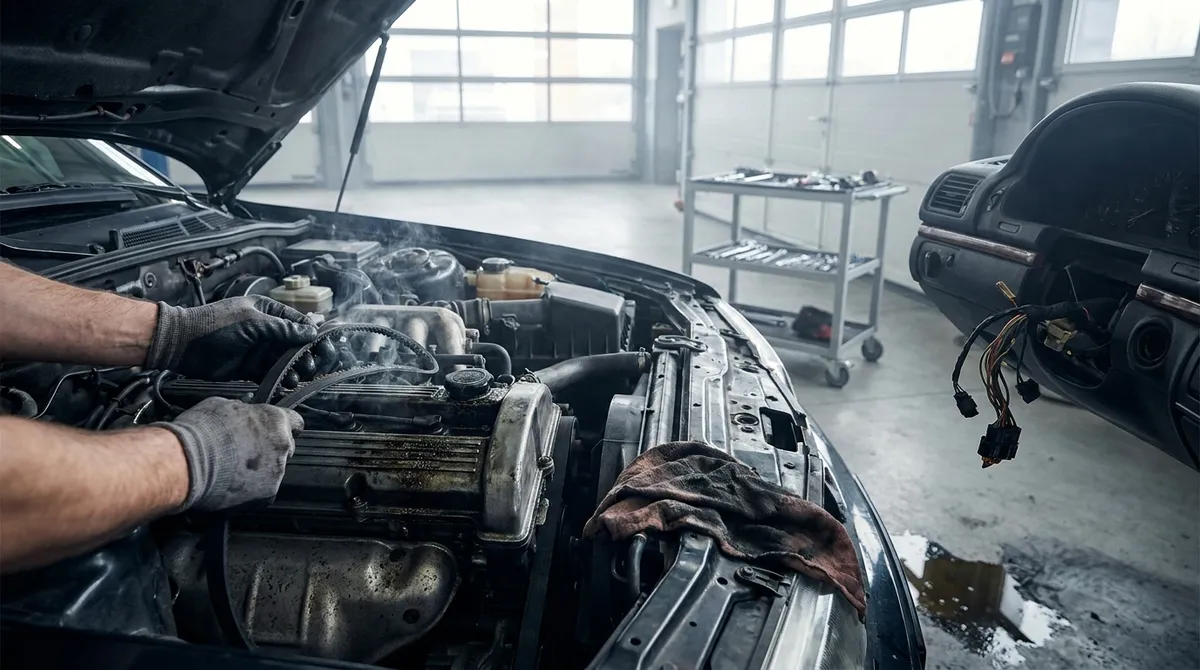
You’re driving along, minding your own business, and then you catch a whiff of something… burning. It’s never a good sign, but what kind of burning smell is it? Pinpointing the odor can tell you a lot about what’s going on under the hood and how quickly you need to act.
The Smell of Burning Rubber
This one’s pretty distinct, like a tire screeching for too long, or maybe a burnt rubber band. If you smell burning rubber, it usually points to friction where it shouldn’t be.
Common Causes:
- Slipping Drive Belts: The serpentine belt or accessory belts can slip if they’re worn, loose, or if an accessory (like the AC compressor or alternator) is seizing up. The friction generates heat and that rubber smell. You might also hear a squealing noise.
- Tire Rubbing: If a tire is rubbing against the fender liner, suspension component, or even another part of the car, it’ll generate that smell. This often happens after hitting a pothole, an accident, or if you’ve got oversized tires.
- Hoses or Plastic on Hot Engine Parts: Sometimes a loose vacuum hose, fuel line, or even a plastic bag picked up from the road can come into contact with a hot exhaust manifold or catalytic converter. The plastic or rubber melts, giving off a strong smell.
Seriousness: Can range from a minor annoyance to a serious issue. A slipping belt can lead to a dead battery (alternator not charging) or an overheating engine (water pump not turning). A rubbing tire can blow out.
What to do: If it’s safe, pull over and check under the hood. Look for frayed belts, smoke, or anything melted. Check your tires for signs of rubbing. If you can’t spot the issue, it’s best to get it checked out. You can find more symptom guides here.
The Smell of Burning Oil
This smell is often described as acrid, greasy, or sometimes like burnt toast. It’s a common one, usually meaning engine oil is leaking and hitting something hot, like the exhaust system.
Common Causes:
- Valve Cover Gasket Leaks: These are common. Oil seeps out from under the valve covers and can drip onto the hot exhaust manifolds.
- Oil Pan Gasket or Drain Plug Leaks: Oil leaking from the bottom of the engine can get blown back onto the exhaust or other hot components as you drive.
- Oil Filter Leaks: A poorly installed or loose oil filter can leak, especially right after an oil change.
- Overfilled Oil: If you put too much oil in, the excess can get pushed out through seals or breather systems and burn off.
- Turbocharger Issues: On turbocharged engines, oil can leak from the turbo’s seals and burn off on the hot turbo housing.
Seriousness: While not usually an immediate breakdown risk, burning oil can indicate a significant leak. Over time, low oil levels can damage your engine. It’s also a fire hazard if enough oil accumulates on hot parts.
What to do: Check your oil dipstick. If it’s low, add oil, but don’t overfill. Look for fresh oil stains under your car after it’s been parked. Visually inspect the top and bottom of your engine for oil leaks. A good place to start diagnosing is to check common leak points. The MECH AI fix database can help you identify common issues for your specific vehicle.
The Smell of Burning Plastic or Electrical Wires
This is perhaps the most concerning smell. It’s sharp, chemical, and often smells like melting plastic or insulation. If you smell this, don’t ignore it.
Common Causes:
- Short Circuits: A wire with damaged insulation can short out, causing it to overheat and melt.
- Overloaded Circuits: A circuit pulling more current than it was built for will heat its wiring until the insulation starts to break down. Add-on accessories spliced into the wrong place are a frequent cause.
- Failing Electrical Components: A blower motor, window motor, or alternator on its way out can overheat and cook its own windings. A burning smell that shows up only when the heater fan is running is a classic version of this.
Seriousness: High. Melting insulation is how vehicle fires start, and a fire that begins under the dash or behind the engine bay spreads faster than you can react to it.
What to do: Stop driving. Pull over somewhere safe, shut the engine off, and get yourself and your passengers out and well away from the car if you see any smoke or flame. Don’t open the hood if you suspect there’s fire behind it. If it’s only a smell and there’s no smoke, still don’t keep driving on it — a fault hot enough to smell is hot enough to be a fire risk, and this is a tow, not a drive-it-in-tomorrow. An electrical burning smell is not a diagnose-it-later problem, and it’s one of the few things on this list where the right answer is almost always a professional. If you want a sense of what you might be dealing with before the tow truck arrives, the AI Mechanic can talk through the symptoms with you.