Engine Squeal? How to Check Your Serpentine Belt
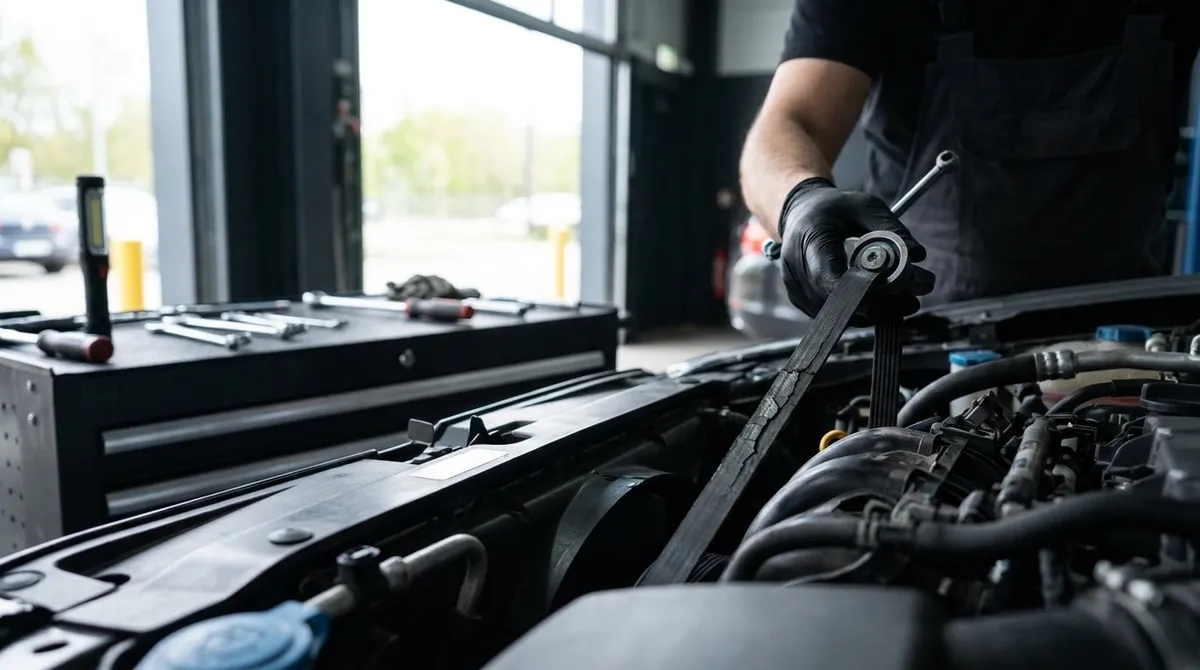
That high-pitched squeal coming from under the hood is usually a sign your serpentine belt needs some attention. It’s not just an annoying noise; it’s your car telling you something important isn’t working right. Ignoring it can lead to bigger problems, like a dead battery or an overheated engine.
What the Serpentine Belt Does
Your serpentine belt is a single, long belt that snakes around several pulleys on the front of your engine. It’s responsible for driving a bunch of important accessories: the alternator (which charges your battery), the power steering pump, the air conditioning compressor, and often the water pump (which keeps your engine cool). If this belt isn’t doing its job, none of those components will either. For more general help with various noises and smells, check out our collection of symptom guides.
Why Belts Squeal: Common Culprits
A squealing belt is usually a slipping belt. Here’s what typically causes it:
- Worn or Glazed Belt: Over time, the rubber on the belt hardens and smooths out, losing its grip. It might look fine at a glance, but the surface is too slick.
- Loose Belt Tension: The belt needs to be held tight against the pulleys. A tensioner pulley, often spring-loaded, keeps the right amount of pressure. If the tensioner fails or weakens, the belt can loosen and slip.
- Misaligned Pulleys: If one of the pulleys the belt rides on is bent or out of alignment, the belt won’t sit correctly and can squeal. This is less common but can happen after a repair or impact.
- Contamination: Oil, coolant, or power steering fluid leaking onto the belt can make it slick, causing it to slip and squeal. If you’ve also noticed a burning smell, it could be rubber from a slipping belt.
- Failing Accessory Bearing: Sometimes the squeal isn’t the belt itself, but a bearing in one of the accessories (like the alternator or AC compressor) that the belt drives. A failing bearing can create resistance, making the belt slip over that pulley.
Your Inspection Checklist
Before you start poking around, make sure the engine is OFF and the car is in Park (or Neutral with the parking brake on).
-
Visual Inspection of the Belt:
- Cracks and Fraying: Look for any cracks, especially across the ribs on the underside. Check for frayed edges or chunks of rubber missing.
- Glazing: Feel the belt. If it feels smooth and shiny, like polished leather, it’s likely glazed and losing grip. A good belt should have a slightly dull, grippy feel.
- Wear Indicators: Some belts have wear indicators molded into them. Check your owner’s manual or a service guide to see if yours does.
-
Check Belt Tension:
- With the engine off, try to twist the longest unsupported section of the belt. If you can twist it more than 90 degrees, it might be too loose.
- Important: This is a rough check. The proper tension is critical and usually requires a special tool, especially for automatic tensioners.
-
Inspect Pulleys and Tensioner:
- Wobble: Gently try to wiggle each pulley. There shouldn’t be any play or wobble. If a pulley wobbles, its bearing is likely shot.
- Tensioner Movement: The automatic tensioner should have good spring pressure. If it looks slack or doesn’t move smoothly, it could be failing.
- Contamination: Look for any signs of fluid leaks on or around the belt and pulleys.
-
Listen Carefully (Engine Running, Safely!):
- Start the engine briefly and listen for the squeal.
- Try spraying a small amount of water (NOT belt dressing) onto the ribbed side of the belt while it’s squealing. If the squeal stops for a few seconds and then returns, the belt is likely the problem. If it doesn’t stop, the issue might be a failing pulley bearing.
Fixing the Squeal: DIY or Shop?
If your inspection points to a worn belt, replacing it can be a DIY job for some, but it depends on your comfort level and the complexity of your engine. Some serpentine belts are straightforward, while others require special tools or are tucked away in tight spaces.
- Belt Replacement: If the belt is cracked, glazed, or frayed, it needs replacing. Make sure to get the correct belt for your specific vehicle.
- Tensioner Replacement: If the tensioner is weak or seized, it also needs to be replaced along with the belt.
- Pulley Replacement: If a pulley bearing is bad, that pulley needs to be replaced.
If you’re unsure about any of these steps, or if the squeal persists after a new belt, it’s best to take it to a trusted mechanic. They have the right tools and experience to diagnose more complex issues like failing accessory bearings or misaligned pulleys. You can also use the MECH AI app to get specific guidance for your car’s make and model.
Don’t let that squeal go on too long. A simple belt issue can quickly become a breakdown if the belt snaps or an accessory fails. Get it checked out and keep your ride running smooth.