That Whining Noise When You Turn the Wheel
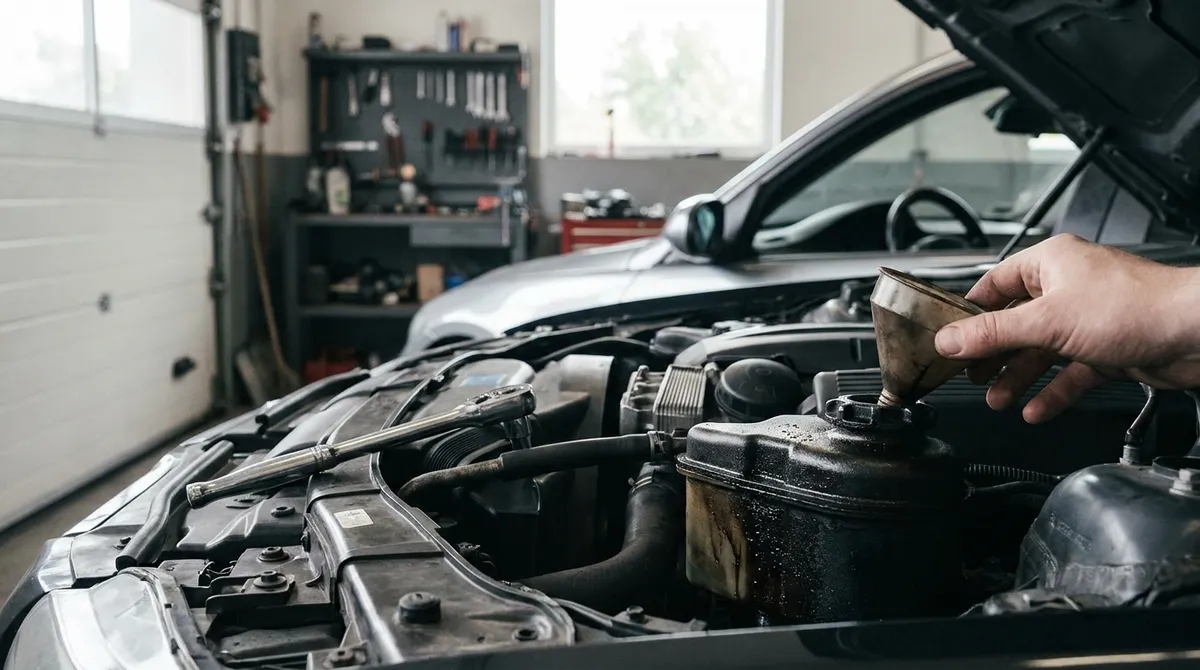
You’re backing out of the driveway, or maybe just parking, and as you turn the steering wheel, you hear it: a distinct whine. It’s not a normal sound, and it usually means your power steering system is trying to tell you something. This isn’t just an annoyance; it’s a signal that something needs attention before it gets worse.
Low Power Steering Fluid
This is the most common reason for a whining power steering pump. The pump relies on fluid to operate smoothly and quietly. When the fluid level drops, the pump starts sucking air, which creates that characteristic whine.
What to check:
- Locate the reservoir: On most vehicles, the power steering fluid reservoir is a plastic tank under the hood, often with a cap labeled “Power Steering” or a steering wheel icon. If you’re unsure where to find it for your specific vehicle, the MECH AI app can help you pinpoint it.
- Check the fluid level: Most reservoirs have “MIN” and “MAX” lines. Check the level when the engine is cold, then again when it’s at operating temperature, as the fluid expands when hot.
- Look at the fluid condition: Good power steering fluid is usually clear, amber, or light red. If it looks dark brown or black, or smells burnt, it’s old and needs to be changed.
- Top it off: If the fluid is low, top it off to the “MAX” line using the correct type of power steering fluid for your vehicle. Using the wrong fluid can cause damage. Check your owner’s manual or a reliable service guide for the right spec.
- Look for leaks: If the fluid was low, it went somewhere. Check around the reservoir, hoses, and the steering rack for any signs of fluid leaks. A small leak can eventually drain the system.
Contaminated or Old Fluid
Even if the fluid level is correct, old or contaminated fluid can cause the pump to whine. Over time, power steering fluid breaks down, loses its lubricating properties, and can accumulate debris. This forces the pump to work harder and can lead to premature wear.
Signs of old fluid:
- Dark color: As mentioned, if it’s brown or black, it’s past its prime.
- Burnt smell: A strong, burnt odor indicates the fluid has overheated and broken down.
- Grit or particles: If you see tiny particles or sludge in the fluid, it’s contaminated.
What to do: If your fluid is old or contaminated, a power steering fluid flush is usually the best course of action. This involves draining the old fluid and replacing it with fresh fluid. This isn’t just topping it off; it’s a full system refresh. This can be a bit messy, and ensuring all air is bled from the system afterward is crucial, so it might be a job best left to a shop if you’re not comfortable.
Air in the Power Steering System
Air trapped in the power steering system can also cause a whining or gurgling noise. This often happens after a component has been replaced, a hose has been disconnected, or if the fluid level was allowed to get too low. Air bubbles in the fluid cause cavitation, which is essentially the pump trying to compress air instead of fluid.
How to check and bleed (carefully):
- Top off fluid: Ensure the reservoir is full.
- Start the engine: With the engine running, turn the steering wheel slowly from full lock to full lock (all the way left, then all the way right) several times. Do this gently, don’t hold it against the stops for more than a second or two.
- Watch the reservoir: You might see bubbles coming up in the fluid as the air works its way out.
- Recheck fluid: Once the bubbles stop, recheck the fluid level and top off if necessary. Repeat the process until no more bubbles appear and the whine subsides.
Worn Power Steering Pump
If the fluid level is correct, the fluid is clean, and there’s no air in the system, the whine might be coming from the power steering pump itself. Like any mechanical part, pumps wear out over time. Internal components, such as bearings or vanes, can become worn, leading to increased friction and noise. The whine might be louder when the engine is cold, or when you turn the wheel to its full lock.
What to listen for:
- A consistent whine that doesn’t go away after checking fluid and bleeding.
- The whine gets louder or changes pitch when you turn the wheel.
- Steering feels harder than usual, especially at low speeds.
What to do: A worn power steering pump needs to be replaced. This is a more involved repair that typically requires removing belts, disconnecting hoses, and properly bleeding the new system. It’s usually a job for a professional mechanic, as improper installation can lead to immediate failure of the new pump.
Other Potential Issues
While less common, other components in the power steering system can contribute to noise:
- Loose or worn drive belt: The power steering pump is driven by a serpentine belt. If the belt is old, cracked, or not tensioned correctly, it can slip and cause a squealing or whining noise, especially when the pump is under load (turning the wheel).
- Steering rack or gearbox: In some cases, a whine can originate from the steering rack or gearbox itself, indicating internal wear or damage. This is usually accompanied by other symptoms like loose steering or leaks from the boots.
- Hoses: Kinked or restricted hoses can impede fluid flow, causing the pump to strain and whine.
If you’ve checked these basic items and the whine is still there, or if you’re seeing significant leaks, it’s time to get your vehicle to a trusted mechanic. Ignoring a power steering problem can lead to bigger issues, like a complete loss of steering assist, and nobody wants to wrestle a steering wheel that’s lost its power.