P0740: Torque Converter Clutch Stuck Off
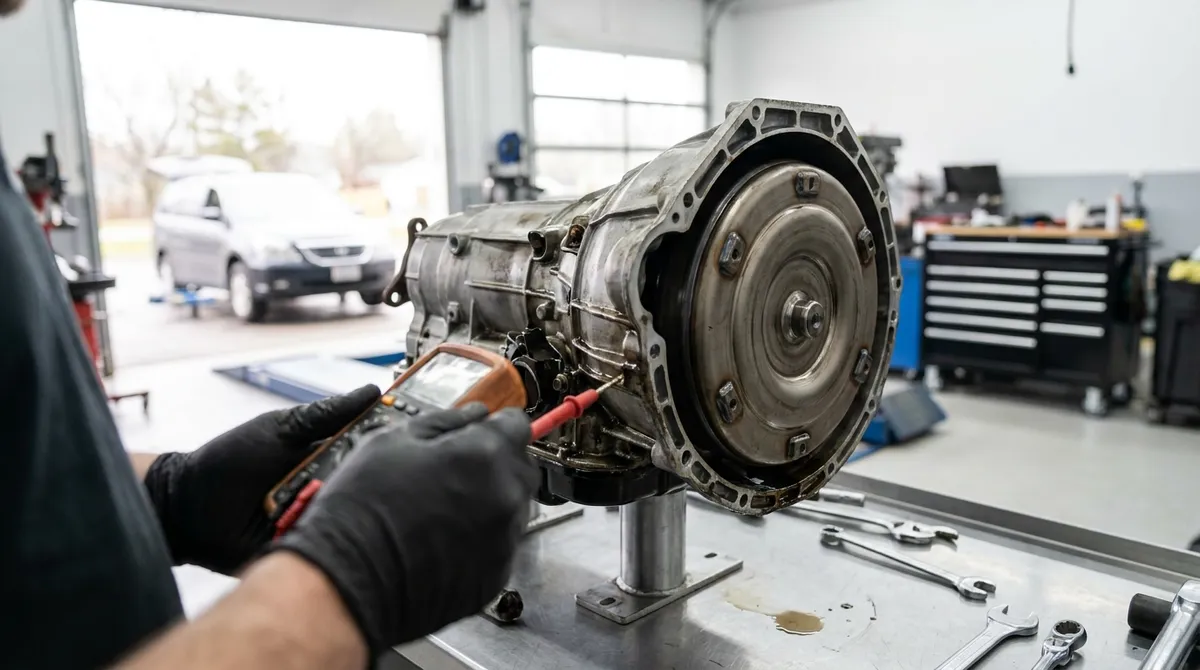
Getting a P0740 code on your scanner means the powertrain control module (PCM) isn’t seeing the right amount of slip from your torque converter clutch (TCC). This usually points to an issue where the TCC isn’t engaging when it should, or it’s not engaging fully. You might notice your engine RPMs are higher than normal on the highway, your fuel economy has taken a hit, or your check engine light is on.
What the Torque Converter Clutch Does
Think of your torque converter as a fluid coupling that transfers power from the engine to the transmission. It lets your engine spin while the car is stopped, but it also creates some slip. To improve fuel economy and reduce heat, most modern automatic transmissions have a torque converter clutch (TCC). This clutch locks the engine’s crankshaft directly to the transmission’s input shaft, essentially making it a direct drive, much like a manual transmission in gear.
When the TCC isn’t locking up, the engine has to work harder, burning more fuel, and generating more heat in the transmission fluid. This can sometimes make your car feel sluggish or like it’s losing power, especially at cruising speeds.
Common Causes of a P0740 Code
The P0740 code usually points to one of a few common problems. The simplest is often low or dirty transmission fluid. If the fluid level is off, or if it’s old and broken down, the TCC can’t engage properly. Transmission fluid does a lot more than just lubricate; it’s also the hydraulic medium that makes the clutch work.
Another frequent culprit is a faulty TCC solenoid. This is an electrical valve that the PCM uses to control fluid flow to engage or disengage the clutch. If the solenoid is stuck open, stuck closed, or electrically faulty, the TCC won’t work right. Wiring problems, like a broken wire or a bad connection to the solenoid, can also cause this code. You can often find details about specific parts and common failures in the MECH AI fix database. Finally, the torque converter itself could be failing. Internal wear or damage can prevent the clutch from locking up.
What to Check First (DIY)
Before you start throwing parts at the problem, there are a few things you can check yourself. First, check your transmission fluid level. Do this according to your car’s owner’s manual – some need to be checked hot, some cold, some with the engine running, some off. If it’s low, top it off with the correct type of fluid.
While you’re at it, check the fluid’s condition. It should be red or light brown and mostly transparent. If it’s dark brown or black, smells burnt, or has metal flakes in it, that’s a sign of bigger trouble. You should also look for any leaks around the transmission pan or cooler lines. A small leak can quickly lead to low fluid, which can cause a range of symptoms.
What it typically costs
The most common cause of P0740 — failed tcc solenoid — typically runs $300–$900 in parts and labor at an independent U.S. shop. Across every cause we track for this code the range is $100–$6,500, because a P0740 can be anything from a cheap sensor to a major component.
These are editorial estimates, not quotes: what you actually pay moves with your region, the shop’s hourly rate, which engine you have, and how much diagnostic time the job takes. Dealer service departments typically sit above these ranges. See the P0740 guide for the full ranked breakdown and per-vehicle details.
When to Take It to the Shop
If the basic fluid checks don’t fix the P0740, or if your fluid looks bad, it’s time to consider taking it to a professional. Diagnosing electrical issues with the TCC solenoid requires a multimeter and often specific wiring diagrams for your vehicle. Replacing a TCC solenoid often means dropping the transmission pan, and sometimes even removing the valve body, which is a job best left to someone with the right tools and experience.
If the problem is the torque converter itself, that’s a major repair. It requires removing the transmission from the vehicle, which is a big job that needs a lift and specialized equipment. A shop can also check for any relevant Technical Service Bulletins (TSBs) for your specific make and model that might address known issues with the TCC. Before you head to the shop, you can use the MECH AI app to get a better idea of what might be going on with your exact car.
A P0740 code isn’t one to ignore. While some checks are simple, many of the repairs involve getting deep into the transmission. Addressing it early can save you from more expensive damage down the road. Get it checked out, whether it’s by you or a trusted mechanic.