P0404 EGR Valve Range Performance: What It Means
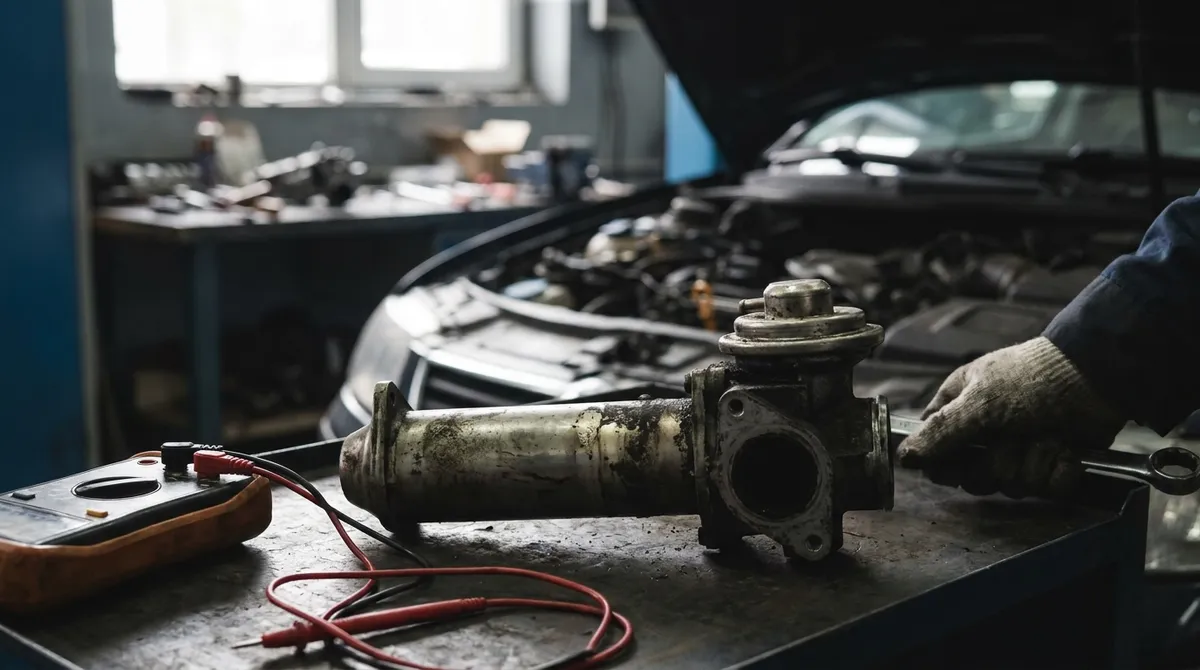
When your check engine light comes on and you pull a P0404 code, it means your vehicle’s computer isn’t happy with how your Exhaust Gas Recirculation (EGR) valve is operating. Specifically, it’s reporting a “range/performance” issue, which is a fancy way of saying the valve isn’t moving or reporting its position within the expected limits. This isn’t just a nuisance light; it points to a problem that can affect how your engine runs.
What the P0404 Code Means
The EGR system is there to do a couple of important jobs. First, it reroutes a small amount of exhaust gas back into the engine’s intake manifold. This lowers combustion temperatures, which helps reduce harmful nitrogen oxide (NOx) emissions. Second, it can improve fuel economy in some driving conditions. The P0404 code means the Powertrain Control Module (PCM) has detected that the EGR valve’s position sensor is sending signals that are out of the expected range, or the valve itself isn’t responding correctly to commands. It’s not necessarily stuck open or closed, but rather not performing its job within the specified parameters.
Common symptoms you might notice with a P0404 include a rough idle, especially when the engine is warm, or a general lack of power during acceleration. You might also hear a knocking or pinging noise from the engine, which is pre-ignition caused by higher combustion temperatures. Of course, the most obvious sign is the check engine light itself. If you’re wondering more about what that light means, we’ve got a rundown on why your check engine light is on.
Common Causes of P0404
Like most engine issues, a P0404 code can pop up for a few reasons. Knowing the usual suspects helps narrow down your diagnosis:
- Clogged EGR Passages: This is probably the most common culprit. Over time, carbon deposits from the exhaust gas can build up in the EGR valve itself or in the passages in the intake manifold where the exhaust gas flows. If these passages are blocked, the EGR system can’t do its job, and the computer sees the valve struggling to move or the gas not flowing as expected.
- Faulty EGR Valve: The valve itself might be sticking due to internal wear, or its internal motor or solenoid might be failing. Even if the passages are clear, a bad valve won’t operate correctly.
- Bad EGR Position Sensor: The sensor that tells the computer where the valve is might be faulty. It could be sending incorrect data even if the valve is physically moving fine, leading the PCM to think there’s a problem.
- Vacuum Leaks (for vacuum-operated EGRs): Some EGR valves are operated by engine vacuum. If there’s a leak in the vacuum lines or a bad vacuum solenoid, the valve won’t open or close properly.
- Wiring Problems: Damaged, corroded, or loose wiring and connectors to the EGR valve or its sensor can interrupt the signal to the PCM, causing it to misinterpret the valve’s operation.
If you’re experiencing a rough idle along with this code, it’s a good bet the EGR system is involved.
How to Diagnose P0404
Diagnosing a P0404 isn’t always a quick fix, but a systematic approach will get you there.
-
Visual Inspection: Start simple. Pop the hood and look at the EGR valve and its surrounding components.
- Check all vacuum lines (if your EGR is vacuum-operated) for cracks, disconnections, or signs of wear.
- Inspect the electrical connector on the EGR valve. Make sure it’s fully seated and that the wires aren’t frayed or corroded.
- Look for excessive carbon buildup around the valve itself. Sometimes you can see it caked up.
-
Test the EGR Valve’s Movement:
- If you have a scan tool with bi-directional control, you can command the EGR valve to open and close while monitoring the position sensor data. It should move smoothly and the sensor readings should change consistently.
- For vacuum-operated valves, you can use a hand-held vacuum pump to apply vacuum directly to the valve. It should open, and the engine idle should typically become rough or stall as exhaust gas is introduced. If it doesn’t move, it’s likely stuck or faulty.
- You can also check the resistance of the EGR valve’s solenoid or motor with a multimeter, comparing it to factory specifications.
-
Check for Clogged Passages: If the valve itself seems to move and respond correctly, the problem might be in the passages. This usually requires removing the EGR valve to visually inspect the ports in the intake manifold for carbon buildup. A small mirror and a flashlight can help here. You can often clean these passages with a carburetor cleaner and a brush, but be careful not to let debris fall into the manifold.
-
Test the Position Sensor: If the valve moves but the P0404 persists, the position sensor might be the issue. You can often test its voltage output with a multimeter while manually moving the valve (if possible) or commanding it with a scan tool. The voltage should change smoothly as the valve moves. Our fix database has specific testing procedures for many common vehicles.
Fixing P0404 and What It Might Cost
Once you’ve pinpointed the cause, fixing a P0404 can range from a simple cleaning to a full replacement.
- Cleaning: If carbon buildup is the problem, cleaning the EGR valve and its passages can often resolve the code. This is the cheapest fix, usually just the cost of a can of cleaner and your time.
- EGR Valve Replacement: If the valve itself is faulty (stuck, bad solenoid, or bad position sensor), it will need to be replaced. The cost of an EGR valve varies widely depending on your vehicle’s make and model, from under $100 to several hundred dollars for the part alone. Labor can add another $100-$300, as access to the valve can sometimes be tricky.
- Vacuum Line/Wiring Repair: If it’s a simple vacuum leak or a damaged wire, the repair cost is usually minimal, often just a new vacuum line or a wiring repair kit.
Ignoring a P0404 isn’t a good idea. While your car might still run, it will likely have reduced fuel economy, higher emissions, and potentially lead to more serious engine issues down the road from excessive heat or pre-ignition. If you’re not comfortable tackling the diagnosis or repair yourself, it’s always smart to take it to a trusted shop. For specific advice on your vehicle, the MECH AI app can help you understand what’s going on under the hood.
Addressing a P0404 code promptly will keep your engine running cleaner and more efficiently. Take the time to diagnose it properly, and you’ll save yourself headaches and potentially bigger repair bills in the future.