P0455 Code: Tracking Down a Big EVAP Leak
When your Check Engine Light comes on and you pull a P0455 code, it means your car’s computer has found a “gross leak” in the Evaporative Emission Control (EVAP) system. Simply put, there’s a big hole somewhere that’s letting fuel vapors escape. While your car might seem to run fine, this isn’t something to ignore.
What a P0455 Code Really Means
The EVAP system is designed to capture fuel vapors from your gas tank and send them to the engine to be burned, rather than releasing them into the air. This keeps harmful pollutants out of the atmosphere. A P0455 code indicates that the leak is significant enough that the system can’t hold vacuum or pressure during its self-test. This is different from a P0442 code, which points to a smaller leak. Sometimes, with a P0455, you might even notice a smell of fuel around your car. For a deeper dive into common causes and fixes specific to your vehicle, check out our P0455 code guide.
Start with the Simplest Fix: Your Gas Cap
Before you get under the car or start tearing things apart, check the gas cap. This is, by far, the most common cause of a P0455 code. It’s easy to forget to tighten it properly, or the cap itself might be old and no longer sealing right.
Here’s what to look for:
- Is it tight? Turn it until it clicks at least a few times.
- Is it damaged? Check the rubber seal on the cap. If it’s cracked, dry-rotted, or missing, it won’t seal.
- Is it the right cap? Make sure it’s the correct cap for your vehicle. An aftermarket cap might not seal as well as an original equipment one.
If you find an issue, replace the cap or tighten it, then clear the code (if you have a scanner) or drive for a few cycles. Many times, the light will go off on its own after a good seal is re-established. If your Check Engine Light is still on after that, it’s time to dig a bit deeper. You can learn more about why your Check Engine Light might be on in our general guide.
Beyond the Cap: Hoses and Canisters
If the gas cap isn’t the problem, the next step is a visual inspection of the EVAP system components. This system typically runs from your gas tank, along the chassis, to the engine bay.
Common leak points include:
- Cracked or disconnected vacuum hoses: Follow the lines from the gas tank, charcoal canister, and purge valve. Look for any hoses that are obviously cracked, split, or have come loose from their fittings. Rodents can also chew through these lines.
- Charcoal canister: This component stores fuel vapors. It’s usually located near the fuel tank. Check for cracks in the canister itself or loose connections where hoses attach.
- Purge valve (or purge solenoid): Often located in the engine bay, this valve controls the flow of vapors to the engine. Check the hoses connected to it for damage or looseness. Sometimes the valve itself can stick open, causing a leak.
- Vent valve (or vent solenoid): Usually near the charcoal canister, this valve opens to allow fresh air into the system. Like the purge valve, check its connections and for any obvious damage.
A thorough visual inspection can take some time, especially if the components are tucked away. Use a flashlight and follow the lines carefully. Look for signs of wear, dry rot, or anything that looks out of place.
What it typically costs
The most common cause of P0455 — missing, loose, or wrong-fit fuel cap — costs nothing to fix if you catch it yourself, and up to $60 in parts and labor at an independent U.S. shop. Across every cause we track for this code the range is $0–$700, because a P0455 can be anything from a cheap sensor to a major component.
These are editorial estimates, not quotes: what you actually pay moves with your region, the shop’s hourly rate, which engine you have, and how much diagnostic time the job takes. Dealer service departments typically sit above these ranges. See the P0455 guide for the full ranked breakdown and per-vehicle details.
When to Take It to the Shop
While checking your gas cap and visually inspecting hoses is something most folks can do in their driveway, tracking down an elusive EVAP leak can be tough. If you’ve checked the obvious stuff and the P0455 code keeps coming back, it might be time for a professional.
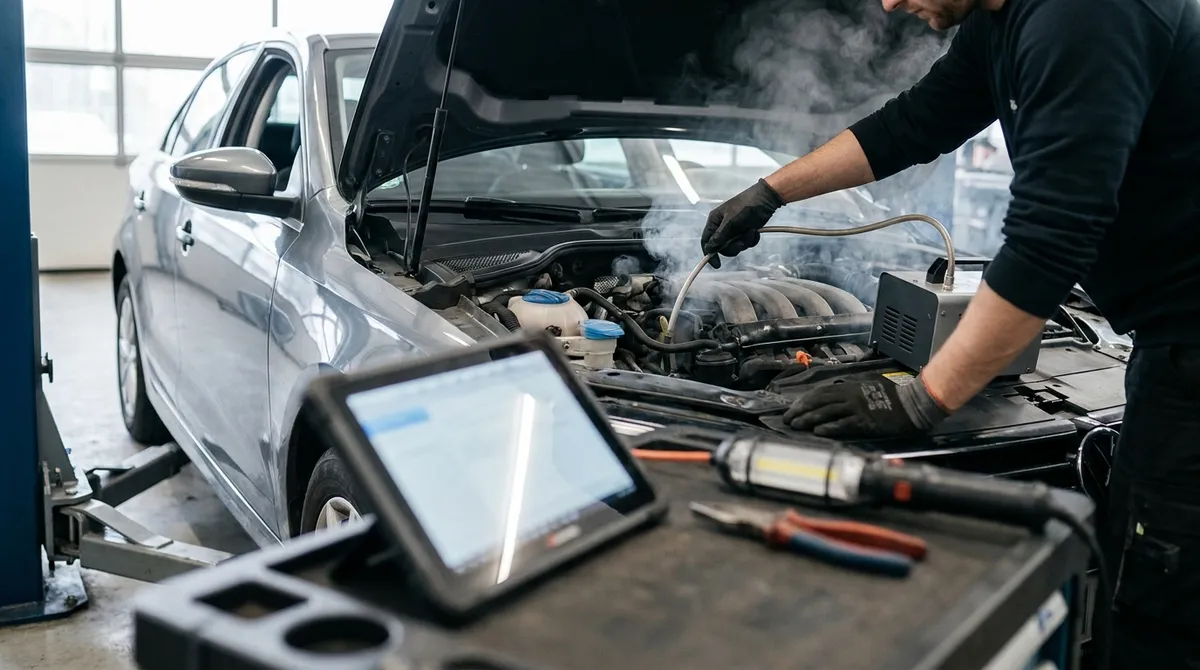
Shops have specialized equipment, like a smoke machine, that pumps smoke into the EVAP system. This makes even tiny leaks visible, showing exactly where the vapor is escaping. It’s a precise way to pinpoint the problem without guessing. While the car might seem to run fine with a gross EVAP leak, it’s an emissions issue and can slightly impact your fuel economy over time. Sometimes, getting a professional diagnostic can save you a lot of time and frustration. If you’re unsure what to check next, the MECH AI app can help you narrow down possibilities based on your specific vehicle.
Tackling a P0455 code starts with the simplest check: your gas cap. If that’s not it, a careful visual inspection of the EVAP hoses and components is the next step. If the leak remains hidden, don’t hesitate to take it to a trusted mechanic who can perform a smoke test and get you back on the road, free of that pesky Check Engine Light.