Intermittent Misfire: What It Means & How to Find It
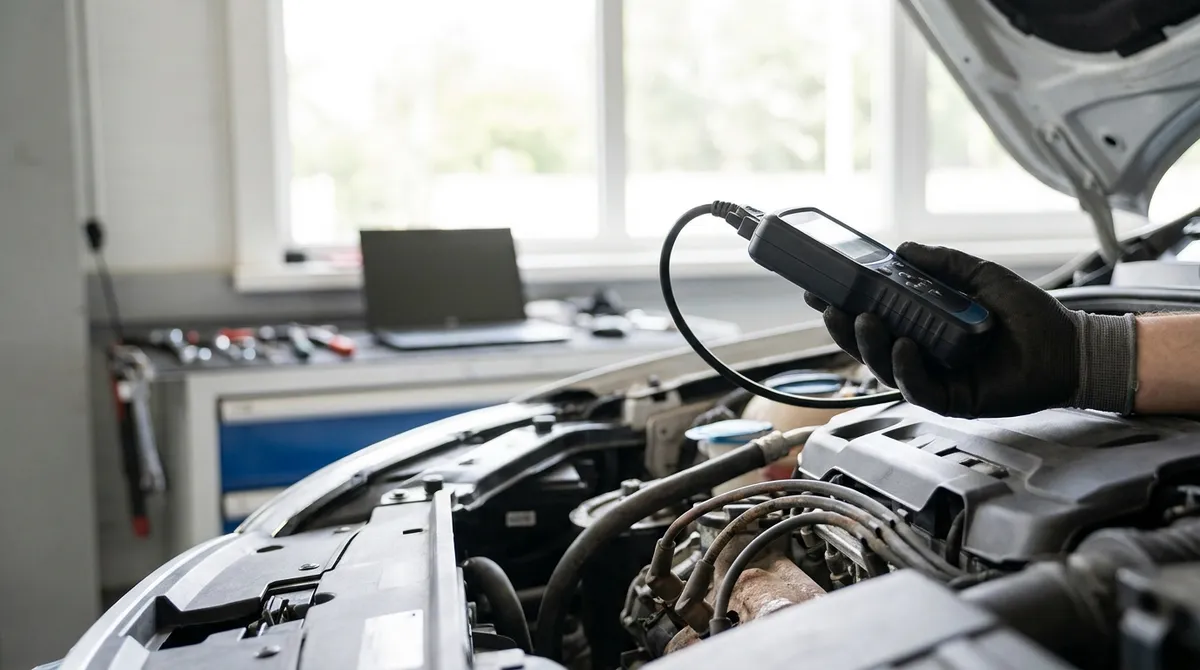
Your engine feels a little rough, maybe shakes a bit, and sometimes the Check Engine Light flashes, then goes off. This isn’t a constant problem, but it’s consistent enough to be annoying and concerning. You’ve likely got an intermittent misfire, and while it’s a pain, it’s usually fixable.
What “Misfire” Really Means
When an engine misfires, it means one of the cylinders isn’t firing correctly. In a gas engine, you need three things for a cylinder to do its job: air, fuel, and spark, all at the right time. If any of those are off, the fuel-air mix doesn’t ignite, or it ignites poorly.
When a cylinder misfires, you’ll feel it. The engine might idle rough, lose power, or get worse gas mileage. If it’s bad enough, the Check Engine Light will come on. If the light is flashing, that means the misfire is serious enough to potentially damage the catalytic converter, so you should address it quickly. For more on what that light means, check out our guide on why your check engine light is on.
Why “Intermittent” Is a Pain
A constant misfire is often easier to track down because the problem is always there. An intermittent misfire, however, only shows up under certain conditions. Maybe it’s when the engine is cold, or hot, or under heavy load, or at a specific RPM. This makes diagnosis trickier, as the problem might not be present when you’re actively looking for it.
The engine’s computer (PCM or ECM) keeps track of misfires. If it sees enough misfires in a certain timeframe, it’ll set a code like P0300 (random/multiple misfire) or P0301 (misfire on cylinder 1), P0302 (misfire on cylinder 2), and so on. Sometimes these codes are “pending” and don’t turn on the Check Engine Light right away, especially if the problem isn’t constant.
First Steps: Checking the Basics
Before you start swapping parts, do some basic checks. A lot of misfires come down to simple issues.
- Spark Plugs: Pull them out and inspect them. Are they worn, fouled with oil or carbon, or do they look burnt? A bad plug can cause an intermittent misfire, especially under load. Make sure the gap is correct for your vehicle.
- Coil Packs/Ignition Wires: If your car has individual coil-on-plug coils, check them for cracks or signs of arcing. If it has a distributor and wires, check the wires for damage or corrosion.
- Fuel Injectors: You can often hear injectors clicking with a mechanic’s stethoscope. If one is quieter or silent, it might be stuck or clogged. You can also check their resistance with a multimeter, though specific values vary by vehicle.
- Vacuum Leaks: A vacuum leak can lean out the air-fuel mixture in one or more cylinders, causing a misfire. Listen for hissing noises around the intake manifold or vacuum lines. You can carefully spray a small amount of unlit propane or starting fluid around vacuum lines and intake gaskets; if the engine RPM changes, you’ve found a leak.
For general troubleshooting tips and other common vehicle issues, our symptom guides hub can point you in the right direction.
Pinpointing the Troublemaker
When the basic checks don’t turn up an obvious culprit, it’s time to get a bit more systematic.
- Scan for Codes: Even if the Check Engine Light isn’t on, connect an OBD-II scanner. Look for any stored or pending P030X codes. This will tell you which cylinder (or cylinders) the computer thinks is misfiring.
- Live Data - Misfire Counters: This is your best friend for intermittent misfires. Many scanners can display “misfire counts” for each cylinder in real-time. Drive the car under the conditions where the misfire usually occurs (e.g., highway speed, uphill, cold start) and watch these counters. When the misfire happens, you’ll see the count jump for the cylinder that’s acting up.
- Component Swapping: Once you’ve identified a suspect cylinder, you can swap parts.
- Coil Pack Swap: If cylinder #3 is misfiring, swap its coil pack with cylinder #1’s coil pack. Clear the codes (if any) and drive the car. If the misfire now shows up on cylinder #1, you know the coil pack is bad.
- Spark Plug Swap: Same idea. Swap the spark plug from the misfiring cylinder with a known good one.
- Injector Swap: This is a bit more involved but can be done if you suspect a fuel injector.
- Compression Test: If you’ve ruled out spark and fuel delivery to a specific cylinder, a compression test can tell you if there’s a mechanical problem, like a bad valve, head gasket, or piston ring. This is less common for intermittent issues but worth checking if all else fails.
Tracking down an intermittent misfire takes patience and a methodical approach. Start with the easiest checks and work your way up. If you’re still stuck, or if you want personalized guidance for your specific vehicle, the MECH AI app can help you narrow down the possibilities and suggest next steps. For a deeper dive into common fixes, our fix database is a good resource.
Frequently asked
What causes an intermittent misfire?
Intermittent misfires often come from a coil or plug that fails only under load or heat, a cracked coil boot arcing when damp, a marginal injector, or a vacuum leak that shifts with engine temperature — which is why they are hard to catch.
How do I find a misfire that comes and goes?
Note exactly when it happens — cold, hot, under load, in the rain — those conditions point to the cause. Freeze-frame data from the code and a live-data misfire counter help localize it. The AI Mechanic can use those clues for your exact engine.
Is an intermittent misfire safe to ignore?
No. Even occasional misfires dump raw fuel into the exhaust and can damage the catalytic converter over time, and they tend to get worse. Track it down before it becomes constant.