P0172 Code: Running Rich Symptoms, Causes & Fixes
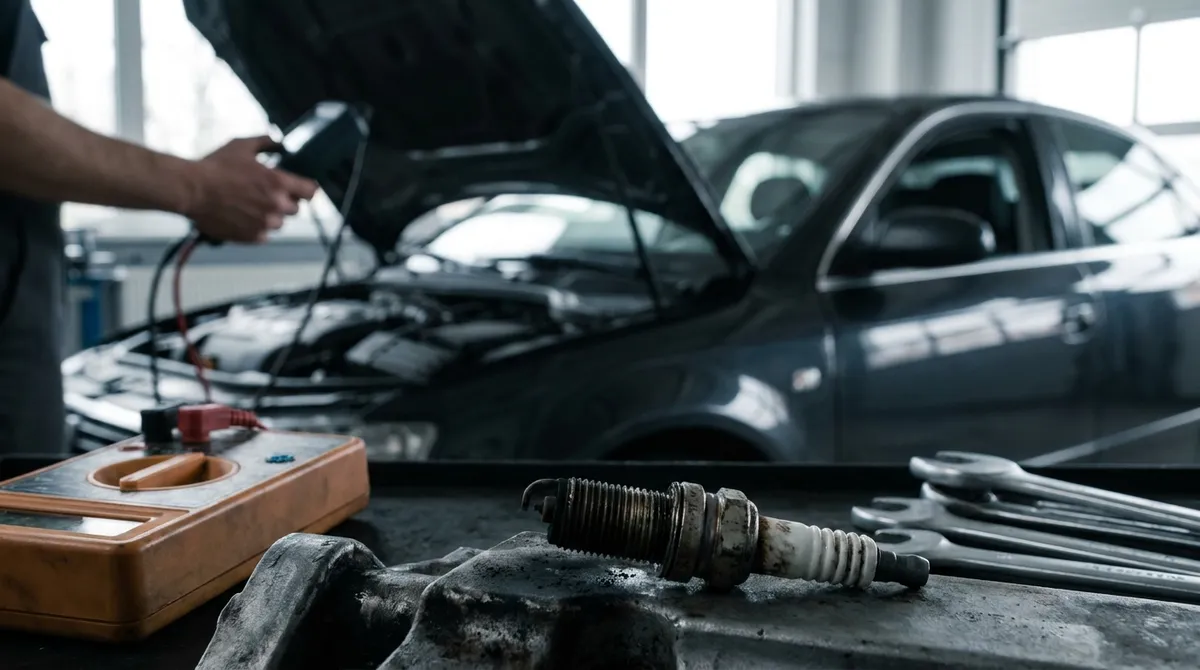
When your check engine light comes on and you pull a P0172 code, your engine’s computer is telling you it’s seeing too much fuel in the exhaust. This is called a “rich” condition, and it means the air-fuel mixture in your engine’s Bank 1 is out of whack.
What “Running Rich” Looks Like
A P0172 code means your engine is getting more fuel than it needs for the amount of air coming in. Think of it like trying to start a campfire with too much lighter fluid – it just smokes and struggles. Bank 1 simply refers to the side of the engine that contains cylinder #1. On a four-cylinder, there’s only one bank. On a V6 or V8, Bank 1 is usually the passenger side.
When your engine runs rich, you might notice a few things:
- Poor Fuel Economy: Burning more fuel than necessary means more trips to the pump.
- Black Smoke from the Exhaust: Unburnt fuel shows up as black, sooty exhaust.
- Rough Idle or Stalling: The engine struggles to run smoothly with the wrong mixture.
- Fuel Smell: You might smell raw fuel, especially around the exhaust.
- Fouled Spark Plugs: The excess fuel can leave deposits on your spark plugs, making them less effective.
- Reduced Power: The engine won’t be as responsive or powerful.
If you’re seeing a P0172 code, it’s worth digging into what’s causing it. You can learn more about what this specific code means for your vehicle and common fixes at /diagnose/p0172/.
Common Culprits Behind P0172
Several things can cause your engine to run rich. It usually boils down to either too much fuel being delivered or not enough air getting into the engine.
Here are the usual suspects:
- Leaky Fuel Injector: If an injector is stuck open or leaking, it’ll dump too much fuel into a cylinder. This is one of the more common causes.
- Fuel Pressure Regulator Failure: A faulty regulator can send too much pressure to the fuel rail, forcing injectors to spray more fuel than they should.
- Faulty Mass Airflow (MAF) Sensor: The MAF sensor measures the amount of air entering the engine. If it’s dirty or failing and reports less air than is actually present, the computer will add less fuel, but if it reports more air than is actually present, the computer will add more fuel, leading to a rich condition.
- Problem with the Upstream Oxygen (O2) Sensor: The O2 sensor tells the computer how much oxygen is in the exhaust. If it’s faulty and incorrectly reports a lean condition (too much oxygen), the computer will try to compensate by adding more fuel, making the engine run rich.
- Clogged Air Filter: A dirty air filter restricts airflow. If the computer doesn’t correctly compensate, it can lead to a rich mixture because there’s not enough air for the amount of fuel.
- EVAP System Issues: A purge valve stuck open can allow fuel vapor to constantly enter the intake manifold, enriching the mixture.
- Engine Mechanical Problems: While less common for a rich code, issues like low compression in a cylinder can prevent proper combustion, leading to unburnt fuel in the exhaust.
Sometimes, a P0172 code might show up with other codes, like misfire codes or other O2 sensor codes. Always check for additional codes to get the full picture. If your engine is running rough, even without a check engine light, you might want to check out our guide on /blog/rough-idle-no-check-engine-light-what-to-check-first/.
How to Start Your Diagnosis
Tackling a P0172 code requires a bit of methodical checking. Here’s where to begin:
- Check for Other Codes: Use an OBD-II scanner to see if any other codes are present. These can point you in the right direction. For example, a P0301 (misfire on cylinder 1) alongside P0172 might suggest a leaky injector on that cylinder.
- Inspect the Air Filter: A quick visual check of your air filter is free and easy. If it’s dirty, replace it.
- Clean the MAF Sensor: Disconnect the MAF sensor and carefully clean it with MAF sensor cleaner. Never use anything else, as it can damage the sensor. Let it dry completely before reinstalling.
- Check for Fuel Leaks: Look and smell around the engine bay for any signs of fuel leaks, especially near the fuel rail and injectors.
- Monitor Live Data: If you have a scanner that can read live data, look at the following:
- Short Term Fuel Trim (STFT) and Long Term Fuel Trim (LTFT): For Bank 1, these numbers will likely be negative, indicating the computer is trying to remove fuel because it sees a rich condition.
- O2 Sensor Readings (Bank 1 Sensor 1): This is the upstream O2 sensor. If it’s stuck high (reading close to 0.9V), it’s reporting a rich condition, which matches the code. If it’s stuck low (reading close to 0.1V) and the fuel trims are negative, the sensor might be faulty.
- MAF Sensor Readings: Compare the grams per second (g/s) reading at idle and at a specific RPM (e.g., 2500 RPM) to what’s typical for your engine.
- Check Fuel Pressure: This often requires a special gauge. Compare the actual fuel pressure to your vehicle’s specifications. Too high, and you’ve found a likely cause.
Remember, sometimes a simple fix like a new air filter or a cleaned MAF sensor can clear the code. Other times, it might be a more involved repair like replacing an injector or an O2 sensor.
What it typically costs
The most common cause of P0172 — leaking or stuck-open fuel injector(s) on bank 1 — typically runs $150–$1,200 in parts and labor at an independent U.S. shop. Across every cause we track for this code the range is $20–$1,200, because a P0172 can be anything from a cheap sensor to a major component.
These are editorial estimates, not quotes: what you actually pay moves with your region, the shop’s hourly rate, which engine you have, and how much diagnostic time the job takes. Dealer service departments typically sit above these ranges. See the P0172 guide for the full ranked breakdown and per-vehicle details.
What to Do Next
Once you’ve done some basic checks, you should have a better idea of what might be causing your P0172 code. If you’ve found a likely culprit, like a dirty air filter or MAF sensor, replace or clean it, then clear the code and drive the vehicle to see if it returns. If the problem persists, or if you’re not comfortable with the diagnosis steps, it’s time to consider taking it to a trusted shop. Sometimes, a professional diagnostic fee is money well spent to avoid throwing parts at a problem.
For more specific guidance on your exact vehicle and its P0172 code, consider using the MECH AI app. It can help you narrow down the possibilities based on your car’s make, model, and year.