P0403 Code: EGR Circuit Malfunction - What to Check
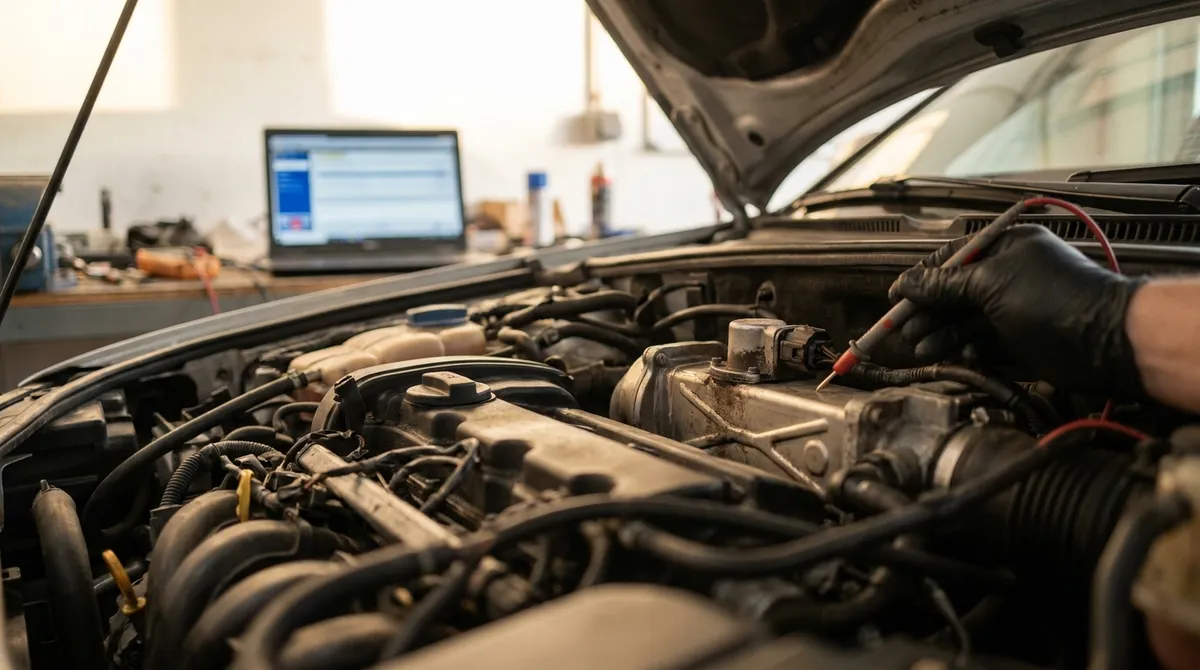
When your check engine light comes on and you pull a P0403 code, it means the powertrain control module (PCM) has detected a problem with the electrical circuit for the Exhaust Gas Recirculation (EGR) system. This isn’t usually a “stop driving now” kind of problem, but it needs attention. Ignoring it can lead to bigger issues down the road, like poor fuel economy or failing an emissions test. If you’re wondering why your check engine light is on, it’s always worth checking the codes.
What the EGR System Does (And Why It Matters)
The EGR system is there to help your engine run cleaner and sometimes cooler. It takes a small amount of exhaust gas and routes it back into the engine’s combustion chambers. This might sound counter-intuitive, but adding inert exhaust gas lowers the combustion temperature. Lower temperatures mean less nitrogen oxide (NOx) emissions, which are a major pollutant.
The main parts of an EGR system often include an EGR valve, a solenoid (which might be integrated into the valve or separate), and some vacuum lines or electrical wiring. The PCM commands the EGR valve to open or close based on engine load, speed, and temperature. The P0403 code specifically points to an electrical problem with this system, not necessarily a mechanical blockage (though blockages can sometimes cause electrical symptoms if the valve can’t move).
Common Causes of a P0403 Code
Since P0403 is about the electrical circuit, you’re looking for issues that disrupt the flow of electricity to or from the EGR valve or its control solenoid. Ignoring an EGR issue can sometimes lead to your car feeling sluggish and losing power over time.
Here are the usual suspects:
- Faulty EGR Valve: The valve itself might have an internal electrical short or open circuit. This is common, as these valves cycle a lot and can wear out.
- Bad EGR Solenoid: If your EGR system uses a separate solenoid to control vacuum to the valve, that solenoid’s electrical windings can fail.
- Wiring Issues: This is a big one. Look for:
- Frayed, broken, or corroded wires: Especially near the EGR valve or solenoid, where heat and vibration are common.
- Loose or corroded connectors: A poor connection can mimic an open circuit.
- Shorts to ground or power: Wires rubbing against engine components can wear through insulation.
- Clogged EGR Passages: While P0403 is electrical, severe carbon buildup in the EGR passages or the valve itself can sometimes cause the valve to draw too much current or bind, leading to an electrical fault code. Think of it like trying to run an electric motor with a seized bearing.
- PCM Failure: This is rare for a P0403 code, but a bad PCM could incorrectly report an EGR circuit malfunction. Always rule out everything else first.
How to Diagnose P0403
Tackling a P0403 code requires a methodical approach. You’ll need a multimeter and ideally a scan tool that can read live data.
- Visual Inspection:
- Start by looking at the EGR valve and any associated solenoids.
- Check the wiring harness connected to them. Are there any obvious signs of damage, fraying, or chew marks (critters love wiring)?
- Inspect the connectors for corrosion, bent pins, or a loose fit. Disconnect and reconnect them a few times to scrub the contacts if they look okay.
- Check any vacuum lines if your system uses them, although P0403 is electrical, a vacuum issue could sometimes indirectly affect electrical readings if the valve is vacuum-actuated with an electrical position sensor.
- Check for Carbon Buildup:
- Remove the EGR valve (if accessible) and inspect it and its mounting passages. If it’s heavily caked with carbon, it might be sticking. Clean it carefully with throttle body cleaner and a brush, or replace it if it’s too far gone.
- Electrical Testing (with a Multimeter):
- EGR Valve/Solenoid Resistance: Disconnect the electrical connector from the EGR valve or solenoid. Use your multimeter to measure the resistance across its terminals. Specified resistance varies a lot between designs, so don’t assume a value — look up the figure your service manual gives for your exact part. If the reading is outside that range, or the meter shows an open circuit, the component is likely bad.
- Wiring Continuity and Voltage:
- With the key on (engine off), check for proper voltage at the EGR connector (usually 12V on one pin, or a 5V reference signal depending on the system).
- Check for a good ground connection at the connector.
- If no voltage or ground, trace the wires back to the PCM or fuse box, checking for continuity and shorts. This can be tedious, but it’s often where the problem lies.
- Scan Tool Live Data:
- If you have a scan tool that can read live data, monitor the EGR valve’s commanded position and actual position (if equipped with a position sensor).
- Command the EGR valve open and closed with the scan tool. Listen for it to click or feel it move. If it doesn’t respond, or the position sensor doesn’t report movement, you’re closer to finding the issue.
If you’re not comfortable with electrical testing or don’t have the right tools, it’s smart to take it to a professional. Sometimes, the cost of a diagnostic fee makes sense to avoid chasing your tail.
What to Do Next
Once you’ve identified the faulty component – whether it’s the EGR valve, a solenoid, or a wiring harness issue – the next step is replacement or repair.
- Replacing the EGR Valve or Solenoid: This is often a straightforward bolt-off, bolt-on job. Make sure to use a new gasket if required.
- Repairing Wiring: If you find damaged wires, repair them properly using solder and heat-shrink tubing, or replace the section of the harness. Don’t just twist wires together; that’s a recipe for future problems.
After any repair, clear the P0403 code with your scan tool and drive the vehicle to see if the code returns. If it does, you might have missed something, or there’s another underlying issue. If you’re stuck and need more specific guidance for your vehicle, the MECH AI app can help you narrow down possibilities based on your exact car’s symptoms and codes.
Sources
- SAE J2012 — Diagnostic Trouble Code Definitions (P04xx auxiliary emission controls)
- HELLA TECH WORLD — Exhaust Gas Recirculation and the EGR Valve
- Pico Technology — Guided Test: Exhaust Gas Recirculation Valve Solenoid
- California Air Resources Board — On-Board Diagnostic II (OBD II) Systems Fact Sheet