Why Your Car Stalls While Driving: What to Check
Your car suddenly cutting out while you’re driving or sitting at a light is more than just an inconvenience; it can be dangerous. When an engine stalls, it’s basically dying because it’s not getting what it needs to keep running. Figuring out why it’s happening usually comes down to one of the engine’s three basic requirements: fuel, air, or spark.
What Happens When Your Engine Stalls?
An engine needs a precise mix of fuel and air, compressed, and then ignited by a spark at just the right time. If any part of this process goes sideways, the engine will stop. Sometimes it’ll sputter and die, other times it’ll just cut out like you turned the key off. A stall can happen at idle, under acceleration, or even at highway speeds. If you’re seeing other weird behavior, like a rough idle, that might give you a clue. You can find more general advice on common car problems in our symptoms guides.
Fuel Delivery Problems
If your engine isn’t getting enough fuel, it’s going to stall. This is one of the most common reasons.
Here’s what to check:
- Low Fuel Pressure: This is often caused by a weak fuel pump or a clogged fuel filter. A bad fuel pressure regulator can also cause issues. If the pump isn’t sending fuel to the engine at the right pressure, the injectors can’t spray enough gas.
- Clogged Fuel Filter: This is a cheap and easy part to replace, and it’s often overlooked. A dirty filter restricts fuel flow, starving the engine.
- Bad Fuel Pump: If the pump is failing, it might work sometimes and not others, leading to intermittent stalling. You might hear a whining noise from the back of the car before it completely gives up.
- Dirty Fuel Injectors: Over time, injectors can get clogged with deposits, leading to an inconsistent spray pattern or not enough fuel getting through.
- Empty Tank: This might sound obvious, but sometimes the fuel gauge can be faulty, or you simply misjudged how far you could go. Always check your fuel level first.
Ignition System Issues
Without a spark, that fuel-air mix isn’t going anywhere. Problems in the ignition system can easily lead to a stall.
Things to look at:
- Worn Spark Plugs: Plugs wear out over time, leading to a weak or inconsistent spark. This can cause misfires and, eventually, stalling.
- Bad Ignition Coils or Coil Packs: Each cylinder (or pair of cylinders) has an ignition coil that steps up voltage for the spark plug. If a coil fails, that cylinder won’t fire, leading to a rough idle and potential stalling.
- Faulty Crankshaft or Camshaft Position Sensor: These sensors tell the engine’s computer (PCM) the exact position of the crankshaft and camshaft. This information is critical for timing the spark and fuel injection. If either sensor sends bad data or fails, the engine won’t know when to spark, and it will stall.
- Distributor Problems (older cars): On older vehicles, a failing distributor cap, rotor, or ignition module can interrupt the spark.
For more on spark plugs and avoiding common ignition issues, check out our guide on spark plugs: gap, torque, and avoiding coil pack trouble.
Air and Sensor Faults
The engine needs the right amount of air, and various sensors tell the computer how much air is coming in. If this information is wrong, the engine’s fuel-air mix will be off, leading to a stall.
Common culprits:
- Mass Airflow (MAF) Sensor: This sensor measures the amount of air entering the engine. If it’s dirty or faulty, it sends incorrect data, causing the engine to get too much or too little fuel.
- Idle Air Control (IAC) Valve: This valve regulates the amount of air that bypasses the throttle plate when your foot is off the gas. If it’s stuck or dirty, the engine can’t maintain a steady idle and will stall, especially when coming to a stop.
- Oxygen (O2) Sensors: These sensors monitor the oxygen content in the exhaust, helping the PCM fine-tune the fuel-air mixture. A bad O2 sensor can lead to an incorrect mixture, causing stalling and poor fuel economy.
- Vacuum Leaks: A leak in a vacuum hose or intake manifold gasket can let unmetered air into the engine, throwing off the fuel-air ratio and causing a stall. You might hear a hissing sound.
- Throttle Position Sensor (TPS): This sensor tells the PCM how far the throttle is open. If it’s faulty, the computer won’t know how much air is entering, leading to incorrect fuel delivery and potential stalling.
- Check Engine Light (CEL): Often, a bad sensor or an issue with the fuel or ignition system will trigger the check engine light. If your light is on, getting the codes read is your first step. Learn more about why your check engine light is on.
Other Potential Causes and Next Steps
While less common for a straight-up stall, other issues can contribute:
- Bad Alternator/Battery: If your car stalls and then won’t restart, or all the dash lights go out, it could be an electrical issue. A failing alternator won’t charge the battery, and eventually, the car will run out of juice and die.
- Transmission Problems: In rare cases, a severe transmission issue (like a seized torque converter) can cause the engine to stall, especially when coming to a stop.
- Engine Control Module (ECM/PCM) Failure: The computer that runs your engine can fail, leading to all sorts of unpredictable problems, including stalling. This is usually a last resort diagnosis.
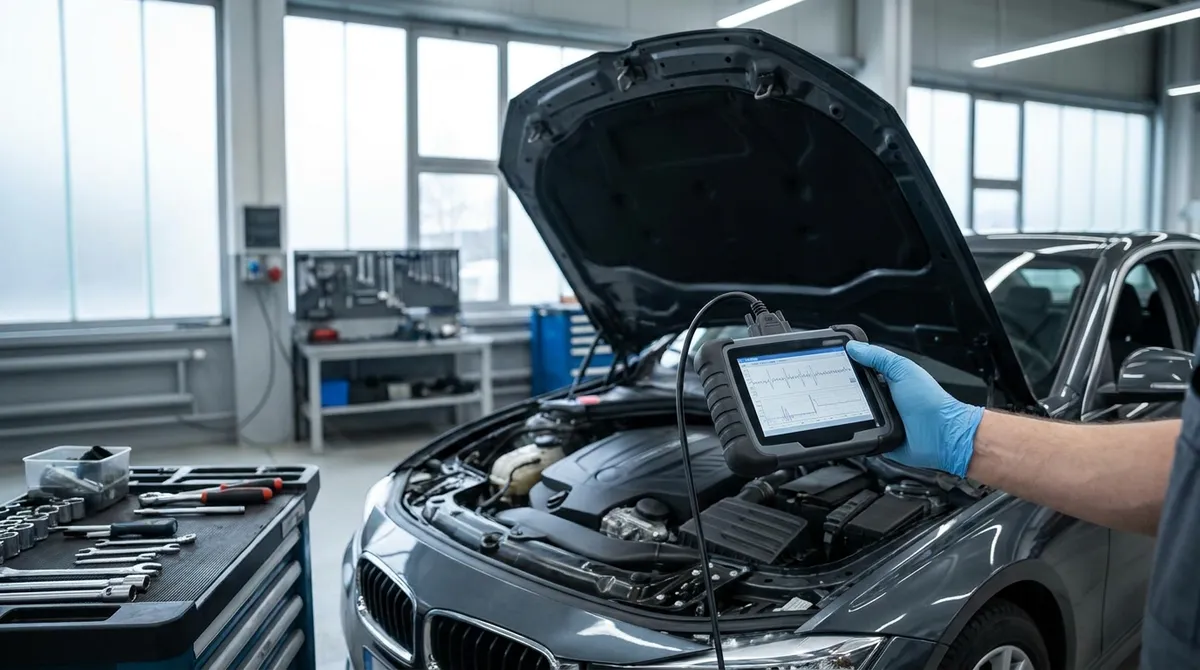
When your car stalls, the best first step is to check for any warning lights and get any diagnostic trouble codes read. Even if the check engine light isn’t on, the computer might have stored a “pending” code. A tool like the MECH AI app can help you pinpoint common issues based on your car’s symptoms and codes, guiding you through the likely culprits. If you’re not comfortable digging into these systems, or if the problem is intermittent and hard to track down, taking it to a trusted mechanic for a full diagnosis is always a good call.