Exhaust Back Pressure Test: What It Is and How to Do It
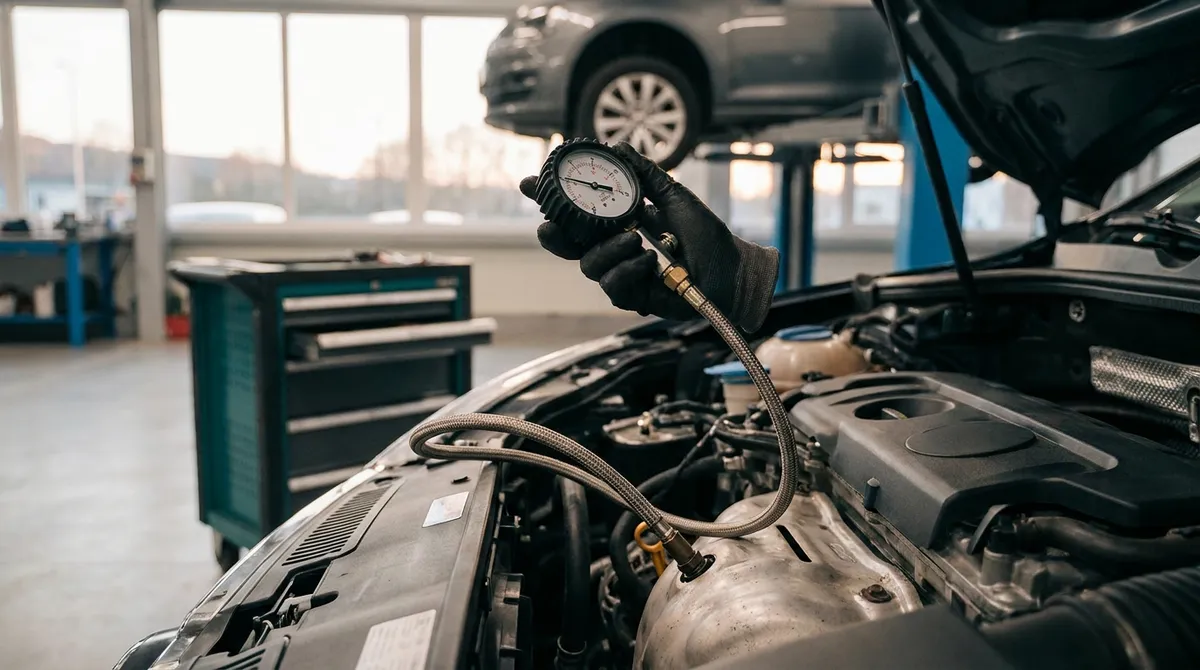
When your engine feels like it’s running with a pillow over its face – sluggish, struggling to accelerate, or losing power uphill – a restricted exhaust system could be the culprit. An exhaust back pressure test is a straightforward way to check if something is choking your engine’s ability to breathe.
What is Exhaust Back Pressure and Why Does It Matter?
Think of your engine as an air pump. It sucks in air and fuel, burns it, and then pushes the exhaust gases out. Exhaust back pressure is simply the resistance those gases meet as they try to leave the engine and travel through the exhaust system. Every exhaust system creates a little back pressure, and engines are tuned with that in mind, but too much is a problem.
When exhaust gases can’t escape easily, they get trapped in the combustion chambers. This means less fresh air and fuel can get in, effectively starving the engine. The result? A significant drop in power, poor fuel economy, and sometimes even engine overheating. The most common reasons for excessive back pressure are a clogged catalytic converter, a crushed exhaust pipe, or a collapsed muffler.
Symptoms of High Exhaust Back Pressure
Your car will usually tell you if it’s struggling with too much back pressure. Keep an eye out for these signs:
- Loss of Power: This is the big one. Your car might feel sluggish, especially when accelerating or going uphill. It just doesn’t have the grunt it used to. If your car feels like it’s always struggling, you might want to read our guide on why your car feels sluggish and loses power.
- Poor Acceleration: Similar to power loss, the car will take longer to get up to speed.
- Reduced Fuel Economy: The engine has to work harder to push out exhaust gases, which burns more fuel.
- Engine Stalls or Runs Rough: At idle, the engine might struggle to maintain a steady RPM, leading to rough idling or even stalling.
- Engine Overheating: Trapped hot exhaust gases can increase engine temperatures.
- Check Engine Light: While not always direct, a clogged catalytic converter, a common cause of high back pressure, often triggers codes like P0420 or P0430, indicating catalytic converter efficiency issues.
Tools You’ll Need
Performing an exhaust back pressure test isn’t complicated, but you’ll need the right gear. Most auto parts stores rent or sell exhaust back pressure gauge kits.
Here’s what you’ll typically need:
- Exhaust Back Pressure Gauge Kit: This usually includes a pressure gauge (measured in PSI or kPa) and various adapters to fit different O2 sensor bungs.
- Oxygen Sensor Socket or Wrench: A specialized O2 sensor socket (often 7/8” or 22mm) is best, as it has a slot for the sensor’s wire. A regular open-end wrench might work but risks damaging the wire.
- Anti-Seize Compound: Essential for reinstalling the O2 sensor to prevent it from seizing in the exhaust pipe.
- Safety Glasses and Gloves: Always protect your eyes and hands, especially when working on a hot engine.
- Jack and Jack Stands (Optional but Recommended): If your O2 sensor is hard to reach from above, you might need to lift the car safely.
How to Perform the Test
Safety First: The exhaust system gets extremely hot. Always let the engine cool down enough to work safely, or wear appropriate heat-resistant gloves. Make sure the car is in park/neutral with the parking brake engaged, and only run the engine outdoors or in a well-ventilated area, never in a closed garage. If you raise the car, support it on jack stands, never on the jack alone.
- Locate the Upstream O2 Sensor: The best place to measure exhaust back pressure is usually at the upstream oxygen sensor bung, located before the catalytic converter. This gives you a reading of the pressure directly from the engine. If that’s inaccessible, you can try the downstream O2 sensor, but the upstream is preferred.
- Carefully Remove the O2 Sensor: Use your O2 sensor socket or wrench. These sensors can be stubborn, especially if they haven’t been removed in a while. Take your time to avoid stripping the threads in the exhaust pipe.
- Install the Gauge Adapter: Thread the correct adapter from your kit into the O2 sensor bung. Make sure it’s snug, but don’t overtighten it. Then, attach the pressure gauge to the adapter, routing the hose away from hot exhaust parts and moving components. Kit hoses are heat-rated but not meant to stay on a hot exhaust for long, so take your readings and shut the engine off.
- Start the Engine: Start the engine and let it warm up to normal operating temperature. This ensures the exhaust system is behaving as it would during normal driving.
- Read the Pressure at Idle: With the engine idling, observe the gauge. A widely used rule of thumb is no more than about 1.25 PSI (8.6 kPa) at idle. Specs vary by make and model, so check the service manual for your vehicle.
- Read the Pressure at Higher RPM: Slowly increase the engine speed to about 2,000 RPM and hold it steady. The same rule of thumb allows no more than about 3 PSI (20.7 kPa) at 2,000 RPM. If the pressure keeps climbing as you hold the RPM, or reads well above the limit, you have a restriction. Keep in mind that revving in neutral puts the engine under little load, so a borderline result may need confirming by a shop under load.
- Snap Throttle Test (Optional): Quickly “snap” the throttle open and then release it. The pressure gauge will spike but should drop back down almost immediately. If it stays high for several seconds, it’s another sign of a blockage.
- Interpret Your Results:
- Low pressure (within spec) at idle and RPM: Your exhaust back pressure is likely not the cause of your engine’s problems. The issue lies elsewhere.
- High pressure at idle and/or RPM: You’ve found your culprit. There’s a restriction in the exhaust system. The higher the pressure, the more severe the blockage.
What to Do Next
If your back pressure test shows a problem, the next step is to figure out exactly where the restriction is.
- Inspect the Exhaust System: Visually check the entire exhaust pipe, muffler, and catalytic converter for any obvious damage like dents, kinks, or crushing. Sometimes a simple physical obstruction is the cause.
- Consider the Catalytic Converter: A clogged catalytic converter is one of the most common causes of high back pressure. If your car has a downstream (post-cat) O2 sensor, repeat the test there. If pressure is high before the converter but much lower after it, the converter is the restriction. If both readings are high, look further back, at the muffler and tailpipe.
- Check the Muffler: While less common, the internal baffles of a muffler can collapse, creating a blockage.
- Use MECH AI: Once you have your back pressure readings, you can use the MECH AI app to input your car’s make, model, and symptoms. The AI can help you narrow down the most likely causes and suggest further diagnostic steps specific to your vehicle.
If your back pressure is normal but your car is still acting up, then you’ll need to look at other systems. Issues with fuel delivery, ignition, or air intake can also cause similar symptoms. Our symptoms hub has guides on many common car problems that can help you continue your diagnosis.