Radiator Fan Not Working? Here's What to Check
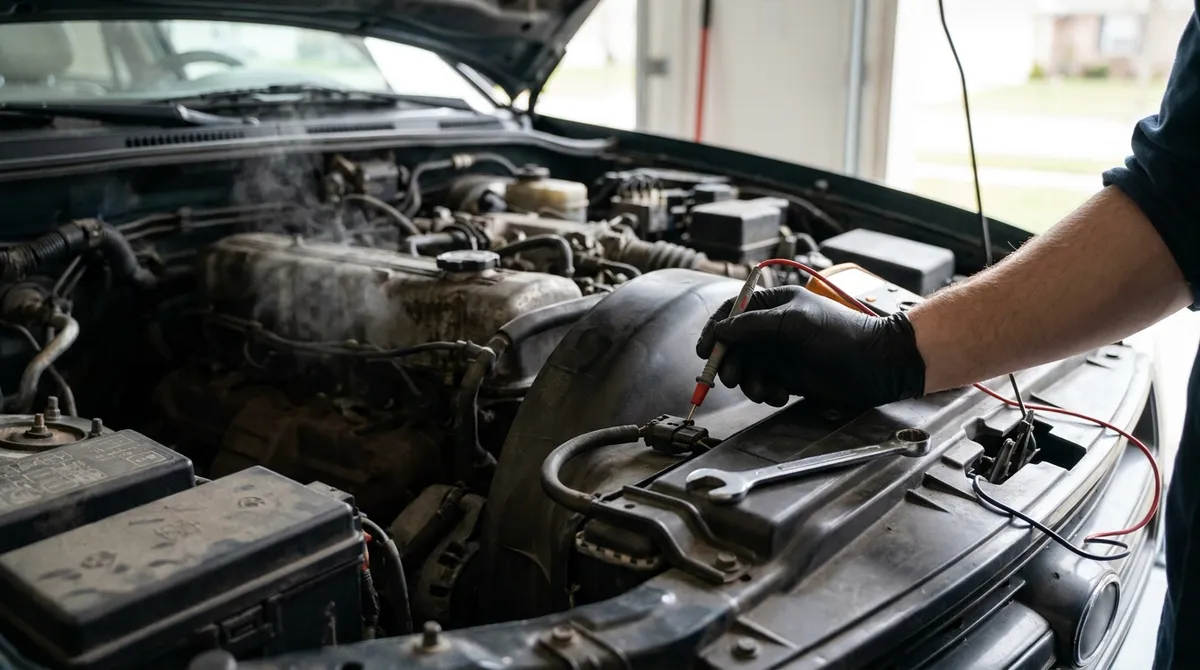
You’re sitting in traffic, watching the temperature gauge creep up, but you don’t hear that familiar hum from under the hood. The radiator fan isn’t kicking on, and your engine is getting hotter than a two-dollar pistol. A non-functioning radiator fan is a common cause of overheating, especially when the vehicle isn’t moving fast enough for natural airflow to do the job.
What Your Radiator Fan Does
The radiator fan has one job: pull air through the radiator to cool the engine coolant. When you’re driving down the highway, the air rushing through the grille does most of the work. But at low speeds, idling, or stuck in traffic, there isn’t enough natural airflow. That’s when the fan needs to kick in.
Most modern cars use an electric fan controlled by the engine’s computer (ECM/PCM), which gets its signal from a temperature sensor. When the coolant hits a certain temperature, the computer tells the fan to turn on. If it doesn’t, you’ve got a problem that needs sorting out before you warp a cylinder head. If you’re noticing other strange behaviors, our general guide to symptoms can help you identify other potential issues.
Common Reasons Your Fan Stops Spinning
When the fan decides to take a vacation, it’s usually one of a few suspects. It’s rarely a mystery worthy of a detective novel, more like finding out who ate the last donut in the breakroom.
Here are the usual culprits:
- Blown Fuse: The fan motor draws a lot of power, and a fuse is there to protect the circuit. If it blows, the fan gets no juice.
- Bad Relay: The relay acts like a switch, allowing a small electrical signal from the computer to control the much larger current needed for the fan motor. If the relay fails, the switch never closes.
- Faulty Fan Motor: Like any electric motor, the fan motor can wear out, burn up, or seize. If the motor itself is dead, nothing else matters.
- Bad Temperature Sensor: If the sensor that tells the computer how hot the coolant is goes bad, the computer might never get the signal to turn the fan on. This can sometimes trigger a Check Engine Light as well.
- Wiring Problems: Frayed wires, loose connections, or corrosion in the fan’s circuit can interrupt the power supply or the signal from the computer.
- ECM/PCM Issue: While less common, a problem with the engine’s computer itself could prevent it from sending the “on” signal to the fan.
What to Check First (DIY Steps)
Before you throw in the towel and call a tow truck, there are a few things you can check yourself. Always make sure the engine is cool and the ignition is off before poking around.
Safety first: On many cars the electric fan can switch on by itself even with the ignition off and the key out, because the engine is still hot. Keep hands, tools, and loose clothing away from the blades, and unplug the fan’s connector before you reach near it. Never open the radiator cap or coolant reservoir on a hot engine; pressurized coolant can cause serious burns. If the temperature gauge reaches the red while you’re driving, pull over safely and shut the engine off.
- Visual Inspection:
- Check the fan blades. Are they intact? Is anything physically blocking them? Sometimes a rock or debris can get wedged in there.
- Look at the wiring going to the fan motor. Are there any obvious breaks, frays, or melted spots?
- Check the Fuses:
- Locate your vehicle’s fuse box (usually under the hood, sometimes under the dash). Your owner’s manual will show you where.
- Find the fuse labeled for the radiator fan (or cooling fan). It’s usually a larger fuse, maybe 30A or 40A.
- Pull the fuse and inspect it. If the wire inside is broken, it’s blown. Replace it with a new fuse of the exact same amperage. If it blows again immediately, you have a short circuit somewhere.
- Test the Relay:
- Again, consult your owner’s manual to find the fan relay. It’s often in the same fuse box.
- You can sometimes test a relay by swapping it with another identical relay from a non-critical system (like the horn relay, if it’s the same type). If the fan works after swapping, you’ve found your problem. If the horn now doesn’t work, you know the relay you moved was good, and the fan relay is bad.
- Test the Fan Motor (Carefully):
- This requires a bit more comfort with electrical work. With the ignition off, you can sometimes disconnect the fan motor’s electrical connector and apply 12V directly from the battery (using jumper wires with an inline fuse for safety). Stand clear of the blades before you connect power; the fan will spin up instantly. If the fan spins, the motor is likely good, and the problem is upstream (fuse, relay, sensor, wiring, or computer). If it doesn’t spin, the motor is probably shot.
- Check for Codes:
- Even if your Check Engine Light isn’t on, a pending code might be stored in the computer, especially if a temperature sensor is acting up. An OBD-II scanner can read these. If you’re looking for more specific help for your exact vehicle, the MECH AI app can walk you through common diagnostics.
When to Call a Pro
If you’ve checked the fuses and relays, visually inspected the wiring, and the fan still won’t come on, it might be time to take it to a professional. Diagnosing a bad temperature sensor, a wiring short, or a faulty ECM/PCM requires specialized tools and knowledge. Don’t guess, as throwing parts at a problem can get expensive quickly. Sometimes, paying a shop’s diagnostic fee makes sense to get a definitive answer.
A non-working radiator fan isn’t just an inconvenience; it’s a direct threat to your engine’s health. Get it fixed promptly to avoid serious damage.