Power Steering Pump or Rack Leak? How to Tell
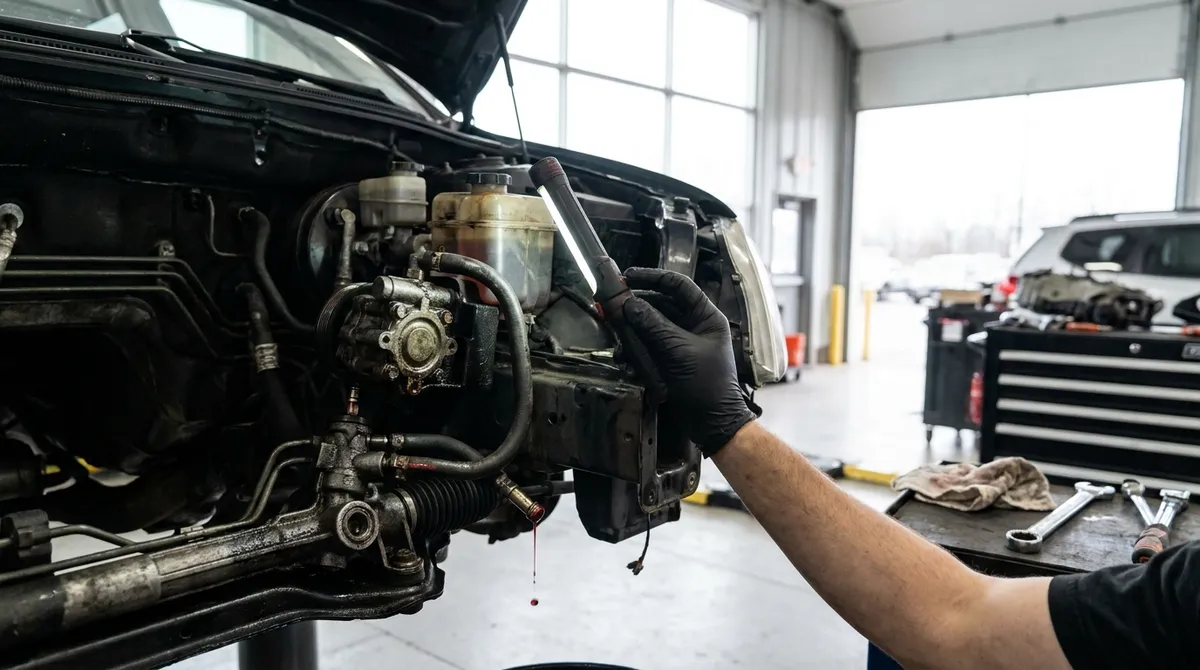
Your power steering system makes turning your wheels easy. When it starts acting up—maybe a whine, a groan, or just a heavy steering wheel—it usually comes down to the power steering pump, a leaking hose, or a leak in the steering rack. Figuring out which one is the problem can save you time and money.
The Job of Power Steering
Before we get into troubleshooting, let’s quickly cover how hydraulic power steering works. A pump, usually driven by the engine’s serpentine belt, pushes hydraulic fluid through hoses to the steering rack (or steering gearbox on many trucks). That fluid pressure helps you turn the wheels with less effort. Many newer vehicles use electric power steering instead, with no pump, hoses or fluid. If your car has no power steering reservoir, this guide doesn’t apply, and a steering-assist warning light is your cue to get it scanned.
A hydraulic system is sealed, so it shouldn’t use fluid. If the level keeps dropping, something is leaking. If you’re trying to track down a car symptom in general, our symptoms guide can help you narrow things down.
Signs of a Failing Power Steering Pump
The power steering pump is a workhorse, but like any mechanical part, it wears out. Here are the common giveaways:
- Whining or Groaning Noise: This is the classic sign. You’ll usually hear it when you turn the steering wheel, especially at low speeds or when parked, and it often changes with engine speed. Low fluid or air in the system causes the same noise, so rule those out before blaming the pump. For more on this symptom, see that whining noise when you turn the wheel.
- Foamy or Bubbly Fluid: If the fluid in the reservoir looks foamy with the engine running, the system is drawing in air. Common entry points are a loose clamp or cracked suction hose, failed O-rings, or a worn pump shaft seal. A pump starved of fluid by a clogged reservoir screen or a pinched return hose can also growl.
- Hard Steering That Gets Worse as It Warms Up: A worn pump often gives decent assist when cold and less once the fluid is hot. Steering that’s heaviest at idle and eases as you rev the engine also points toward weak pump output or a slipping belt.
- Leaks at the Pump Itself: Fluid wetting the pump body, shaft seal or pump-side hose fittings points to the pump or its hoses rather than the rack.
- Belt Squeal: A belt that squeals at full lock is usually worn or loose. A pump that’s binding internally can add extra load, too.
Signs of a Steering Rack Leak
The steering rack turns your steering wheel input into side-to-side movement of the wheels. Its seals are a common spot for leaks.
- Visible Fluid Near the Front Wheels: Power steering fluid is usually red, amber or clear. A drip near the inner tie rods or under the middle of the front subframe points toward the rack or its lines.
- Fluid in the Rack Boots: The rubber bellows on each end of the rack should be nearly dry. A small dampness can be normal on a high-mileage car, but boots full of fluid mean the rack’s end seals are leaking. The boot isn’t the problem; the seal behind it is.
- Consistently Low Fluid Level: If you keep topping off the reservoir and the pump looks dry, the rack and its lines are prime suspects.
- Stiff Steering When Cold: Worn seals inside the rack’s control valve can let pressure bypass internally. That often shows up as sluggish, heavy steering on cold mornings that improves once things warm up, with no external leak at all.
- Uneven Assist: If the steering is noticeably easier in one direction, the rack’s control valve may be at fault. A seized upper strut bearing can feel similar, so have that checked too.
- Burning Smell: If fluid drips onto hot exhaust parts, you may smell it burning. Power steering fluid can catch fire on a hot exhaust, so don’t ignore this one. Our guide on what’s that burning smell can help you sort out the source.
How to Check It Yourself
With a few simple checks, you can often narrow down the problem.
- Check the Fluid Level: With the engine off, check the reservoir. Many have separate “hot” and “cold” marks. If it’s low, top it up only with the fluid type listed in your owner’s manual or on the cap; some cars need a specific fluid, and the wrong one can damage the seals.
- Inspect for Leaks:
- With the engine off and cool, use a flashlight to check the pump, every hose and fitting, and the rack.
- Squeeze the rack boots gently. If they feel full of fluid or are wet on the outside, the rack is leaking.
- Fluid runs downhill and gets blown around while driving, so the wet spot isn’t always the source. Wipe everything clean and check again after a short drive. Shops often add UV dye to find stubborn leaks.
- Look and Listen With the Engine Running:
- Keep hands, hair and clothing well away from the belt and fan. Watch the reservoir for foam.
- Turn the steering wheel slowly from lock to lock. Don’t hold it against the stops for more than a second or two, as that pushes the pump to maximum pressure.
- Listen for groaning or whining. If the noise is loudest at the pump and the fluid is full and bubble-free, the pump is the likely suspect.
- Feel the Steering:
- Note how much effort it takes at a standstill, at low speeds, when cold and when warm. Is it the same both ways? Is there extra play?
What to Do Next
A leaking hose or loose clamp is usually a simpler, cheaper fix than a pump or rack. If the pump is noisy with full, bubble-free fluid and no leaks, the pump is likely on its way out. If the boots are full of fluid, or steering is stiff when cold with no outside leak, the rack is the likely culprit. Leaking racks are usually replaced with a remanufactured unit rather than resealed.
Don’t keep driving on a system that’s losing fluid fast, and don’t let it run dry, which can ruin the pump. If you lose steering assist while driving, the car will still steer but will take much more effort. Pull over safely and have it checked before driving further.
For a definitive diagnosis, take it to a trusted shop. They can pressure-test the pump against the manufacturer’s spec and reach parts that are hard to see from your driveway. For guidance specific to your vehicle, the MECH AI app can walk you through common issues and possible fixes.