Tie Rod Ends: What They Do and When to Replace Them
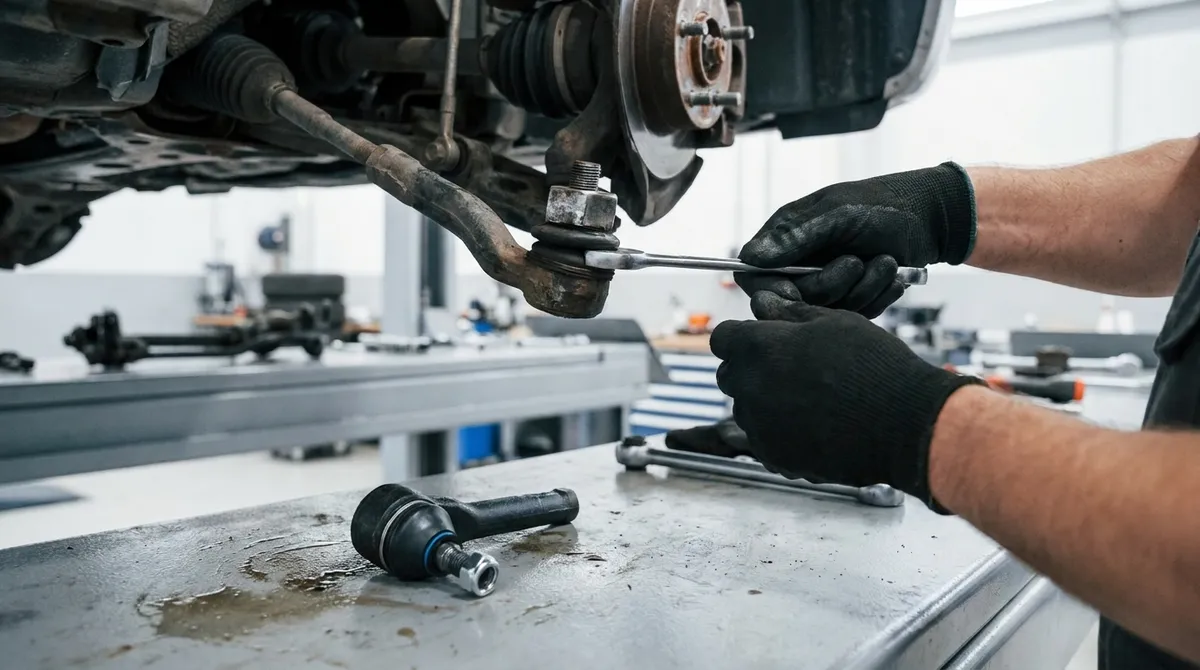
If your steering feels a bit off, or you hear a clunk when you hit a bump, your tie rod ends might be telling you something. These small but mighty parts are critical for keeping your wheels pointed where you want them and your tires wearing evenly. Ignoring them can lead to bigger problems, so it’s worth knowing what to look for.
What Tie Rod Ends Do
Think of your steering system like a puppet show. The steering wheel is your hand, and the tie rod ends are the strings that move the puppet’s feet – in this case, your front wheels. They connect the steering rack (or steering box on older trucks) to the steering knuckle on each wheel.
There are two kinds:
- Outer Tie Rod Ends: These are the ones you can usually see, connecting directly to the steering knuckle. They’re typically easier to get to.
- Inner Tie Rod Ends: These connect to the steering rack itself, tucked away behind a rubber boot. They often require a special tool for removal and replacement.
Both are ball-and-socket joints, allowing the suspension to move up and down while still letting you steer. Over time, like any moving part, they wear out. The grease inside can dry up, the boot can tear, letting in dirt and water, and the joint itself can get loose.
Symptoms of Worn Tie Rod Ends
Your car usually gives you fair warning when tie rod ends are on their way out. Pay attention to these common signs:
- Loose or Sloppy Steering: You might feel like there’s a bit of a delay between turning the wheel and the car actually changing direction. There’s too much play in the steering.
- Clunking or Popping Noises: Especially when going over bumps, turning, or braking. This is often the worn joint rattling around.
- Uneven Tire Wear: If your tires are wearing unevenly, particularly on the inner or outer edges, it could be a sign that your alignment is off due to loose tie rods. This is sometimes called “feathering.”
- Vehicle Pulling: The car might want to pull to one side, even when you’re trying to drive straight.
- Shaking or Vibration: You might feel a vibration in the steering wheel, especially at higher speeds.
- Difficulty with Wheel Alignment: If a shop tells you they can’t properly align your front end, worn tie rods are a common culprit.
If you’re noticing any of these issues, it’s a good idea to check out our main guide on common car symptoms to see what other parts might be contributing.
Diagnosing Worn Tie Rod Ends
Figuring out if your tie rod ends are the problem usually takes a quick inspection. You’ll need to get the front of the car off the ground safely.
- Jack it Up Safely: Use a good floor jack and always, always put jack stands under the frame. Never work under a car supported only by a jack.
- Grab the Wheel: With the wheel off the ground, grab it firmly at the 3 o’clock and 9 o’clock positions (like holding a steering wheel).
- Shake it: Try to push and pull the wheel side-to-side.
- Look and Feel for Play: Watch the tie rod ends. If you see or feel any noticeable movement or clunking where the tie rod connects, that’s a sign of wear. A worn wheel bearing can also let the wheel rock, so have a helper do the shaking while you look closely at the joints themselves to pin down where the play is coming from.
While you’re under there, check the rubber boots on both the inner and outer tie rod ends. If they’re torn, cracked, or leaking grease, that joint is probably on its way out, even if it doesn’t have a lot of play yet. Dirt and water getting into the joint will speed up wear. If you’re unsure what you’re looking at, sometimes just describing what you see and feel to the MECH AI mechanic can help narrow down the possibilities.
Replacing Tie Rod Ends: Inner vs. Outer
Replacing tie rod ends is a job many DIYers can tackle, especially the outer ones. The inner ones are a bit more involved.
General Steps (Outer Tie Rod End):
- Loosen Jam Nut: There’s a jam nut where the outer tie rod end threads onto the inner tie rod (or onto an adjusting sleeve on some trucks with a steering box). Hold the inner tie rod steady with a wrench and break the jam nut loose.
- Remove the Stud Nut: On the stud that goes through the steering knuckle, remove the nut. Many vehicles use a self-locking nut; others use a castle nut with a cotter pin that has to come out first.
- Separate the Joint: Use a tie rod end puller to pop the stud out of the steering knuckle. A pickle fork also works but usually tears the boot, which is fine only because the old part is being replaced — don’t hammer on the knuckle itself.
- Count Turns: Crucial step for a rough alignment: Before unscrewing the old outer tie rod, count exactly how many turns it takes to remove it. This will help you get the new one close to the original position.
- Install New Part: Thread the new outer tie rod end on the same number of turns you counted. Insert the stud into the knuckle and tighten the new nut to spec (check your vehicle’s service manual for the exact torque). If it’s a castle nut, install a new cotter pin.
- Tighten Jam Nut: Once everything is in place, tighten the jam nut to spec.
Inner Tie Rod End (Additional Steps):
- Remove Outer Tie Rod: You’ll usually need to remove the outer tie rod first.
- Remove Steering Rack Boot: Carefully cut or unclamp the large rubber boot that covers the inner tie rod and the end of the steering rack.
- Use a Special Tool: Inner tie rod ends don’t have a hex on them for a wrench. You’ll need a specific inner tie rod removal tool that slides over the end and allows you to use a breaker bar or ratchet to unscrew it from the steering rack. These tools are often available for rent at auto parts stores.
- Install New Inner Tie Rod: Thread the new inner tie rod on, making sure to apply thread locker if specified by the manufacturer. Torque it to spec.
- Install New Boot: Replace the steering rack boot with a new one, securing it with new clamps. This boot is vital for protecting the new inner tie rod from contaminants.
The Most Important Step After Replacement:
No matter if you replace one or all of them, you must get a professional wheel alignment done immediately. Even if you counted turns perfectly, it’s only a rough estimate. Driving without a proper alignment will quickly ruin your new tires and make the car unsafe. Always use the torque specs from your vehicle’s service manual. For vehicle-specific diagnostic help and service bulletins, you can also check the MECH AI database.
Don’t Put It Off
Worn tie rod ends aren’t just an annoyance; they’re a safety concern. They can lead to unpredictable steering, excessive tire wear, and in extreme cases, a complete loss of steering control. If you’re experiencing symptoms, get them checked out. Fixing them promptly will save you money on tires and keep your ride safe and straight.