Car Pulls to One Side (Not Braking): What to Check
A car that pulls to one side can be annoying, and sometimes a bit nerve-wracking. The good news is, if it only happens when you’re driving straight and stops or changes when you apply the brakes, it narrows down the list of suspects. This usually points away from brake problems and more towards your tires, alignment, or suspension components.
Start with Your Tires
Tires are the first thing that touches the road, so they’re often the first place to look for a pull. Even small differences can throw things off.
Here’s what to check:
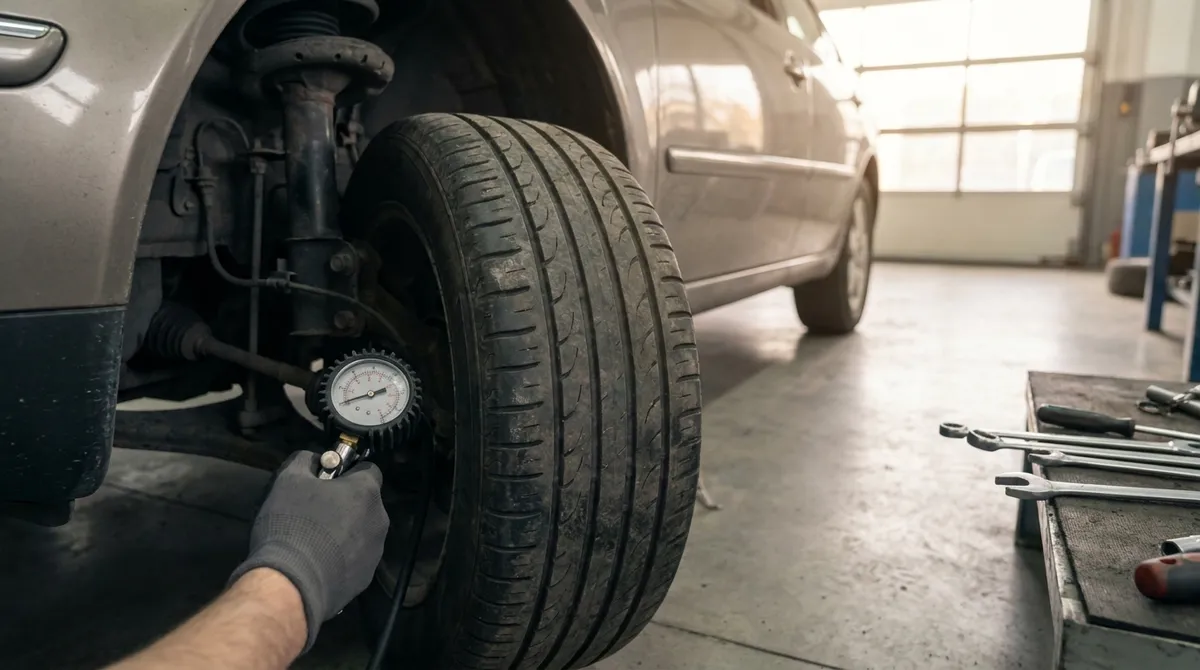
- Tire Pressure: This is the easiest thing to check and fix. Low pressure in one front tire can cause a noticeable pull towards that side. Get a reliable tire gauge and check all four tires. Make sure they match the pressure listed on the sticker inside your driver’s side door jamb, not the max pressure on the tire itself.
- Uneven Wear: Take a good look at the tread on all your tires. Is one side of a tire worn more than the other? Is one tire significantly more worn than its partner on the same axle? Uneven wear can change how the tire grips the road and lead to a pull.
- Mismatched Tires: If you’ve got different brands, tread patterns, or even just significantly different wear levels between tires on the same axle, it can cause a pull. Tires should ideally be the same on all four corners, or at least the same on each axle.
- Tire Separation: Sometimes the internal structure of a tire can fail, creating a bulge or a flat spot that isn’t always obvious until you really inspect it. This can feel like a pull or a wobble. If you’re noticing any unusual behavior, it’s a good idea to consult a comprehensive guide on various car symptoms to help narrow down potential causes.
If you find a tire issue, fixing it (inflating, rotating, or replacing) might solve your problem.
When Alignment is Out of Whack
If your tires look good, the next likely culprit is your car’s alignment. Alignment refers to the angles of your wheels relative to each other and the road. These angles (camber, caster, and toe) are set precisely at the factory, but they can get knocked out of spec over time.
Common reasons for alignment issues include:
- Hitting a Pothole or Curb: Even a seemingly minor bump can shift things.
- Worn Suspension Parts: If parts that hold the alignment in place are loose, the alignment won’t hold.
- Recent Suspension Work: Any time major suspension components are replaced, an alignment is usually required afterward.
An alignment problem will often cause a consistent pull in one direction. You might also notice your steering wheel isn’t centered when you’re driving straight. While you can’t fix alignment at home without specialized equipment, checking your tires first can help confirm if it’s the issue. If you suspect an alignment problem, it’s best to take it to a shop. You can also use tools like the MECH AI app to ask about your specific car’s symptoms and get a better idea of what might be going on before you head to the shop.
Worn Steering and Suspension Components
If tire pressure is good and an alignment doesn’t fix the pull, or if the pull developed suddenly, you’re likely looking at worn or damaged steering and suspension parts. These components keep your wheels pointed in the right direction and absorb bumps. When they get loose or bent, they can cause a pull.
Key parts to inspect (or have a professional inspect):
- Ball Joints: These allow your steering knuckle to pivot while keeping the wheel attached to the control arm. Worn ball joints can introduce play, leading to a pull.
- Tie Rod Ends: These connect your steering rack to the steering knuckles. Inner and outer tie rod ends can wear out, causing slop in the steering and a pull.
- Control Arm Bushings: These rubber or polyurethane bushings cushion the connection between your control arms and the car’s frame. If they’re cracked or worn, the control arm can shift, affecting alignment and causing a pull.
- Struts or Shocks: While less common to cause a direct pull, a severely worn or leaking strut/shock on one side can allow that corner of the car to sag or react differently to road conditions, leading to a pull.
- Wheel Bearings: A severely worn wheel bearing can sometimes cause a pull, though it’s more often accompanied by a grinding or humming noise.
Inspecting these parts usually involves jacking up the car and checking for play or damage. This can be tricky and requires some know-how. If you’re not comfortable doing it yourself, or if you’re looking for more detailed repair information, the MECH AI fix database can provide guidance on common issues and their solutions.
What to Do Next
A car that pulls to one side isn’t just annoying; it can be a safety concern and lead to premature tire wear. Start with the easy stuff: check your tire pressure and visually inspect your tires for any obvious issues. If that doesn’t fix it, or if you suspect a deeper problem with alignment or suspension, it’s time to get a professional opinion. Sometimes, a shop’s diagnostic fee makes sense to accurately pinpoint the problem and ensure it’s fixed right the first time.
Keep diagnosing
If you’re still chasing this one: Symptom guides hub · The MECH AI fix database.