P0430 Code: Bank 2 Catalyst Efficiency Diagnosis
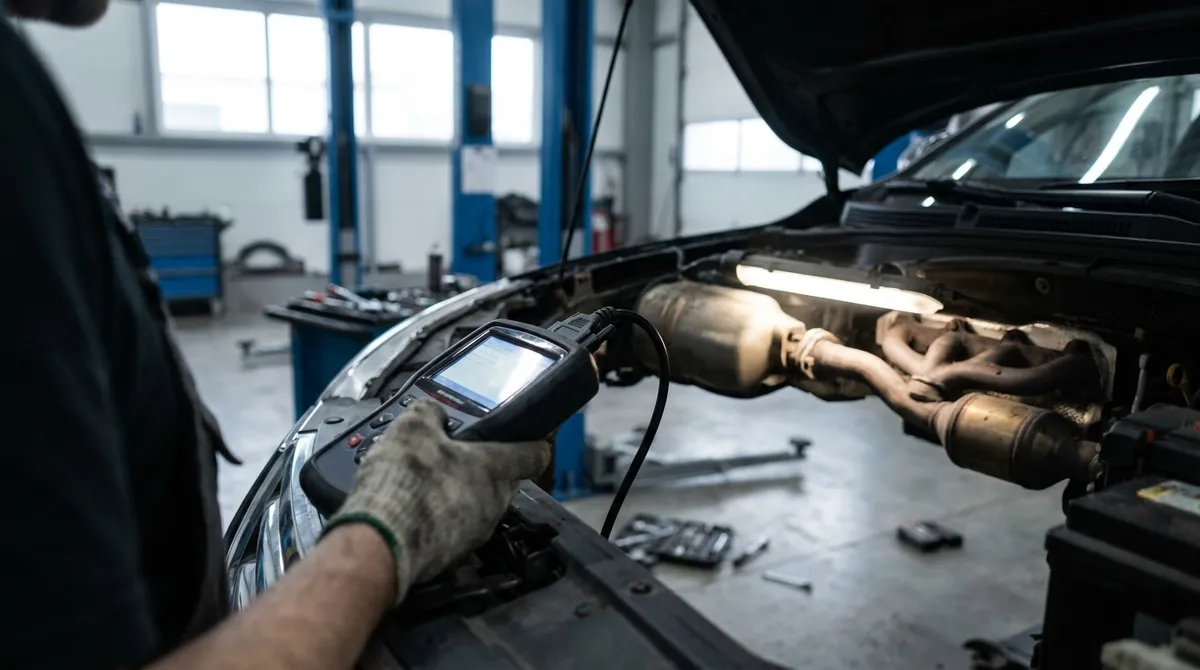
That check engine light can be a real party pooper, especially when it points to something vague like “catalyst efficiency.” If you’re seeing a P0430 code, your car’s computer thinks the catalytic converter on Bank 2 isn’t doing its job. But before you start sweating about a big repair bill, let’s break down what that code really means and how to track down the actual problem.
What P0430 Really Means (and Why it’s Not Always the Cat)
The P0430 code, “Catalyst System Efficiency Below Threshold (Bank 2),” tells you the computer has noticed that the catalytic converter on Bank 2 isn’t cleaning up the exhaust gases like it should. Bank 2 is simply the side of the engine that doesn’t contain cylinder #1. On a V6 or V8, this means one side of the engine; on an inline-four, you’ll only have one bank, so you’d see a P0420 code instead.
Your car’s computer monitors the catalytic converter’s performance by comparing the readings from two oxygen sensors: one before the converter (upstream) and one after it (downstream). The upstream sensor should show a lot of activity, rapidly switching between rich and lean. The downstream sensor, however, should show a much flatter, more stable reading if the converter is doing its job. If the downstream sensor starts mirroring the upstream sensor too closely, the computer decides the converter isn’t efficient enough and sets a P0430 code.
Now, here’s the kicker: the code means the efficiency is low, not necessarily that the catalytic converter itself is dead. Something else could be messing with the exhaust gases or the sensors, making the cat look bad. For a detailed look at what this code means for your specific vehicle and potential costs, check out our P0430 code deep-dive.
Common Culprits Beyond the Converter
Replacing a catalytic converter is expensive, and you don’t want to do it if something else is the real problem. Many issues can trick the computer into setting a P0430 code. Here are the common ones to check before you even think about a new cat:
- Exhaust Leaks: A leak in the exhaust system before the catalytic converter can pull in outside air. This extra air messes with the upstream O2 sensor’s reading, making the computer think the cat isn’t working right. Look for soot marks or listen for hissing.
- Fouled or Failing O2 Sensors: If either the upstream or downstream oxygen sensor is faulty, it can send bad data to the computer. A dirty or slow sensor can give readings that make the cat appear inefficient.
- Engine Misfires: Unburnt fuel from misfiring cylinders can get into the exhaust system and overheat or contaminate the catalytic converter, damaging it over time. If you’ve had a persistent misfire, even if it’s fixed now, it could have already taken a toll on the cat.
- Oil or Coolant Consumption: If your engine is burning oil or coolant, those contaminants can coat the catalyst material, reducing its effectiveness and eventually clogging it.
- Rich or Lean Fuel Mixtures: Problems with fuel injectors, fuel pressure, or a mass air flow (MAF) sensor can cause the engine to run too rich (too much fuel) or too lean (not enough fuel). Either condition can overload the catalytic converter or prevent it from working properly. If your check engine light is on for other reasons alongside P0430, address those first.
How to Diagnose P0430 (Without Guessing)
Don’t just throw parts at it. A proper diagnosis can save you a lot of cash.
- Visual Inspection: Start simple. Get under the car (safely!) and look for obvious exhaust leaks. Check the O2 sensor wiring for damage, corrosion, or signs of being chewed by critters. Look for any signs of oil or coolant leaks from the engine.
- Scan Tool Data: This is where you earn your stripes. A good scan tool can show you live data from your O2 sensors.
- Upstream O2 Sensor: Should switch rapidly and consistently.
- Downstream O2 Sensor: Should show a relatively flat line, especially once the engine is warm. If it’s mimicking the upstream sensor, that’s a strong sign the cat isn’t doing its job, or the sensors are bad.
- Fuel Trims: Check short-term and long-term fuel trims. High positive numbers can indicate a lean condition (vacuum leak, fuel delivery issue), while high negative numbers suggest a rich condition (leaking injector, bad fuel pressure regulator). These can affect cat efficiency.
- Backpressure Test: If you suspect a clogged catalytic converter, a backpressure test can confirm it. This involves temporarily removing an O2 sensor and installing a pressure gauge. High backpressure indicates a restriction.
- Smoke Test: For exhaust leaks, a smoke machine is the best way to find even tiny cracks or loose connections that might be throwing off your O2 sensor readings.
If you’re unsure about interpreting live data or performing these tests, it might be time to use a more advanced tool. Our AI Mechanic can help you make sense of the data and guide you through the diagnostic process for your specific vehicle.
What it typically costs
The most common cause of P0430 — worn or contaminated catalytic converter on bank 2 — typically runs $600–$2,400 in parts and labor at an independent U.S. shop. Across every cause we track for this code the range is $100–$3,500, because a P0430 can be anything from a cheap sensor to a major component.
These are editorial estimates, not quotes: what you actually pay moves with your region, the shop’s hourly rate, which engine you have, and how much diagnostic time the job takes. Dealer service departments typically sit above these ranges. See the P0430 guide for the full ranked breakdown and per-vehicle details.
What to Do Next
Once you’ve done your homework, you’ll have a better idea of the actual problem.
First, clear the code and drive the car for a bit. Sometimes, especially after a minor issue or a long drive, the computer might set the code prematurely. If it comes back, you know you’ve got a persistent problem.
If you find an underlying issue like an exhaust leak, a bad O2 sensor, or an engine misfire, fix that first. Don’t replace the catalytic converter until you’ve addressed the root cause. If you put a new cat on an engine that’s still burning oil or misfiring, you’ll just kill the new one too, and that’s a waste of good money.
If, after thorough diagnosis, all signs point to a truly failed catalytic converter, then it’s time to consider replacement. It’s a significant repair, but necessary for emissions and sometimes for the car to run right. For general repair information and common fixes, our MECH AI database can be a handy resource.
The P0430 code doesn’t have to be a death sentence for your wallet. With a little methodical diagnosis, you can pinpoint the real issue and fix it right, rather than just guessing.