P0101 Code: MAF Sensor Symptoms, Causes & Fixes
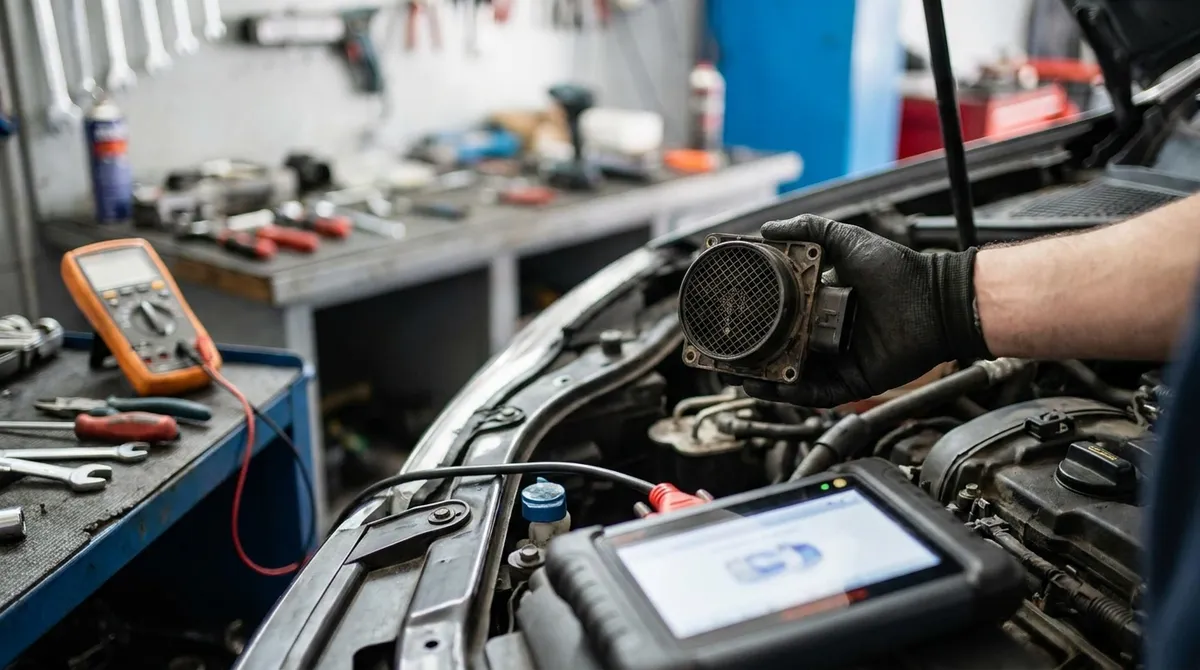
When your check engine light comes on and you pull a P0101 code, it means your engine’s computer isn’t getting the signal it expects from the Mass Air Flow (MAF) sensor. Don’t just jump to replacing the MAF sensor, though. This code often points to other issues in the air intake system, and understanding why your check engine light is on is the first step to a proper fix.
What the P0101 Code Actually Means
The MAF sensor is like the engine’s air traffic controller. It measures how much air is flowing into the engine, which is critical for the computer to calculate the right amount of fuel to inject. If that measurement is off, your engine can run too rich or too lean, leading to all sorts of performance problems.
A P0101 code specifically indicates a “Mass Air Flow (MAF) Sensor Performance Problem.” This means the signal from the MAF sensor isn’t matching up with what the engine’s computer expects based on engine speed, throttle position, and other readings. It’s not necessarily a complete failure, but rather an inconsistency. For a detailed breakdown of costs and common fixes for your specific vehicle, check out our P0101 code deep-dive.
You might notice symptoms like:
- A rough idle or stalling
- Hesitation or sluggish acceleration
- Poor fuel economy
- Sometimes, no noticeable symptoms at all, just the light
Common Culprits Behind a P0101
Before you even think about buying a new MAF sensor, it’s important to understand that the P0101 code often points to something else in the air intake system. The MAF sensor might be reporting correctly, but the air it’s measuring isn’t what the engine should be getting.
Here are the usual suspects:
- Vacuum Leaks: Any unmetered air getting into the engine after the MAF sensor will throw off the readings. Think cracked vacuum lines, a loose intake manifold gasket, or even a faulty PCV valve. This is a common cause of a rough idle and can definitely trigger a P0101.
- Dirty MAF Sensor: Over time, dirt, dust, and oil vapor can build up on the MAF sensor’s hot wire or film. This insulation makes the sensor read less airflow than is actually entering the engine. It’s like trying to read a ruler through a foggy window.
- Air Filter Issues: A clogged air filter restricts airflow, which the MAF sensor will accurately report. But if the computer expects more air for a given throttle position, it’ll see this as a “performance problem.” Conversely, a poorly seated or aftermarket air filter that lets unfiltered air bypass the sensor can also cause issues.
- Intake Air Leaks (Pre-MAF): Leaks before the MAF sensor, like a loose air box lid or a crack in the intake tube, mean the MAF sensor isn’t measuring all the air entering the system.
- Wiring Problems: Frayed wires, corroded connectors, or a loose plug to the MAF sensor can cause intermittent or incorrect signals.
- Exhaust Leaks: Believe it or not, an exhaust leak, especially before the oxygen sensors, can sometimes trick the engine’s computer into thinking there’s an air intake problem because it affects the oxygen sensor readings, which then influence fuel trim calculations.
Your Diagnostic Checklist
Don’t just clear the code and hope it goes away. Here’s a practical approach to tracking down the real issue:
- Visual Inspection:
- Check the air filter. Is it clean and seated correctly?
- Inspect the entire air intake tube from the air box to the throttle body. Look for cracks, loose clamps, or tears.
- Examine all vacuum lines for cracks, disconnections, or signs of wear. Pay close attention to hoses connected to the intake manifold.
- Check the MAF sensor connector. Is it fully seated? Are the wires leading to it intact and free of damage?
- Clean the MAF Sensor:
- This is cheap, and it fixes the problem often enough to be worth doing before anything else. Unplug the connector and remove the sensor from the intake tube.
- Use a dedicated MAF sensor cleaner. Never use carburetor cleaner, brake cleaner, or compressed air — they’ll damage the delicate hot wire or film element.
- Spray the element, don’t scrub it. Nothing should physically touch the wire.
- Let it dry completely before reinstalling and reconnecting.
- Watch Live Data: If you have a scan tool that reads live data, watch the MAF reading at idle and as you bring the revs up. It should climb smoothly and steadily with engine speed. A reading that’s flat, jumpy, or drops out points toward the sensor or its wiring rather than toward the air reaching it.
What it typically costs
The most common cause of P0101 — dirty maf sensor (oil film or dust on the hot-wire elements) — typically runs $15–$80 in parts and labor at an independent U.S. shop. Across every cause we track for this code the range is $15–$450, because a P0101 can be anything from a cheap sensor to a major component.
These are editorial estimates, not quotes: what you actually pay moves with your region, the shop’s hourly rate, which engine you have, and how much diagnostic time the job takes. Dealer service departments typically sit above these ranges. See the P0101 guide for the full ranked breakdown and per-vehicle details.
Before You Buy a Sensor
Work through the free checks first. A cracked intake tube, an air box lid that isn’t clipped down, or a dirty sensor element costs nothing to rule out, and any one of them will set a P0101 with a perfectly good sensor installed. That’s the trap this code sets, and it’s why so many people end up with a new MAF sensor and the same light.
If you’ve cleaned the sensor, sealed up the intake tract, and the code comes right back, replacement starts to make sense. If you’d rather not guess, a shop can compare what your MAF is actually reporting against what your engine should be pulling at a given load — that’s the test that settles it.