P0440 EVAP System Gross Leak: Tracking Down the Problem
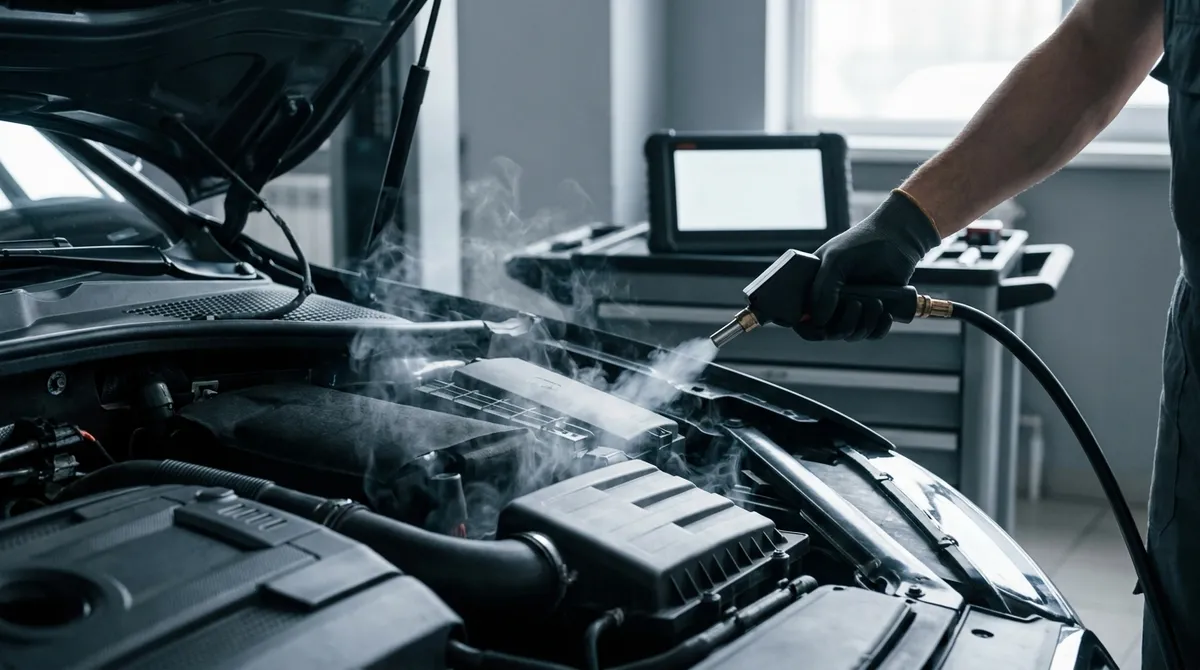
When your check engine light comes on and you pull a P0440 code, it means your vehicle’s Evaporative Emission Control (EVAP) system has a “gross leak.” That’s just a fancy way of saying there’s a pretty big hole somewhere, letting fuel vapor escape into the air. While it usually won’t leave you stranded, it’s a problem that needs fixing.
What the EVAP System Does and Why P0440 Matters
Your car’s EVAP system is designed to capture fuel vapors from the gas tank and engine, store them, and then send them to the engine to be burned. This keeps harmful pollutants out of the atmosphere. When the system detects a gross leak, it means a significant amount of vapor is escaping, which is bad for the environment and will cause your car to fail an emissions test. Unlike some other codes, a P0440 usually doesn’t cause noticeable driving problems like a rough idle or stalling, though you might occasionally catch a whiff of fuel. If you’re seeing a P0440, it’s a good idea to dig into the specifics for your vehicle, which you can do with a deeper look at the P0440 code.
Common Culprits for a Gross Leak
Most of the time, a P0440 is caused by something relatively straightforward. It’s about finding where that big leak is. Here are the usual suspects:
- Loose or Faulty Gas Cap: This is the number one cause for almost any EVAP leak code, including P0440. If the cap isn’t tightened properly, or if its rubber seal is cracked or missing, vapors will escape. It’s the cheapest and easiest thing to check first.
- Damaged EVAP Hoses: The EVAP system uses a network of rubber and plastic hoses to move fuel vapors. These hoses can crack, split, or become disconnected over time due to age, heat, or even rodent damage. A large crack or a completely disconnected hose will definitely trigger a gross leak code.
- EVAP Canister Damage: The charcoal canister stores fuel vapors. If it’s physically cracked or damaged, it can create a large leak point. This isn’t as common as a bad gas cap or hose, but it does happen.
- Stuck Open EVAP Vent Valve/Solenoid: The vent valve opens and closes to allow fresh air into the EVAP system during the purge cycle. If it’s stuck open, it creates a constant opening to the atmosphere, which the system interprets as a gross leak.
- Stuck Open EVAP Purge Valve/Solenoid: The purge valve controls the flow of fuel vapor from the canister to the engine. If it’s stuck open, it can also lead to a system leak, though this is more often associated with a different set of codes.
A gross leak is a bigger opening than what you’d find with a P0455 code, but the troubleshooting steps are often similar.
How to Track Down the Leak (DIY Checks)
Before you take it to a shop, there are a few things you can check yourself:
- Check Your Gas Cap: Seriously, start here. Remove it, inspect the rubber seal for cracks, and then reinstall it, making sure it clicks at least 2-3 times. Drive for a bit, and see if the check engine light clears itself after a few drive cycles.
- Visual Inspection of Hoses: Pop the hood and look for any obvious disconnected or severely cracked vacuum lines, especially those running to and from the EVAP purge valve on the engine. Also, get under the car (safely, with jack stands!) and inspect the hoses around the fuel tank, leading to and from the charcoal canister. Look for chew marks, loose connections, or visible splits.
- Listen for Hissing: With the engine off and the gas cap removed, sometimes you can hear a faint hissing sound if there’s a very large leak. This is rare for a P0440, but worth a listen.
If these basic checks don’t reveal anything, a professional smoke test is usually the next step. A shop will inject smoke into the EVAP system and watch for where it comes out, pinpointing the leak. If you’re unsure where to start or want to narrow down the possibilities for your specific car, the AI Mechanic can often provide a good starting point based on your vehicle’s make and model.
What to Expect for Repairs
The cost to fix a P0440 can vary significantly based on what’s causing it.
- Gas Cap: This is a cheap fix, usually under $30 for a new OEM cap.
- EVAP Hoses: If it’s a simple hose replacement, it might be $50-$150 for parts and labor, depending on accessibility.
- EVAP Vent or Purge Valve: These parts can run from $50 to $200, plus an hour or two of labor, putting the total between $150 and $400.
- EVAP Canister: This is usually the most expensive component to replace, with parts ranging from $150 to $500 or more, plus a couple of hours of labor, potentially pushing the total over $700.
While a P0440 won’t strand you, it’s not a code to ignore. It’s an emissions issue that will prevent your car from passing inspection, and it’s always better to address these things before they potentially lead to other problems. You can explore common fixes and costs for various issues in the MECH AI fix database.
A P0440 code is a clear signal that your EVAP system isn’t sealing up like it should. Start with the easy stuff like the gas cap and visual inspections. If that doesn’t do the trick, it’s time to consider a professional diagnosis to pinpoint the leak and get your vehicle back in top shape.