Heater Blowing Cold Air? Check These Common Causes
A car heater blowing cold air on a chilly morning is more than just uncomfortable; it can make your windshield fog up and reduce visibility. When your car’s heat goes out, it’s usually one of a few common culprits. This guide will help you figure out what’s going on.
How Your Car’s Heater Works
Before we start poking around, it helps to know the basics. Your car’s heating system isn’t some fancy, separate unit. It’s actually a clever use of your engine’s own heat. Hot coolant, which circulates through the engine to keep it from overheating, also flows through a small radiator called the heater core, usually located behind your dashboard. A fan blows air across this hot heater core, and that warmed air gets directed into the cabin. A blend door, controlled by an actuator, mixes hot and cold air to get the temperature you set.
Start with the Obvious: Basic Checks
Before you assume the worst, rule out the simple stuff. These are the first things any mechanic would look at when you report a lack of heat. You can find more general guides on common car troubles in our symptoms hub.
- Coolant Level: This is the big one. If your engine doesn’t have enough coolant, it can’t transfer heat to the heater core. Check the coolant reservoir first, then carefully check the radiator cap (only when the engine is cold!). If it’s low, top it off with the correct coolant type for your vehicle. A continuously low coolant level points to a leak, which needs fixing.
- Air in the Cooling System: Air pockets can block coolant flow to the heater core, and they are common after a coolant flush, a hose replacement, or any repair that drained the system. Bleeding (“burping”) that air out is a real fix, but the procedure is vehicle-specific — many modern cars have a dedicated bleeder valve or need a no-spill funnel, and some have to be bled in a set order. Look up the documented procedure for your make and model rather than improvising. Never open a cooling system that is not completely cold: a warm system is still pressurized and will spray scalding coolant.
- Thermostat: If your engine isn’t reaching its normal operating temperature, the coolant won’t be hot enough to provide cabin heat. Watch your temperature gauge. If it stays low, or takes a very long time to warm up, a stuck-open thermostat might be the problem.
- Blower Motor: Is any air coming out of the vents? If not, the issue might be with the blower motor or its resistor, not the heat itself.
Diagnosing a Faulty Blend Door Actuator
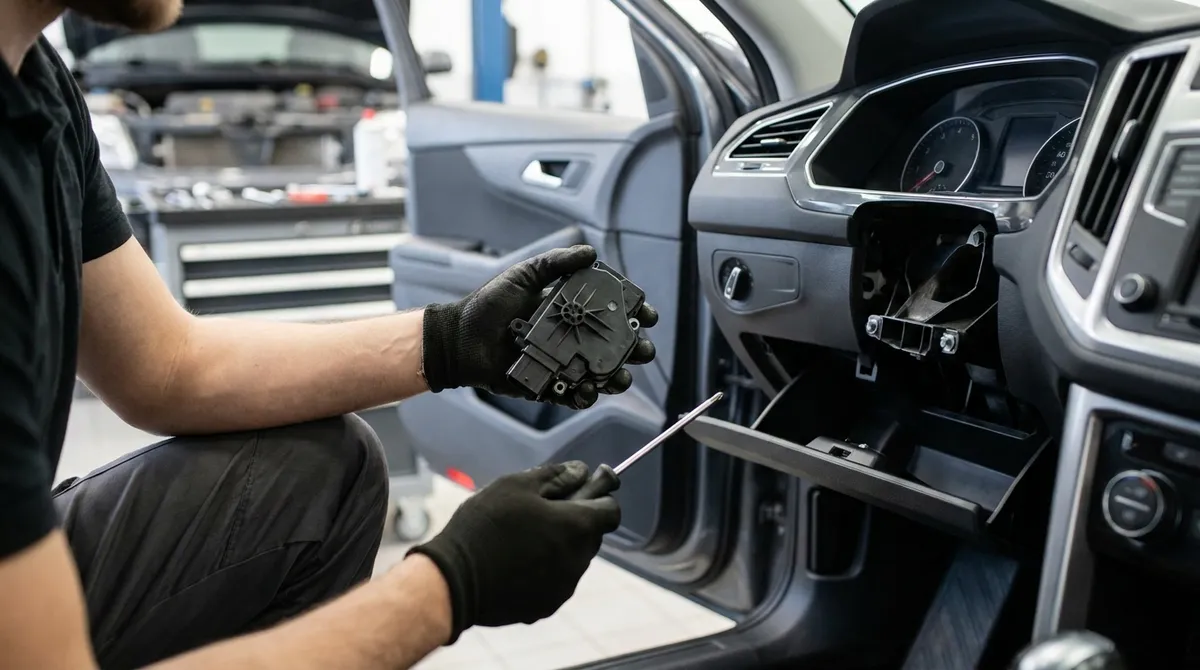
If you’ve got plenty of hot coolant and the engine is at temperature, but still no heat, the blend door actuator is a common suspect. This small electric motor opens and closes the blend door, controlling the mix of hot and cold air.
Symptoms of a Bad Actuator:
- No change in air temperature: You turn the temperature knob from cold to hot, but the air coming out stays the same.
- Clicking or whirring noises: You might hear a repetitive clicking or a constant whirring sound coming from behind the dash when you change the temperature setting. This is the actuator motor trying to move a stuck door or failing internally.
- Air only blows hot or only blows cold: The blend door might be stuck in one position.
How to Check: Often, you can hear the actuator working (or not working) by listening closely while someone changes the temperature setting. If you’re handy and know where it’s located (it varies by vehicle, but often near the center console or glove box), you might be able to access it for a visual inspection. Some actuators are easier to reach than others. The MECH AI app can help you pinpoint specific components and common issues for your exact make and model, helping you narrow down the possibilities.
Pinpointing a Clogged or Leaking Heater Core
The heater core is essentially a small radiator. It can get clogged with debris from the cooling system, or it can develop leaks.
Symptoms of a Bad Heater Core:
- Sweet coolant smell inside the cabin: This is a strong indicator of a leaking heater core. The smell is distinct and usually accompanied by a greasy film on the inside of your windshield.
- Foggy windows: A leaking heater core will release coolant vapor into the cabin, causing windows to fog up, especially when the defroster is on.
- Actual cold air: Even with a hot engine and a working blend door, if the heater core is clogged, hot coolant can’t flow through it properly, resulting in cold air.
- Coolant puddles on the passenger floorboard: If the leak is significant, you might find coolant on the carpet.
How to Check: With the engine warmed up, compare the two heater hoses where they enter the firewall. Both should be hot. These hoses carry coolant at full engine temperature and can burn you, so an infrared temperature gun is both the safer and the more precise way to read them; if you do check by hand, keep well clear of the belts and cooling fan, which can start on their own. If one hose is hot and the other is cold or only lukewarm, that suggests restricted flow through the heater core, meaning it’s likely clogged. If you suspect a clog, a professional might attempt to flush the heater core, but often replacement is the more reliable fix. Our comprehensive fix database offers detailed information on common repair procedures and parts.
What to Do Next
Once you’ve done these checks, you should have a better idea of what’s going on. If it’s a simple coolant top-off or burping the system, you might be back in business. If you suspect a blend door actuator, you might be able to replace it yourself if it’s accessible and you’re comfortable with basic electrical work. However, some actuators are buried deep in the dash, requiring significant disassembly.
A leaking or severely clogged heater core is generally a job for a professional. Replacing a heater core often involves removing the entire dashboard, which is time-consuming and complex. Don’t hesitate to take it to a trusted shop if the repair seems beyond your comfort level, especially if you’re wondering when a shop’s diagnostic fee makes sense. Getting it fixed will make those cold drives much more bearable.