Car Stuck in Park? What to Check First
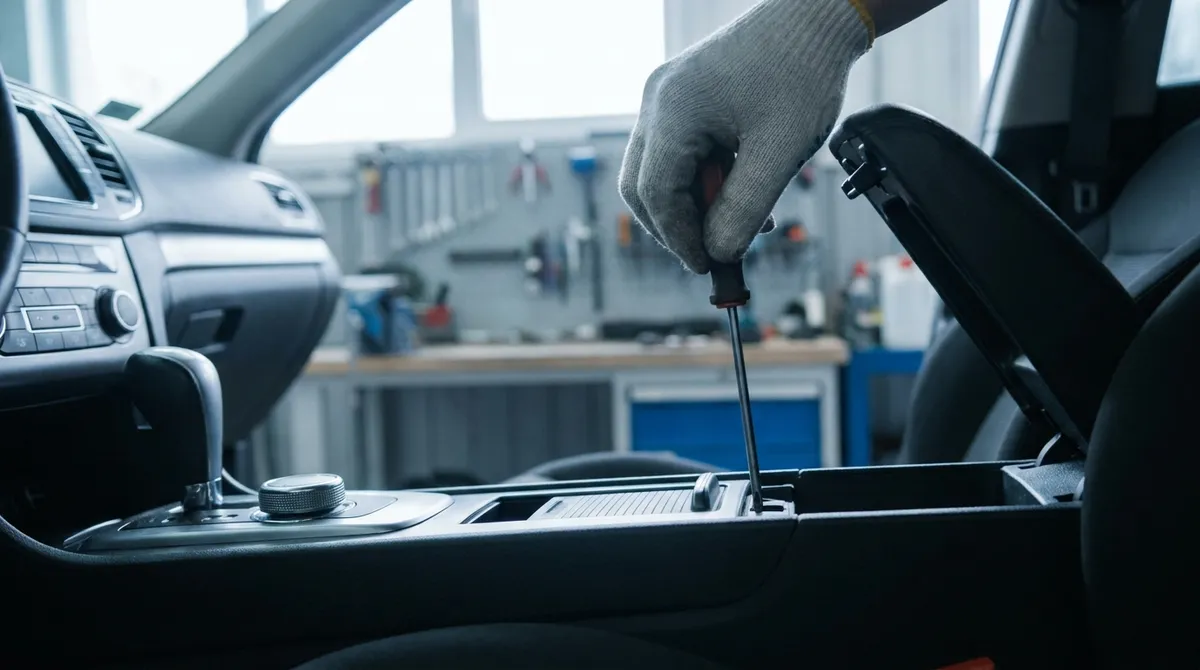
You get in your car, turn the key or push the button, foot on the brake, and… nothing. The shifter won’t budge from Park. It’s a frustrating problem that stops you dead in your tracks. While it might feel like a major issue, the cause is often something simpler than you think, usually related to a safety system designed to keep you from accidentally shifting out of park without the brakes applied.
The Brake Light Switch: The Usual Suspect
The most common reason a car gets stuck in park is a faulty brake light switch. This switch does double duty: it turns on your brake lights when you press the pedal, and it also tells the car’s computer that your foot is on the brake. Most modern cars have a “shift interlock” system that won’t let you move the shifter out of park unless the brake pedal is pressed. If the switch isn’t working, the car thinks your foot isn’t on the brake, even if it is.
Here’s how to check it:
- Check your brake lights: Have someone stand behind the car while you press the brake pedal. If the brake lights don’t come on, the switch is a prime suspect. This is one of those common symptoms that points directly to the problem.
- Listen for a click: With the engine on and your foot off the brake, try to move the shifter. Then, press the brake pedal firmly and listen for a faint click coming from the shifter area. If you don’t hear it, the interlock solenoid isn’t getting the signal, likely due to the switch.
- Look at the switch: The brake light switch is usually mounted near the top of the brake pedal arm. Sometimes, a small plastic stopper pad that presses against the switch breaks or falls out, meaning the switch never fully disengages. A quick look under the dash might tell you if that’s the case.
If the brake light switch is bad, it’s usually a straightforward replacement. They’re typically inexpensive and bolt or twist into place.
The Shift Interlock Solenoid
Even if the brake light switch is working, the signal still needs to get to the shift interlock solenoid. This small electrical component is usually located inside or near the shifter assembly. When it gets the “brake pedal pressed” signal, it retracts a pin, allowing the shifter to move.
If the solenoid itself fails, it won’t retract the pin, and your shifter stays put.
- Listen carefully: As mentioned before, listen for a click from the shifter when you press the brake. If your brake lights are working, but you still don’t hear that click, the solenoid might be the problem.
- Bypass the system (if available): Many vehicles have a small slot or button near the shifter, often covered by a cap, that lets you manually override the shift interlock. Check your owner’s manual for “shift lock release” or “manual shift override.” Pushing a key or screwdriver into this slot usually allows you to shift out of park temporarily. This is a good troubleshooting step to confirm the issue is with the interlock system and not something else.
Replacing a shift interlock solenoid can be a bit more involved, as it often requires removing parts of the center console to access the shifter assembly. You might find specific repair guides for your vehicle in the MECH AI fix database.
Blown Fuses
Electrical systems rely on fuses to protect components from power surges. If the fuse for your brake lights or the shift interlock system blows, it’s like cutting the power to that part of the circuit.
- Check the fuse box: Your car will have at least one fuse box, sometimes two (one under the hood, one inside the cabin, often under the dash or in the glove compartment).
- Consult your owner’s manual: The manual will have a diagram showing which fuse protects which circuit. Look for fuses labeled “Brake Lights,” “Stop Lamp,” “Shift Interlock,” or “Ignition.”
- Visually inspect fuses: Pull out the suspected fuses (use the plastic fuse puller usually found in the fuse box lid) and hold them up to the light. A good fuse will have an intact wire or strip inside. A blown fuse will have a broken or melted wire.
- Test with a multimeter: For a more reliable check, use a multimeter to test for continuity across the fuse.
If you find a blown fuse, replace it with one of the exact same amperage. If the new fuse blows immediately, you likely have a short circuit somewhere that needs professional attention.
Shifter Cable or Linkage Problems
While less common for a car that’s only stuck in park, a problem with the physical shifter cable or linkage can also be the culprit. This cable connects your shifter handle to the transmission. If it’s stretched, frayed, disconnected, or broken, the command from your hand won’t reach the transmission.
- Feel for resistance: Does the shifter feel completely loose, or does it have its usual resistance but just won’t move? A completely loose shifter might point to a disconnected cable.
- Visual inspection (if possible): On some vehicles, you might be able to see parts of the shifter linkage under the car, near the transmission, or under the center console. Look for anything obviously disconnected or damaged.
Diagnosing and repairing a shifter cable issue can be more complex and might require getting under the vehicle or disassembling parts of the interior. If you’re unsure, it’s a good idea to get specific advice for your vehicle. The AI Mechanic can often help you narrow down the possibilities.
What to Do Next
Start with the simplest checks: brake lights, listening for the click, and checking fuses. If you find a bad brake light switch or a blown fuse, replacing it might get you back on the road quickly. If those don’t solve it, or if you’re uncomfortable digging into the shifter assembly, it’s time to consider calling a tow truck. Getting your car to a trusted shop for a proper diagnosis will save you headaches and ensure the repair is done right. Sometimes, a shop’s diagnostic fee makes sense to pinpoint these trickier issues.