ABS Light On? What to Check First
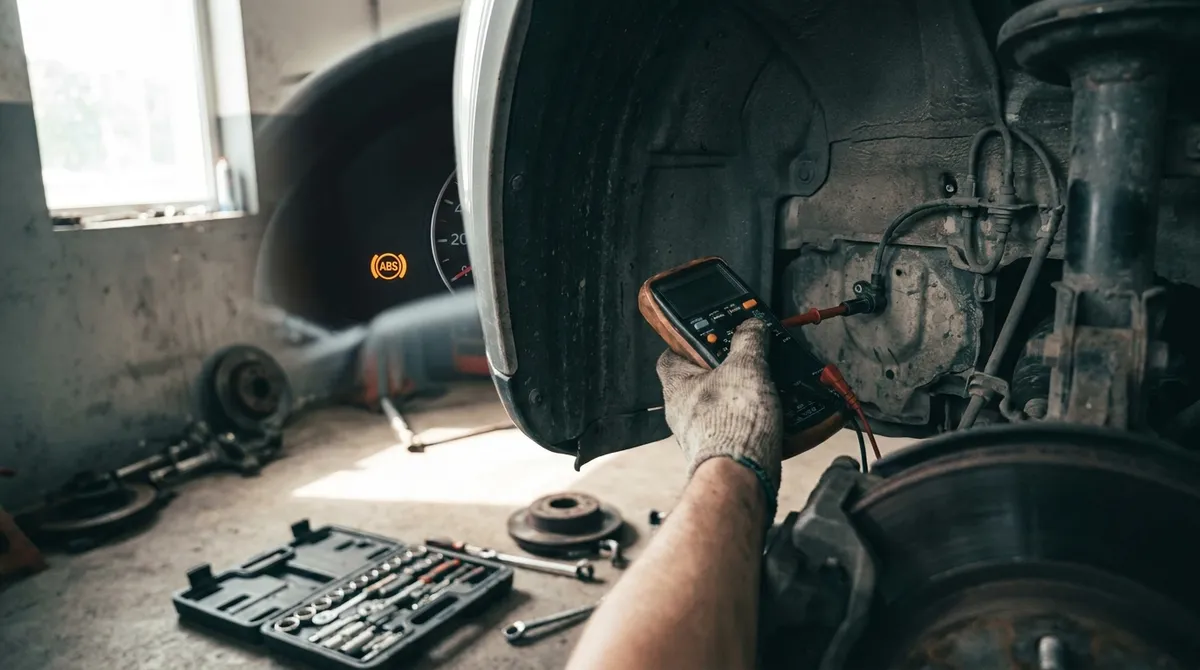
Seeing that ABS light pop up on your dash can be unsettling. It means your Anti-lock Braking System isn’t working like it should. While your regular brakes will likely still function, the ABS system is designed to keep your wheels from locking up during hard braking, helping you maintain steering control. Don’t ignore it; a non-functional ABS can make a bad situation worse.
What the ABS Light Is Telling You
The ABS light is a warning from your car’s computer that something is off with the anti-lock brake system. It doesn’t always mean your brakes are about to fail, but it does mean that in a panic stop, your wheels might lock up, and you could lose control. Think of it as a helpful reminder that a key safety feature is offline. Sometimes, other lights like the traction control (TCS) or stability control (ESC) lights will come on with it, since these systems often share sensors and components with the ABS.
One exception: if the red BRAKE warning light comes on with it, treat that as a real brake-system problem, not just an ABS fault. That pairing usually means low fluid, a hydraulic fault, or an ABS module failure that has also taken electronic brake-force distribution offline, so the rear brakes can lock up early in a hard stop. Pull over somewhere safe and have the car checked before driving it any further.
Common Culprits Behind an ABS Light
Most of the time, an ABS light points to a few usual suspects. These are the things a mechanic usually checks first, and some you can peek at yourself.
- Wheel Speed Sensors: These are the most common cause. Each wheel has a sensor that tells the ABS module how fast that wheel is spinning. If a sensor gets dirty, damaged, or the wiring to it frays, the module loses its data. It’s like trying to navigate without a compass.
- Damaged Wiring or Connectors: The wires running to those wheel speed sensors, or even to the ABS module itself, can get chewed up by road debris, corrode, or just wear out over time. A loose connection is also a common issue.
- Low Brake Fluid: While not always a direct ABS fault, low brake fluid can sometimes trigger various brake warning lights. It’s always worth checking, especially if your brake pedal feels spongy or you hear grinding. For more on brake pedal issues, check out our guide on why your brake pedal is hard to push.
- Faulty ABS Module: This is the brain of the operation. If the module itself goes bad, it can’t process the sensor data or control the brake solenoids. These are less common but more expensive fixes.
- Blown Fuse: The ABS system, like everything else, needs power. A blown fuse can cut off that power, making the system appear faulty. This is an easy check.
What You Can Check In Your Driveway
Before you head to the shop, there are a few things you can look at yourself. You don’t need a full toolbox, just some common sense and maybe a flashlight.
- Check Brake Fluid Level: Pop the hood and find your brake fluid reservoir. Make sure the fluid is between the ‘min’ and ‘max’ lines. If it’s low, top it off with the correct type of fluid (check your owner’s manual). Brake fluid also drops slowly as the pads wear, so slightly low with no wet spots underneath usually isn’t alarming. If it keeps dropping, though, you’ve got a leak that needs attention before anything else.
- Inspect Wheel Speed Sensor Wires: Get down and look behind each wheel. You’ll see wires running from the wheel hub area. Look for obvious damage: cuts, fraying, or loose connectors. Sometimes, a sensor just gets caked with road grime or metal shavings, blocking its signal. On older cars with a bolt-in sensor, pulling it and gently wiping the tip and the toothed ring clean can help; just don’t pry on the sensor or scratch the ring. On many newer cars the sensor is built into the wheel bearing hub and can’t be serviced on its own, so if the wiring looks fine, move on to the scan.
- Check Fuses: Your owner’s manual will have a diagram of your fuse box (or boxes, some cars have a few). Look for the fuse labeled for ABS. If it’s blown, replace it with one of the exact same amperage. If it blows again, you have a short circuit that needs professional diagnosis.
- Scan for Codes: The most direct way to find out what’s wrong is to read the ABS module’s fault codes. One catch: a basic engine-only code reader won’t see them. ABS faults are stored as chassis (C) codes in the ABS module, and reaching that module takes a scan tool with ABS or manufacturer-specific coverage, which many mid-range consumer scanners and any shop tool have. Those codes usually name the wheel or circuit at fault, which turns a guessing game into a short checklist. Some parts stores will read codes for free, but ask whether their tool covers ABS before you count on it. For general guidance on what dashboard lights mean, you can always consult our symptoms guide.
When It’s Time for a Professional
If you’ve checked the basics and the light is still on, or if you’re not comfortable poking around, it’s time to get a professional involved. Some issues are just too complex for a DIY fix.
- Advanced Diagnostics: Shops have more sophisticated scan tools that can read live data from each wheel speed sensor, test the ABS module, and pinpoint intermittent issues. They can also check for Technical Service Bulletins (TSBs) specific to your vehicle model that might address known ABS problems.
- ABS Module Repair/Replacement: If the ABS module itself is faulty, it’s often a job best left to the pros. These modules can be expensive, and they often require programming to your specific vehicle after replacement.
- Brake System Overhaul: If the ABS light is on due to a more widespread brake issue – like a failing master cylinder, seized caliper, or significant fluid leak – a shop can diagnose and repair the entire system safely.
- Safety First: Remember, your ABS is a critical safety system. If it’s not working, your car’s ability to stop safely in an emergency is compromised. Don’t put off getting it fixed. If you’re wondering if a diagnostic fee is worth it, sometimes it really is the best way to get a clear answer without wasting time and money guessing. You can read more about when a shop’s diagnostic fee makes sense to help you decide.
An ABS light isn’t usually an emergency that leaves you stranded, but it’s not something to ignore either. Start with the simple checks, and if those don’t clear it up, get it to a trusted mechanic. Knowing what to look for can save you time and help you have a smarter conversation with your repair shop. And if you want to dig deeper into your specific car’s issues, the MECH AI app can help you understand potential causes and next steps.
Sources
- HELLA TECH WORLD — Checking and Changing ABS / Wheel-Speed Sensors
- Pico Technology — Guided Test: Wheel Speed Sensor (Inductive)
- Pico Technology — Guided Test: Wiggle Test (Resistance)
- U.S. NHTSA / eCFR — FMVSS 571.116, Motor Vehicle Brake Fluids
- SAE J2012 — Diagnostic Trouble Code Definitions (public standards mirror)