Soft Brake Pedal: Master Cylinder or Caliper?
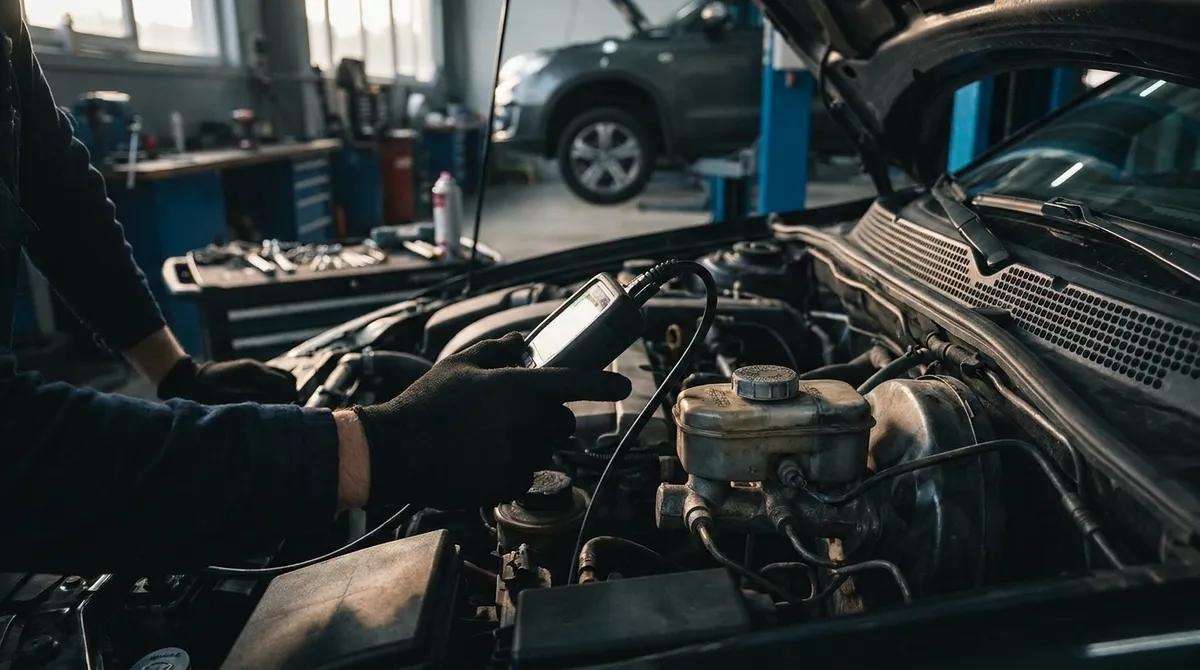
A soft brake pedal does not tell you which part has failed. If a repair estimate names the master cylinder or a caliper, ask what inspection or test identified that part. Replacing parts based only on pedal feel can leave the original problem unresolved.
If the pedal sinks, braking is reduced, or you suspect a brake-fluid leak, do not drive the vehicle to test it or reach the shop. Arrange roadside assistance or towing for a qualified brake inspection. Do not take a short drive to compare wheel temperatures or touch a wheel that may be hot.
For the broader symptom overview, see our soft brake pedal guide. This article focuses on understanding the diagnosis behind a repair estimate.
Why it is not a two-part choice
The master cylinder supplies hydraulic pressure; calipers use that pressure to press the pads against the discs. But low brake fluid and air in the system can also affect pedal feel. HELLA’s brake-fluid guidance explains why a low level calls for inspection of the system for leaks and wear. Simply topping it up does not explain the cause.
Heat can matter too. The same guide explains that overheated fluid can form compressible vapour bubbles, reducing braking effectiveness. A soft pedal is a starting point for inspection, not a replacement instruction.
If the estimate says “master cylinder”
A sinking pedal needs professional investigation. A timed pedal-hold check at home is not enough to justify replacing the master cylinder. The absence of a visible puddle does not establish the cause either.
Ask the shop:
- What vehicle-specific test supports the master-cylinder diagnosis?
- Were external leaks and other hydraulic faults checked?
- Does the estimate explain the findings, the proposed repair and how braking will be verified afterward?
A report that says only “soft pedal” describes what you already noticed. Ask for the evidence connecting that symptom to the quoted part. HELLA’s inspection guidance covers multiple brake components and stresses qualified work using the vehicle manufacturer’s instructions.
If the estimate says “caliper”
A caliper can leak or fail to move correctly. Sticking guide pins can also contribute to uneven pad wear, uneven braking and overheating, as HELLA explains in its guide-pin article. Those observations need an inspection; pulling or a hot wheel alone does not establish that the complete caliper needs replacement.
Ask the shop:
- Which wheel is affected, and what was found: a leak, piston problem, damaged guide or another fault?
- Can the technician show the relevant finding or inspection photo?
- What justifies replacing the complete caliper rather than another affected component?
- Were nearby hoses and related brake parts inspected, and does the estimate cover any resulting damage?
The appropriate repair depends on the actual fault and the manufacturer’s procedure. Do not use a wheel-spinning check or a comparison drive to decide which part to buy.
What to tell the technician
Use observations you already have. Note when the change started, whether it followed brake work, any warning lights, and whether you noticed pulling, an unusual smell or fluid on the ground. Include the vehicle’s year, make and model. Do not reproduce the problem on the road to gather more detail.
Keep the inspection findings with the estimate. If the explanation is unclear, ask the shop to distinguish what it has confirmed from what still needs testing. For brake complaints, getting that distinction right matters more than guessing the cheaper part.
Help understanding the estimate
MECH AI Quick Help can help explain unfamiliar terms and organize questions for your technician. It cannot inspect the brake system, confirm the failed part or establish that the vehicle is safe to drive. Use the shop’s inspection and vehicle-specific service information to decide on the repair.