When to Change Your Cabin Air Filter and Why
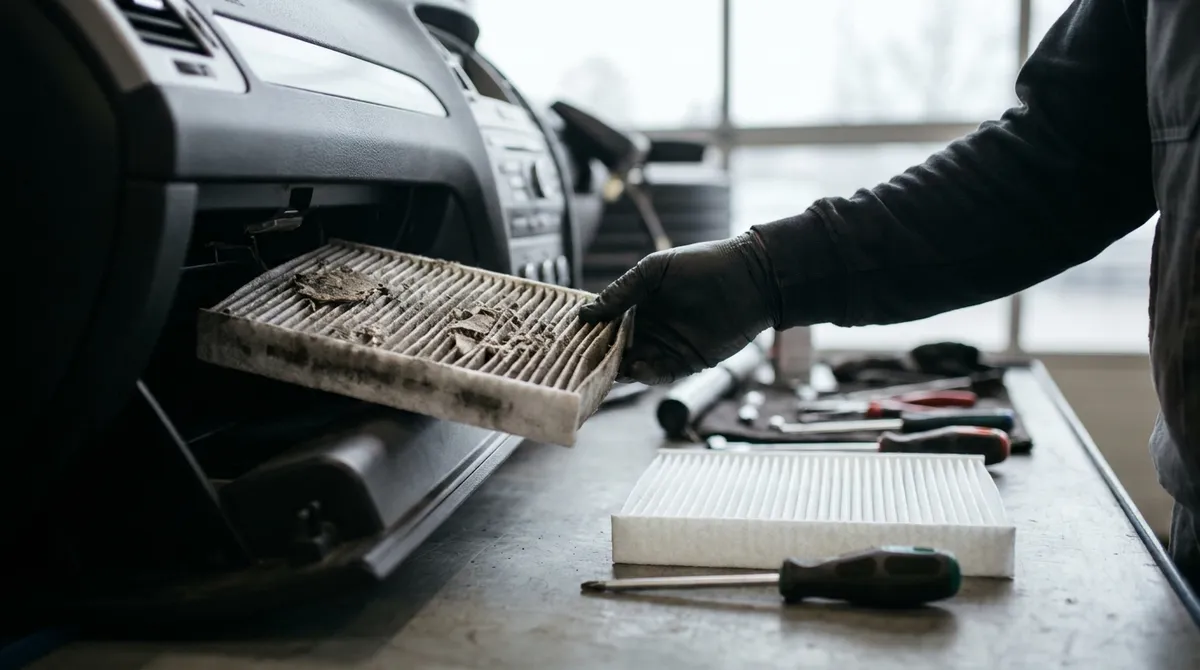
Most folks know about changing their oil and engine air filter, but the cabin air filter often gets forgotten. It’s easy to overlook something you can’t see, but this little filter plays a big role in your comfort and even the health of your car’s HVAC system.
What’s a Cabin Air Filter For?
Think of your cabin air filter as the bouncer for your car’s interior. Its job is to catch dust, pollen, leaves, bugs, and other crud before it gets blown into your face through the vents. It’s usually a pleated paper or synthetic filter, often found behind the glove box or sometimes under the hood near the cowl. Don’t confuse it with the engine air filter, which protects your engine; the cabin filter is all about keeping the air you breathe inside the car clean.
Signs It’s Time for a New One
Your car will usually give you a few hints when the cabin air filter is clogged up. Paying attention to these can save you a headache later.
- Reduced Airflow: If your AC or heat isn’t blowing as strong as it used to, even on high settings, a blocked filter is a likely culprit. It’s like trying to breathe through a pillow.
- Persistent Odors: A musty, stale, or even slightly moldy smell coming from your vents is a classic sign. The filter isn’t just trapping dirt; it’s also trapping moisture and organic matter that can start to smell.
- Increased Fan Noise: The blower motor has to work harder to pull air through a clogged filter. You might notice the fan making more noise than usual, trying to compensate for the restricted airflow.
- Allergy Symptoms: If you find yourself sneezing or coughing more than usual when you’re in the car, especially during allergy season, a dirty filter might not be doing its job to keep pollen out.
- Visible Dirt: If you pull the filter out and it looks like it’s been through a dust storm – packed with leaves, bugs, and dark grime – it’s definitely time for a replacement.
If you’re noticing any of these issues, it’s worth checking your filter. For more general advice on what your car is trying to tell you, check out our symptoms guide.
How a Clogged Filter Affects Your HVAC System
Ignoring a dirty cabin air filter isn’t just about bad smells. It can actually cause bigger problems for your car’s heating, ventilation, and air conditioning (HVAC) system.
- Blower Motor Strain: As mentioned, a clogged filter makes the blower motor work overtime. This extra strain can shorten the life of the motor, and replacing a blower motor costs far more than a filter, often a few hundred dollars with labor depending on the vehicle.
- Reduced Efficiency: When airflow is restricted, your AC system struggles to cool the cabin effectively, and your heater struggles to warm it. The cabin takes longer to reach the temperature you set. A cabin filter does not affect fuel economy the way people sometimes assume; the cost is comfort and airflow.
- Slow Defogging: Weak airflow also means the windshield and windows fog up more easily and take longer to clear. That makes a clogged filter a visibility and safety issue in cold or wet weather, not just a comfort one.
- Moisture and Mold: A severely clogged filter can trap moisture, especially in humid climates or during AC use. This damp environment is a perfect breeding ground for mold and mildew, which not only smells bad but can also be unpleasant to breathe. If the smell stays after a new filter goes in, the source may be deeper in the HVAC case and is worth having checked.
If you’re unsure what specific part you need or how to tackle a repair, the MECH AI app can help you find the right information for your exact vehicle. You can even use the AI Mechanic to walk you through the process.
How Often Should You Change It?
Most car manufacturers recommend replacing your cabin air filter every 15,000 to 30,000 miles, and many filter makers suggest at least once a year. Your owner’s manual has the interval for your vehicle, and it isn’t a hard and fast rule. How often you should change it depends on a few things:
- Driving Conditions: If you drive frequently on dusty gravel roads, through heavy city traffic with lots of exhaust fumes, or in areas with high pollen counts, you’ll need to change it more often.
- Environment: Living in a dry, dusty climate or an area with a lot of trees and foliage means your filter will get dirty faster.
- Pets: If you regularly transport furry passengers, pet hair and dander will contribute to filter clogging.
It’s a good habit to check your cabin air filter every time you get your oil changed. It’s usually a quick visual inspection, and often, replacing it is a straightforward DIY job that doesn’t require special tools. You can find specific instructions and parts information for your vehicle in the MECH AI database.
Don’t let a small, inexpensive filter turn into a bigger problem. Keeping your cabin air filter clean is a simple piece of maintenance that goes a long way in keeping you comfortable and your HVAC system running smoothly. It’s a quick win for your car and your lungs.