Checking Your PCV Valve: A Simple Engine Health Check
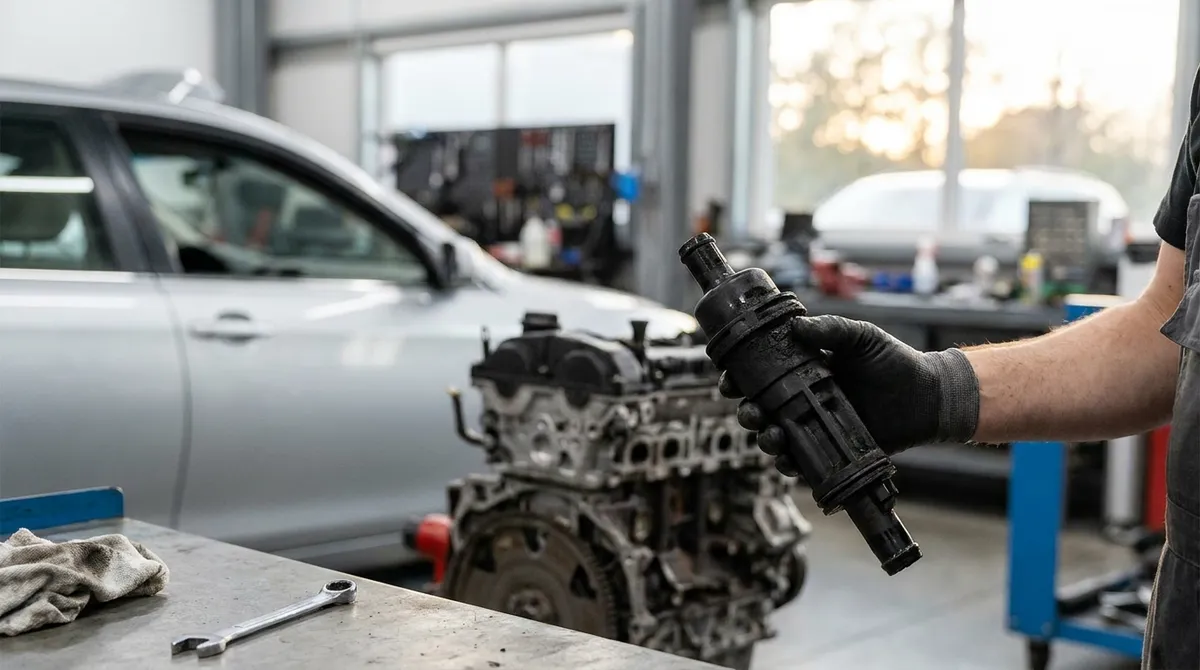
Your engine creates pressure as it runs. This “blow-by” gas, a mix of fuel and exhaust, gets past the piston rings and into the crankcase. Without a way out, this pressure would build up and cause oil leaks or other problems. That’s where the Positive Crankcase Ventilation (PCV) valve comes in. It’s a small, one-way valve that routes these gases back into the engine’s intake to be re-burned, keeping your engine clean and running right.
What a PCV Valve Does and Why It Matters
Think of your engine as a sealed system, mostly. But those combustion gases don’t all stay in the cylinder. Some escape into the crankcase, the area around the crankshaft. If these gases just sat there, they’d mix with your oil, create sludge, and build up pressure. That pressure can force oil past seals and gaskets, leading to leaks.
A working PCV valve is designed to pull those gases out of the crankcase and send them back into the intake manifold, where they get mixed with fresh air and fuel, then burned off. This process keeps crankcase pressure balanced, reduces emissions, and helps prevent sludge buildup. When a PCV valve gets clogged or stuck, it can cause a range of issues: rough idle, increased oil consumption, oil leaks, and even a loss of engine power. If your car feels sluggish or loses power, a bad PCV valve could be one of the reasons.
Finding Your PCV Valve
The location of the PCV valve isn’t the same on every car. It’s usually found on a valve cover or connected to the intake manifold by a hose. It’s often a small, cylindrical part made of plastic or metal, sometimes with a hose running from it.
- Check your owner’s manual: This is always the first place to look for specific component locations.
- Look around the valve covers: Many engines have the PCV valve plugged directly into a valve cover.
- Follow vacuum hoses: A hose from the intake manifold often leads directly to the PCV valve or a PCV system component.
- Use the MECH AI app: If you’re having trouble locating it, the MECH AI app can often provide vehicle-specific diagrams and instructions to help you pinpoint the exact spot on your make and model.
Once you’ve found it, you’ll usually need to pull it out of its grommet or unscrew it. Be gentle, especially if it’s plastic, as older plastic can be brittle.
Not every engine has a separate, removable PCV valve. Many newer engines, especially turbocharged and direct-injection ones, build the crankcase ventilation into the valve cover or an oil separator. Those designs don’t rattle and aren’t cleaned the way described below; they are diagnosed differently and usually replaced as an assembly. If you can’t find a stand-alone valve, check the service information for your engine before pulling parts off.
How to Inspect Your PCV Valve
Before you try to clean anything, give the valve a good inspection. Sometimes, the problem isn’t the valve itself but the hose connected to it.
- Visual Check:
- Valve body: Look for cracks, breaks, or heavy oil sludge buildup on the outside.
- Hose: Check the hose connected to the PCV valve. Is it cracked, collapsed, or clogged with gunk? A bad hose can cause the same problems as a bad valve.
- The Shake Test (Valve Removed):
- Once you’ve got the valve out, shake it. A healthy PCV valve should rattle. This rattle comes from a small pintle (a moving part inside) that opens and closes. If it doesn’t rattle, it’s likely stuck open or closed by carbon buildup and needs attention. A rattle is a good sign but not proof: a worn valve can rattle and still flow wrong, so do the suction test too.
- The Suction Test (Engine Running):
- With the engine at idle, carefully pull the PCV valve out of its grommet (leave the hose connected).
- Place your thumb over the open end of the valve. You should feel strong suction. If there’s little to no suction, the valve is likely stuck closed or the hose is blocked.
- Alternatively, if you can hear a distinct “hissing” sound when you pull it out, that’s another sign of proper vacuum.
- The idle may stumble for a moment while the valve is out. That’s normal; refit the valve as soon as you’ve checked it.
- Caution: The engine is running for this test. Keep hands, sleeves, hair and tools away from the belts, pulleys and cooling fan, and watch for hot surfaces. Don’t let the valve fall into the engine bay.
If your valve doesn’t rattle, or if you don’t feel suction, it’s a good sign that it’s not working correctly. You can often find more specific diagnostic steps for your vehicle in the MECH AI fix database.
Cleaning Your PCV Valve
Not all PCV valves are designed to be cleaned. Some are sealed units that simply need to be replaced if they fail. However, many older or simpler designs can be cleaned.
What you’ll need:
- Carburetor cleaner
- A small brush (optional, for stubborn buildup)
- Shop rags
- Safety glasses and gloves
Work with the engine off and cool, in a well-ventilated spot away from sparks or flames: these cleaners are flammable. Strong solvents can also damage plastic valves and rubber seals, so if your valve is plastic or has a rubber diaphragm, replace it instead of soaking it.
Steps for cleaning:
- Remove the valve: As described above.
- Spray with cleaner: Hold the valve over a shop rag or catch pan. Spray the cleaner into both ends of the valve. You’ll likely see dark, oily residue coming out.
- Shake it: After spraying, shake the valve again. If it didn’t rattle before, keep spraying and shaking until you hear the pintle moving freely inside.
- Let it dry: Allow the valve to air dry completely before reinstalling it. Any residual solvent could cause issues if it gets into the engine.
- Check the hose: While the valve is drying, clean out the hose that connects to it. Use cleaner and, if possible, blow compressed air through it to ensure it’s clear. Replace any cracked or brittle hoses.
If cleaning doesn’t restore the rattle or the suction, or if the valve is visibly damaged, it’s time to replace it. A new PCV valve is usually an inexpensive part, and replacing it is often simpler than cleaning. Use the exact valve specified for your engine, and check your maintenance schedule for an inspection or replacement interval, since it varies by manufacturer.
What’s Next
After cleaning or replacing the PCV valve and its hose, reinstall everything securely. Make sure the valve is seated firmly in its grommet and all hoses are connected without kinks. Start the engine and listen for any unusual noises or vacuum leaks. A properly functioning PCV system is crucial for your engine’s health and can help prevent issues like oil leaks and a rough idle. If you’ve been dealing with a check engine light, a faulty PCV valve could even be the cause.