P0128 Code: Why Your Engine Isn't Getting Warm Enough
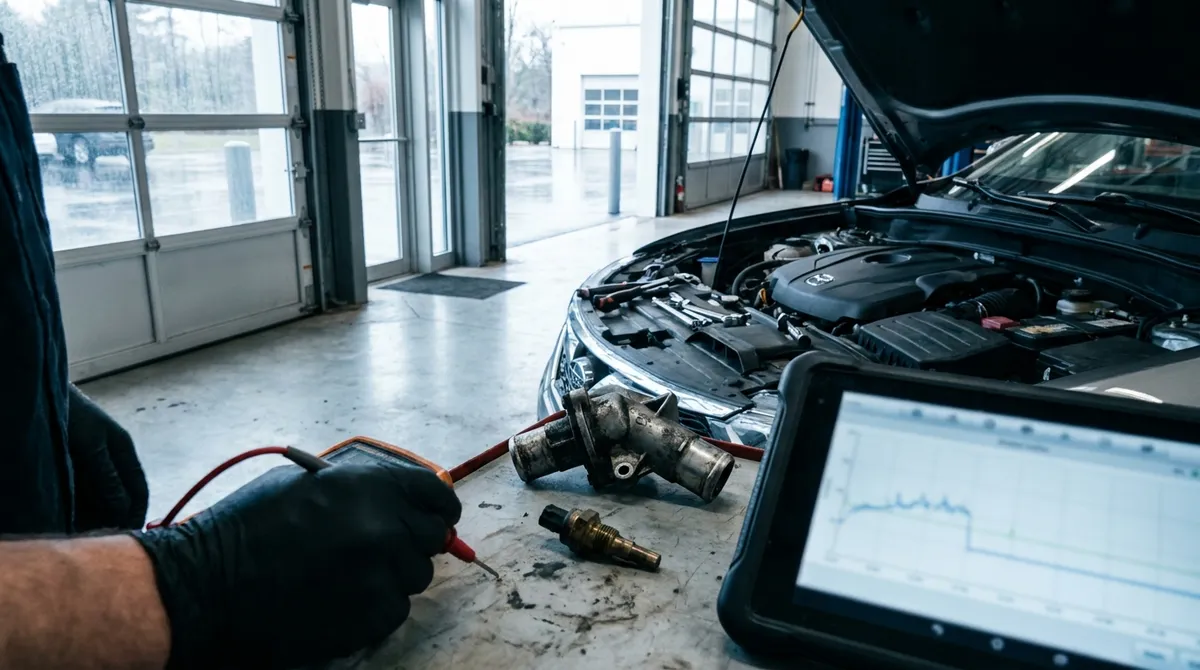
Your check engine light just came on, and a scan tool pulls up a P0128 code. This code means your engine’s coolant temperature isn’t getting up to where it should be within a certain amount of time. Basically, your car’s computer thinks the engine is running too cool for too long.
What P0128 Really Means
The P0128 code, “Coolant Temperature Below Thermostat Regulating Temperature,” is the car’s computer telling you something in the cooling system isn’t working right. Your engine needs to reach a specific operating temperature to run efficiently, control emissions, and give you good fuel mileage. The thermostat is the main gatekeeper here, opening and closing to let coolant flow through the radiator and keep the engine at that sweet spot. If the computer sees the coolant temperature staying too low for too long after startup, it throws this code. You can find more detailed information on specific fixes and costs for this code in our P0128 code deep-dive.
The Usual Suspects Behind P0128
When you see a P0128, it usually points to one of a few common problems. It’s rarely something exotic.
- Stuck Open Thermostat: This is by far the most common cause. A thermostat that’s stuck open allows coolant to flow through the radiator all the time, even when the engine is cold. This keeps the engine from warming up properly. It’s like trying to heat your house with a window open.
- Faulty Coolant Temperature Sensor: If the sensor itself is giving a bad reading, the computer might think the engine is cold when it’s actually at the right temperature. Or, it might genuinely be reading a low temperature because the engine is running cold. A bad sensor can also just fail to send any signal.
- Low Coolant Level: If there isn’t enough coolant in the system, the temperature sensor might not be fully submerged, leading to inaccurate readings. Plus, a low coolant level can mess with the system’s ability to maintain proper temperature.
- Cooling Fan Running Constantly: In some cases, an electrical problem could cause the engine cooling fan to run all the time, even when it’s not needed. This over-cooling can prevent the engine from reaching its ideal temperature.
How to Check It Out
Before you start replacing parts, do some basic checks.
- Check Coolant Level: Pop the hood when the engine is cold and check the coolant reservoir. Make sure it’s between the “min” and “max” lines. If it’s low, top it off with the correct type of coolant for your vehicle.
- Feel the Hoses: Start the engine cold. Let it idle for a few minutes. Feel the upper radiator hose (the one going from the engine to the top of the radiator). It should stay cool for a while, then gradually warm up. The lower radiator hose (from the bottom of the radiator to the engine) should stay cold until the thermostat opens. If both hoses warm up quickly, especially the lower one, your thermostat is likely stuck open.
- Scan Tool Live Data: If you have access to a good scan tool, you can watch the live data for the coolant temperature sensor. Compare the reading to what you expect and watch how it climbs as the engine warms up. If the temperature reading seems erratic or doesn’t climb steadily, the sensor might be bad. The MECH AI app can help you interpret these readings and suggest next steps, giving you a detailed breakdown of your specific vehicle’s data. You can learn more about how it works by checking out the AI Mechanic.
- Check the Cooling Fan: Listen and look for your cooling fan. Does it kick on as soon as you start the car, even when the engine is cold? If so, there might be an electrical issue keeping it running all the time.
Why It Matters If You Ignore It
Ignoring a P0128 code isn’t a good idea. While it might not leave you stranded immediately, it can lead to other problems. Your engine won’t run as efficiently, meaning you’ll burn more fuel than necessary. Emissions will likely increase, and in colder weather, your heater might not put out enough warmth. Over time, constant under-cooling can also cause extra wear on engine components. If you’re noticing other strange behaviors, like poor heater performance or a burning smell, you might want to consult our general symptoms guide for more context.
What it typically costs
The most common cause of P0128 — thermostat stuck partially or fully open — typically runs $80–$350 in parts and labor at an independent U.S. shop. Across every cause we track for this code the range is $30–$500, because a P0128 can be anything from a cheap sensor to a major component.
These are editorial estimates, not quotes: what you actually pay moves with your region, the shop’s hourly rate, which engine you have, and how much diagnostic time the job takes. Dealer service departments typically sit above these ranges. See the P0128 guide for the full ranked breakdown and per-vehicle details.
What to Do Next
Once you’ve done your basic checks, you should have a better idea of the culprit.
- If it’s the thermostat: Replacing a thermostat is often a DIY job for those comfortable with basic car repair. Just make sure to get the right temperature thermostat for your car and properly bleed the cooling system afterward.
- If it’s the sensor: Replacing a coolant temperature sensor is also generally straightforward, but make sure to get the correct part number.
- If it’s low coolant or a fan issue: Address those problems directly. Find and fix any leaks, or diagnose the electrical fault causing the fan to run constantly.
If you’re not comfortable tackling this yourself, or if your checks don’t clearly point to a problem, it’s always smart to take it to a trusted shop. Sometimes, a professional diagnostic fee makes a lot of sense, especially when you’re trying to avoid throwing parts at a problem.