GDI Carbon Buildup: What a TSB Says About It
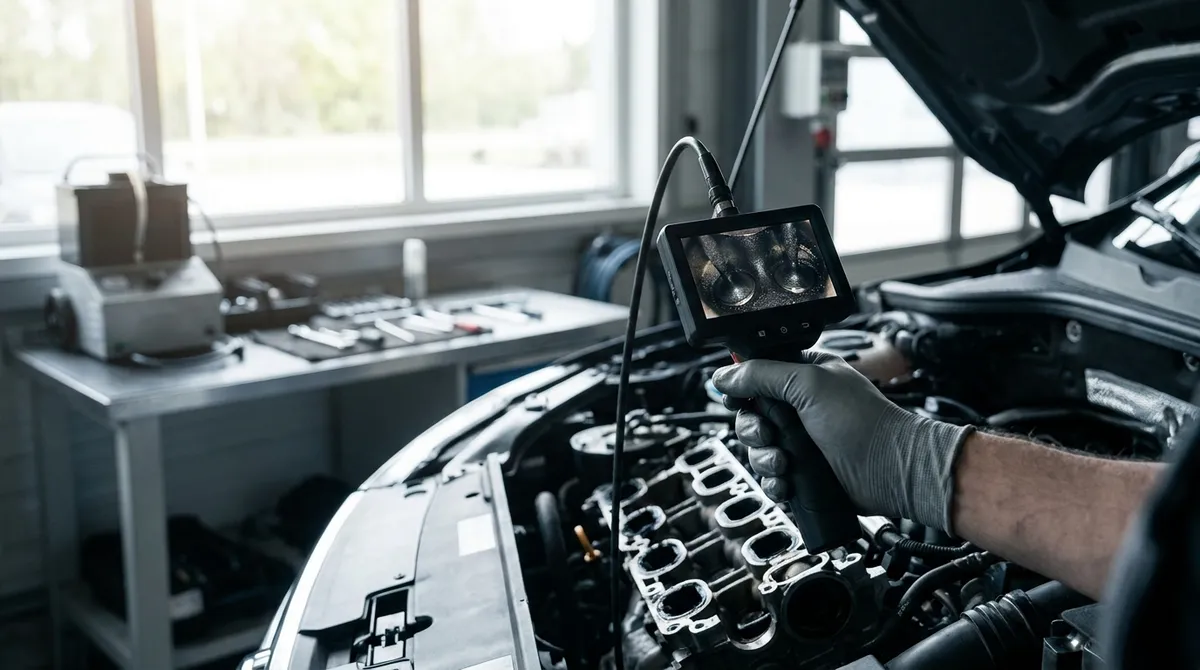
Direct injection engines, often called GDI, are common these days because they’re efficient. But they come with a known issue: carbon buildup on the intake valves. This isn’t a design flaw, exactly, but a side effect of how they work, and it’s something many manufacturers have issued Technical Service Bulletins (TSBs) about.
Why GDI Engines Build Carbon
Traditional port injection engines spray fuel into the intake manifold, and that fuel washes over the back of the intake valves, keeping them clean. GDI engines, on the other hand, spray fuel directly into the combustion chamber. This is great for fuel economy and power, but it means no fuel ever touches the intake valves.
Over time, oil vapor from the PCV (Positive Crankcase Ventilation) system, along with exhaust gas recirculation (EGR) on some engines, deposits on those hot intake valves. Without fuel to wash it away, this turns into a hard, crusty carbon buildup. This buildup can restrict airflow, mess with valve sealing, and cause a whole host of problems. You might notice your engine running rough, especially at idle, or a general loss of power. Some drivers report a noticeable drop in fuel economy, and it’s a common cause of an intermittent misfire. If you’re seeing any of these issues, carbon buildup could be the culprit.
What a TSB Says About It
Many car manufacturers have put out TSBs regarding carbon buildup on GDI engines. These aren’t recalls, but rather guides for technicians on how to diagnose and address common issues. Typically, these TSBs describe the symptoms, the diagnostic process (often involving borescope inspection of the intake valves), and the recommended repair.
The repair often involves cleaning the intake valves. Some TSBs might suggest chemical cleaning, but for significant buildup, most point toward a more aggressive method: walnut blasting. The TSBs detail the specific tools and procedures needed to do the job right, often recommending special adapters to connect to shop air and a vacuum system to contain the walnut shell media. You can often find details on common repairs like this in the MECH AI fix database.
The Walnut Blasting Process
Walnut blasting is exactly what it sounds like. After removing the intake manifold, a specialized tool is used to blast crushed walnut shells at the intake valves. The walnut shells are abrasive enough to chip away the hard carbon deposits but soft enough not to damage the metal of the valves or cylinder heads.
Here’s the basic rundown:
- Access: The intake manifold is removed to expose the intake ports and valves.
- Isolation: Each cylinder’s valves are closed (by rotating the crankshaft) before cleaning to prevent debris from entering the cylinder.
- Blasting: A special nozzle sprays the walnut media into the intake port, cleaning the valve stems and valve faces. A vacuum simultaneously extracts the spent media and carbon.
- Inspection: After blasting, the ports are inspected with a borescope to ensure all carbon is removed.
- Reassembly: Once all ports are clean, the intake manifold is reinstalled with new gaskets.
This process effectively restores proper airflow and valve sealing, often bringing the engine back to its original performance levels. It’s a