Don't Sweat That Check Engine Light
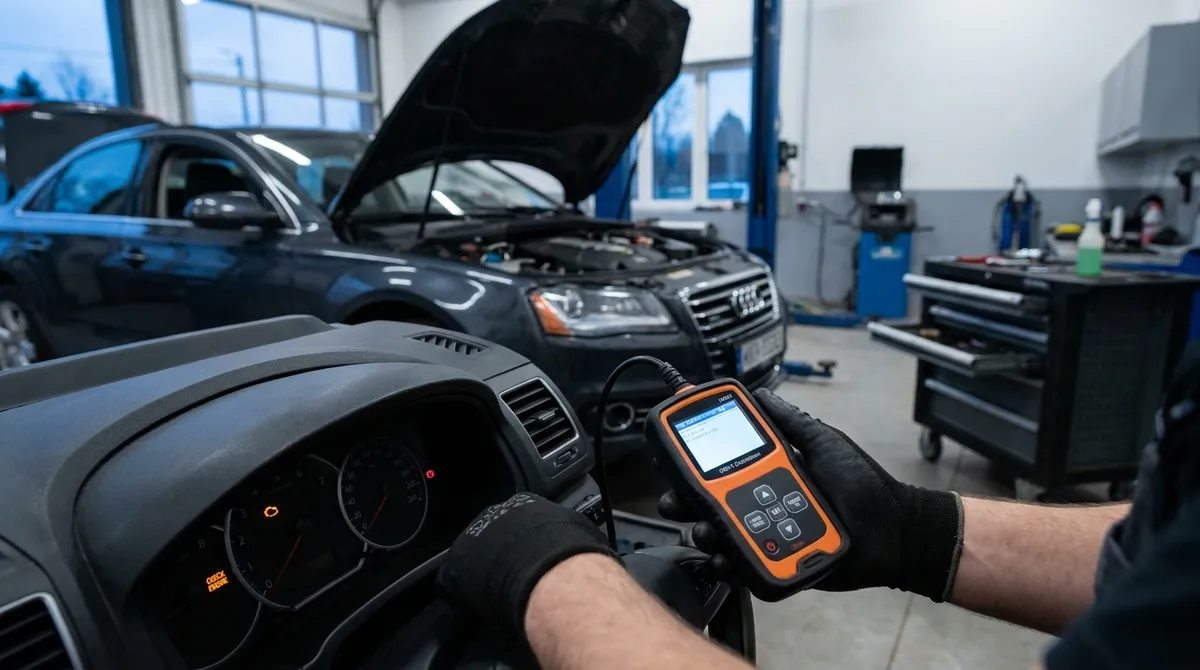
Seeing that check engine light pop up on your dash can make your stomach drop. It’s easy to jump to the worst conclusions, imagining expensive repairs and days without your ride. But most times, it’s not an emergency. It’s just your vehicle’s computer trying to tell you something’s a little off.
What That Light Really Means
First off, let’s clear the air. A check engine light doesn’t mean your engine is about to explode. It means the On-Board Diagnostics system, or OBD-II, has detected an issue that’s outside its normal operating parameters. Think of it as a helpful warning, not a death sentence.
There’s a big difference between a solid light and a flashing light:
- Solid Check Engine Light: This usually indicates a non-critical issue. It could be something minor like a loose gas cap, or something more involved like a faulty sensor. You should get it checked out soon, but it’s generally safe to drive the vehicle.
- Flashing Check Engine Light: This is a serious warning. A flashing light means there’s an active misfire or another severe problem that could be damaging your catalytic converter or other major components. If your light is flashing, pull over when it’s safe to do so and shut the engine off. Get it towed to a shop. Don’t keep driving.
Getting the Code: Your First Step
The first thing you need to do is find out what the computer is trying to tell you. You do this by “reading” the code.
- Get an OBD-II Scanner: You can buy a basic scanner for a reasonable price at most auto parts stores. Many stores will also lend you one for free to use in their parking lot. If you’re serious about working on your own vehicle, owning one is a good investment.
- Locate the OBD-II Port: This port is usually under the dashboard on the driver’s side, often near the steering column. It’s a trapezoidal 16-pin connector.
- Plug It In and Read: Plug the scanner into the port. Turn your ignition to the “ON” position (engine off). Follow the scanner’s instructions to “Read Codes.” It will display one or more “P-codes” (e.g., P0420, P0301).
- Write It Down: Make sure to write down the exact code(s) you get. Don’t just rely on memory.
Understanding the Code: It’s a Clue, Not the Answer
Once you have the P-code, you’ve got a clue. These codes follow a standard format:
- P: Always starts with “P” for Powertrain.
- First Digit (0 or 1):
P0xxx: Generic code, common across all manufacturers.P1xxx: Manufacturer-specific code.
- Second Digit (System Type):
P01xx/P02xx: Fuel and Air MeteringP03xx: Ignition System or MisfireP04xx: Auxiliary Emission ControlsP05xx: Vehicle Speed, Idle Control, and Auxiliary InputsP06xx: Computer and Auxiliary OutputsP07xx/P08xx: Transmission
- Last Two Digits: These pinpoint the specific fault. For example, P0420 is “Catalyst System Efficiency Below Threshold (Bank 1).”
It’s important to remember that a code points you to a system or a component, not always the exact failed part. For instance, a P0420 code often gets blamed on a bad catalytic converter, but it could also be a faulty oxygen sensor, an exhaust leak, or even a wiring issue. The code tells you where to start looking, not what to replace.
What to Do After You Have the Code
Now that you have the code, you’re armed with information.
- Look Up the Code: Use a reliable online resource or the MECH AI app to get a detailed description of the code. This will often include common causes and diagnostic steps.
- Don’t Rush to Replace: Resist the urge to immediately buy the part the code mentions. A P0301 (Cylinder 1 Misfire) doesn’t automatically mean you need a new spark plug, coil pack, or injector. It could be a vacuum leak, low compression, or a wiring issue.
- Perform a Visual Inspection:
- Check your gas cap: Is it tight? A loose cap is a common cause for an evaporative emissions (EVAP) system code.
- Look for obvious damage: Are any hoses disconnected or cracked? Are wires chewed through or frayed?
- Listen for leaks: Can you hear any hissing sounds that might indicate a vacuum leak?
- Consider the Symptoms: Is the engine running rough? Is your fuel economy down? Does it smell unusual? These symptoms, combined with the code, can help narrow down the problem.
- Clear the Code (Carefully): Some scanners allow you to clear codes. If you’ve found and fixed an obvious, minor issue (like tightening a gas cap), you can clear the code to see if it comes back. If the light comes back on, the problem wasn’t solved, or there’s another issue. Never clear a code to hide a problem, especially if the light was flashing.
If you’ve done your homework, checked the simple stuff, and the problem persists, that’s when it’s time to call in the pros. They have advanced diagnostic tools and experience to pinpoint the root cause without just throwing parts at the problem.
Reading an OBD-II code is a skill that puts you in control. It’s a diagnostic tool, not a reason to panic. Take a breath, get the code, and use it to figure out your next move, whether that’s a simple fix or a trip to the shop.